Pharmacy Refill: How to Get Your Medications on Time Without Stress
When you rely on daily medication, a pharmacy refill, the process of obtaining a new supply of a prescribed drug after the current one runs out. Also known as prescription renewal, it’s not just a formality—it’s a lifeline. Missing a refill can mean skipped doses, worsening symptoms, or even hospital visits. And it’s not just about remembering to call—it’s about understanding how insurance, pharmacy systems, and your doctor’s office all connect to make it happen.
A prescription renewal, the official request to extend a medication order before it expires. Also known as refill authorization, it’s often the hidden step that delays your meds. Many people think once a script is written, refills are automatic. They’re not. Some insurers require prior authorization every 30 days. Others limit how early you can refill. And if your doctor’s office is backed up, that email or fax can sit for days. That’s why smart patients set reminders 7 days before running out—not 1. You also need to know if your pharmacy offers automatic refills or text alerts. Most do, but you have to opt in. And don’t assume your pill count matches your schedule. A 30-day supply of metformin might last 35 days if you skip a dose, but that doesn’t mean you should wait.
Then there’s the medication supply, the physical stock of drugs you have on hand, managed to avoid gaps in treatment. If you travel often, you need more than a 30-day supply. If you’re on refrigerated meds like insulin, you can’t just grab a backup from the corner store. And if you’re on a tight budget, you might be stretching doses because you can’t afford to refill early. That’s why tools like GoodRx or Walmart’s $4 program matter—they’re not just for new prescriptions. They help you refill cheaper when your insurance doesn’t cover it well.
And let’s talk about pharmacy communication, how you interact with your pharmacy to get refills, ask questions, or report problems. Calling the pharmacy directly? You’re probably stuck on hold. Using a portal like MyChart? That’s faster. Sending a secure message to your pharmacist? Even better. Many people don’t know they can ask their pharmacist directly about side effects, interactions, or even if they can split a pill to stretch a refill. Pharmacists are trained for this. Use them.
What you’ll find below aren’t just articles about refills—they’re real-world fixes for the problems you face every day. How to handle a denied refill. How to get emergency refills when you’re out of town. How to use digital tools so you never run out again. How to save money on refills without insurance. How to talk to your doctor so they approve refills faster. These aren’t theory pieces. They’re written by people who’ve been stuck at the pharmacy counter, stressed about missing a dose, or worried their meds ran out while traveling. You’re not alone. And you don’t have to figure this out alone either.
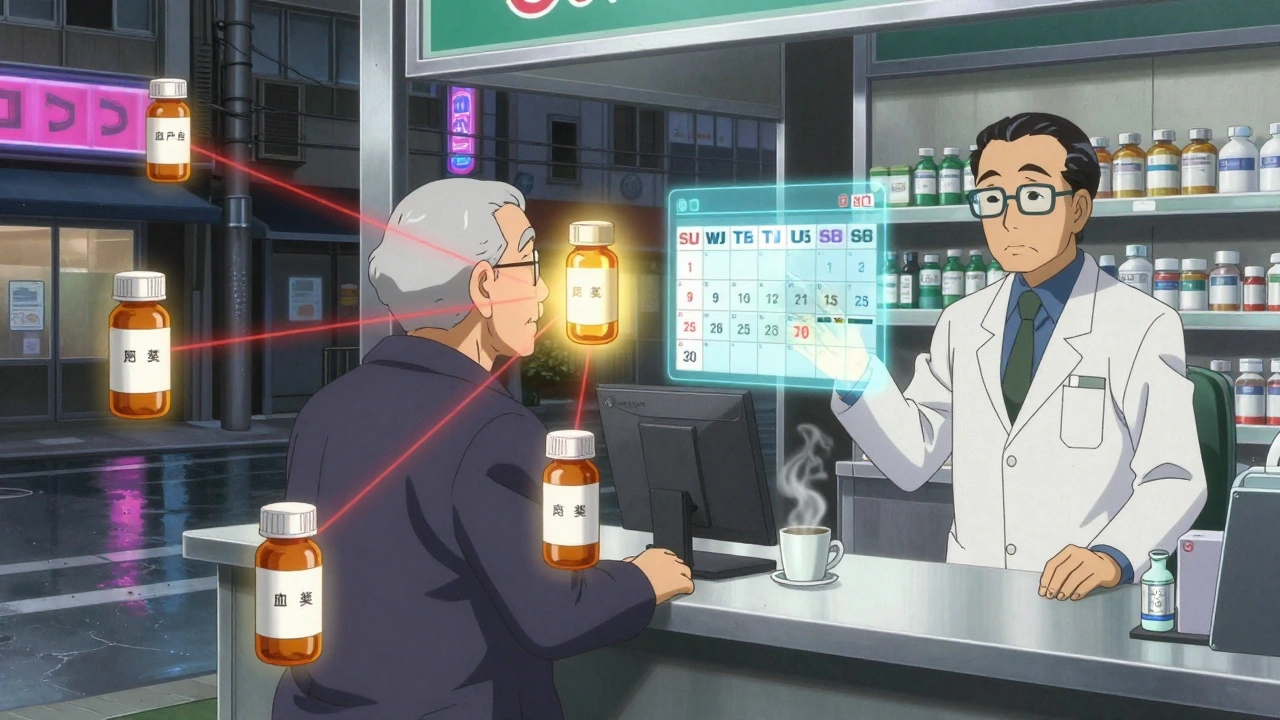
How to Coordinate Multiple Prescriptions for Fewer Copays
Learn how medication synchronization reduces pharmacy visits and copays by aligning all your chronic prescriptions to one monthly refill date. Save money and improve adherence with this simple, free pharmacy service.