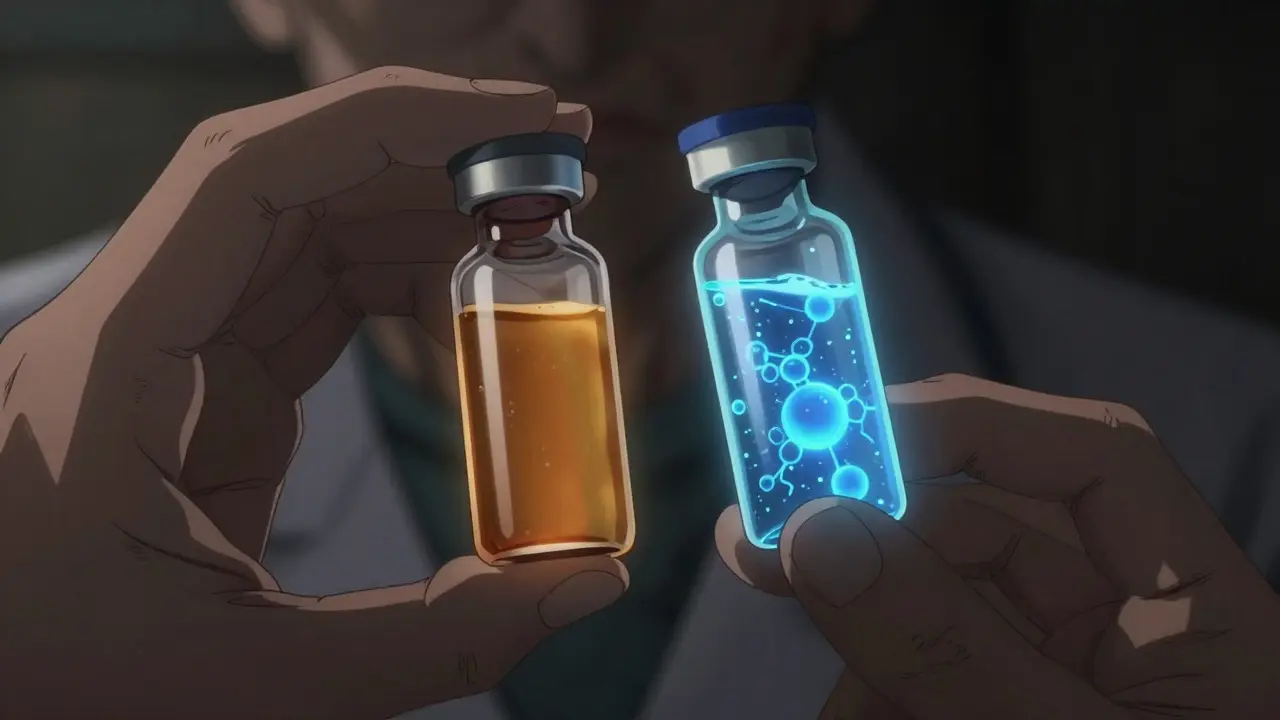
Imagine you’re holding two vials. One is the brand-name biologic your patient has used for years. The other is a biosimilar, which is a biological product highly similar to an existing FDA-approved reference product with no clinically meaningful differences in safety, purity, or potency. They look identical. They treat the same condition. But they are not the same thing. And confusing them with generic drugs? That’s a mistake that costs patients money and causes unnecessary anxiety.
If you are a healthcare provider, understanding these nuances isn’t just academic-it’s clinical necessity. With over 46 biosimilars approved in the US as of late 2023, the landscape is shifting fast. Yet, surveys show that only 38% of physicians feel extremely familiar with the official definition. This gap in knowledge directly impacts patient care, adoption rates, and cost savings that could reach $150 billion over the next decade.
The Core Difference: Why Biosimilars Aren’t Generics
The biggest hurdle in provider education is untangling the knot between biosimilars and generics. People often use the terms interchangeably, but the science behind them is worlds apart.
Generic drugs are chemical copies of small-molecule drugs that are exact replicas of the original brand-name drug. Think of aspirin or ibophenac. These molecules are simple, stable, and easy to manufacture. If you make it correctly, every pill is identical to the last. Because they are chemically identical, generics only need bioequivalence studies to prove they work the same way in the body.
Biosimilars, on the other hand, deal with large, complex proteins produced by living cells. You cannot simply copy-paste a biologic. The manufacturing process-using yeast, bacteria, or mammalian cells-is part of the product itself. Slight variations in temperature, pH, or cell line can change the final molecule. Therefore, a biosimilar is "highly similar" but not identical. It requires rigorous analytical, non-clinical, and clinical testing to prove that any minor differences do not affect safety or efficacy.
| Feature | Generic Drug | Biosimilar |
|---|---|---|
| Molecule Type | Small, simple chemical structure | Large, complex protein from living cells |
| Manufacturing | Chemical synthesis (easy to replicate) | Biological fermentation (complex, variable) |
| Regulatory Pathway | Abbreviated New Drug Application (ANDA) | Biology License Application (BLA) via Section 351(k) |
| Clinical Trials | Usually none required (bioequivalence only) | Required to demonstrate similarity in safety/potency |
| Substitution | Automatic at pharmacy level | Only if designated "Interchangeable" and state law allows |
Understanding this distinction is the first step in provider confidence. When you know why the regulatory pathway is different, you understand why the evidence base is robust, even if it looks different from generic data.
Decoding Interchangeability and Extrapolation
Two concepts cause the most friction in clinical practice: interchangeability and extrapolation of indications. Let’s break them down without the jargon.
Interchangeability is a special designation given to biosimilars that have undergone additional switching studies, allowing pharmacists to substitute them for the reference product without prescriber intervention, provided state laws permit it. Not all biosimilars are interchangeable. To earn this label, the manufacturer must conduct studies where patients switch back and forth between the reference product and the biosimilar multiple times. This proves that switching doesn’t increase safety risks or reduce effectiveness. As of 2023, only a subset of approved biosimilars hold this status. If a biosimilar is not interchangeable, the prescriber must specifically write it on the prescription.
Then there is Extrapolation of indications, which is the regulatory allowance for a biosimilar to be approved for multiple diseases based on clinical data from just one disease, provided the mechanism of action is the same across conditions. For example, a biosimilar might be tested in rheumatoid arthritis but approved for Crohn’s disease as well. This happens because the biological mechanism-say, blocking TNF-alpha-is the same in both conditions. Critics worry about this, but the FDA requires a strong scientific rationale. For providers, this means you don’t need separate clinical trials for every single use case; the foundational similarity study covers the core biology.

The Immunogenicity Question: Addressing Patient Fear
Patients often ask, "Will my body reject this new version?" This fear centers on immunogenicity-the risk that the immune system will produce antibodies against the drug. If antibodies form, the drug stops working or causes allergic reactions.
Here is the reality: all biologics, including originator brands, carry some risk of immunogenicity. Biosimilars are required to demonstrate that their immunogenicity profile is comparable to the reference product. Minor differences in inactive ingredients (like stabilizers or buffers) are allowed, but they must not trigger a clinically meaningful immune response. Studies consistently show that immunogenicity rates for biosimilars fall within the same range as their reference products. Educating yourself on the specific immunogenicity data for each biosimilar you prescribe empowers you to reassure patients with facts, not guesswork.
Why Provider Education Is Falling Short
Despite the clear benefits, adoption lags. In Europe, biosimilars capture up to 80% of the market for some products. In the US, penetration hovers around 25-32%. Why the gap? Education.
A 2021 survey revealed stark disparities. Hospital pharmacists scored 27% higher on biosimilar knowledge than community pharmacists. Rheumatologists led adoption at 68%, while endocrinologists trailed at 29%. Even more telling: 63% of physicians failed to correctly identify the difference between biosimilar and generic development pathways. This isn’t just about laziness; it’s about information overload and fragmented resources.
Many providers rely on manufacturer materials, which can feel biased. Others haven’t had formal training since residency. The result? Hesitancy. A study at UCSF Medical Center showed that before targeted pharmacist-led education, 58% of oncology providers hesitated to prescribe biosimilars. After six months of structured training, that number dropped to 12%. Confidence is contagious-and teachable.

Practical Steps for Effective Biosimilar Integration
You don’t need a PhD in molecular biology to prescribe biosimilars safely. You need a practical framework. Here’s how top-performing institutions approach it:
- Leverage Trusted Resources: The FDA’s Teaching Resource Guide offers 12 free modules covering development, regulation, and clinical use. Start there. Avoid unverified sources.
- Engage Clinical Pharmacists: Pharmacists are emerging as key educators. 76% of US hospitals now report pharmacist-led biosimilar initiatives. Build a partnership with your pharmacy team for real-time decision support.
- Master Your EHR: Documentation is a major pain point. 78% of hospitals report challenges tracking biosimilar administration separately. Learn how your system (e.g., Epic, Cerner) codes biosimilars. Ensure billing reflects the correct NDC to avoid claim denials.
- Communicate Clearly with Patients: Use plain language. Explain that the biosimilar is highly similar, rigorously tested, and often more affordable. Address fears about switching head-on. Provide written materials from reputable sources like the Arthritis Foundation or ASBM.
- Stay Updated on State Laws: Substitution rules vary wildly. Some states require immediate prescriber notification, others allow automatic substitution after 7 days, and some have no requirement. Know your local regulations to avoid legal pitfalls.
Looking Ahead: The Future of Biosimilar Adoption
The trajectory is clear. Biosimilar sales grew 18% year-over-year in 2022, reaching $12.3 billion globally. By 2027, projections suggest they’ll cover 45% of eligible biologics in the US. But growth depends on trust-and trust is built through education.
Initiatives are scaling up. The FDA expanded its curriculum to reach over 147 medical schools and 212 nursing programs. The American College of Rheumatology issued strong recommendations for biosimilar use in RA, backed by 37 clinical trials involving thousands of patients. Specialty societies are aligning guidelines, reducing ambiguity for frontline providers.
Your role is pivotal. You are the bridge between complex science and patient care. By investing time in understanding biosimilar differences, you unlock access to life-saving therapies, reduce financial toxicity, and lead your institution toward smarter, sustainable care models.
Are biosimilars safe compared to brand-name biologics?
Yes. Biosimilars must demonstrate no clinically meaningful differences in safety, purity, or potency compared to the reference product. They undergo rigorous testing, including clinical trials, to ensure equivalent outcomes. Post-market surveillance also monitors long-term safety continuously.
Can I automatically switch a patient from a brand biologic to a biosimilar?
Only if the biosimilar is designated as "interchangeable" AND your state laws permit automatic substitution. If it’s not interchangeable, you must specifically prescribe the biosimilar. Always check state regulations and insurance policies before switching.
What is the main difference between a biosimilar and a generic drug?
Generic drugs are exact chemical copies of small-molecule drugs. Biosimilars are highly similar versions of large, complex biologic proteins made by living cells. Because biologics are harder to replicate exactly, biosimilars require more extensive testing than generics to prove similarity.
Do biosimilars work for all the same conditions as the brand name?
Often, yes, through a process called extrapolation. If the mechanism of action is the same across diseases, a biosimilar tested in one condition may be approved for others. However, always verify the specific approved indications for the biosimilar you are prescribing.
How can I educate my patients about biosimilars effectively?
Use clear, non-technical language. Emphasize that biosimilars are rigorously tested, highly similar, and often more affordable. Address concerns about switching directly. Provide trusted educational materials from organizations like the FDA, Arthritis Foundation, or specialty societies to reinforce your message.
