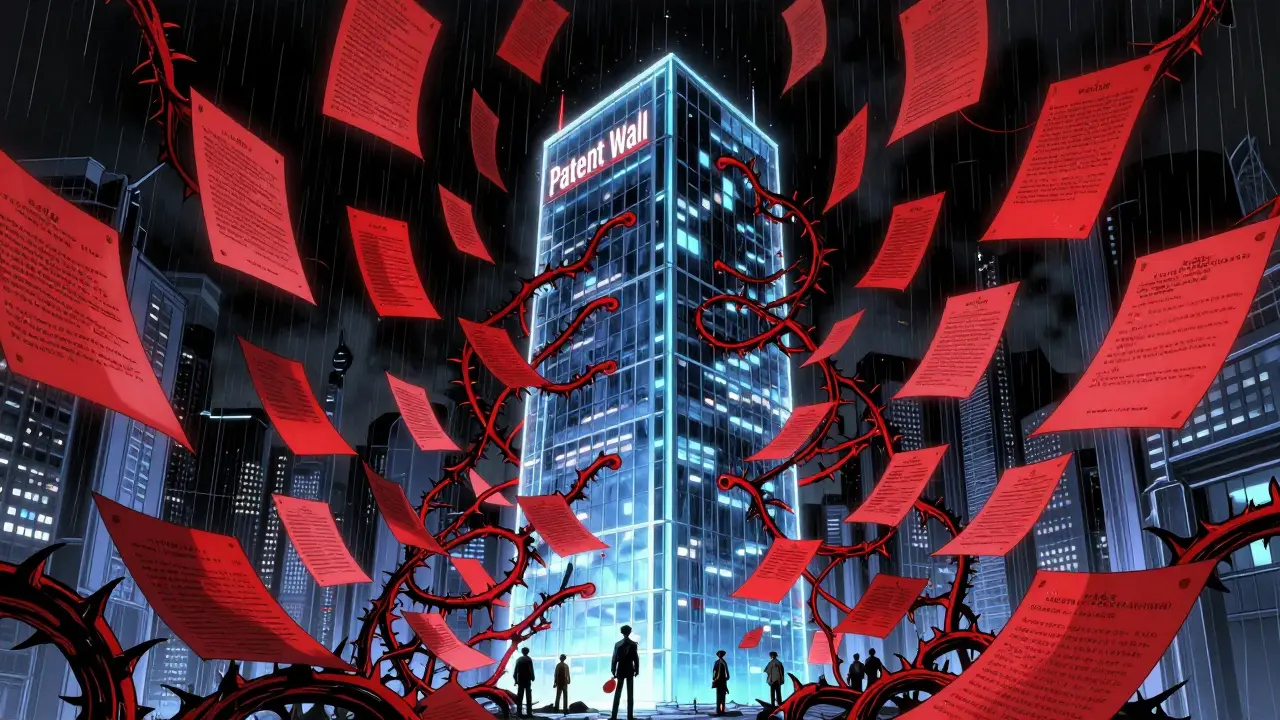
Imagine needing a life-saving medication, only to find out that the brand-name version costs hundreds of dollars a month while no cheaper generic option exists. You might assume this is just how expensive healthcare works, but the reality is far more complex. For many patients, the absence of a generic alternative isn't an accident-it's the result of legal strategies, scientific hurdles, and market dynamics designed to keep competition at bay.
While most common medications like statins or blood pressure pills have affordable generics, a significant portion of the pharmaceutical landscape remains locked behind high prices. Understanding why some drugs never see a generic competitor helps you navigate your prescriptions, anticipate costs, and advocate for better options with your doctor.
The Patent Wall: More Than Just a Time Limit
The most obvious reason a drug lacks a generic is patent protection. When a pharmaceutical company develops a new medication, they file patents to protect their investment. These patents grant them exclusive rights to manufacture and sell the drug, usually for about 20 years from the filing date. During this time, no one else can legally produce a copy.
However, it’s not as simple as a calendar ticking down. Companies often use a strategy called "patent thickets." This involves filing dozens or even hundreds of additional patents covering various aspects of the drug-not just the chemical formula, but also the manufacturing process, the dosage form, the packaging, and even specific methods of administration.
What is a patent thicket?
A patent thicket is a strategy where a company files multiple overlapping patents on different features of a single product. This makes it difficult and risky for competitors to enter the market because they might infringe on any one of these numerous patents, leading to costly lawsuits.
For example, AstraZeneca extended the exclusivity of Nexium (esomeprazole) well beyond its original expiration by leveraging secondary patents. Even after the core patent expired in 2001, legal battles over these secondary protections kept generics off the shelves until 2014. This tactic adds years to the monopoly period, keeping prices high long after the initial innovation phase has ended.
Scientific Hurdles: When Chemistry Gets Complicated
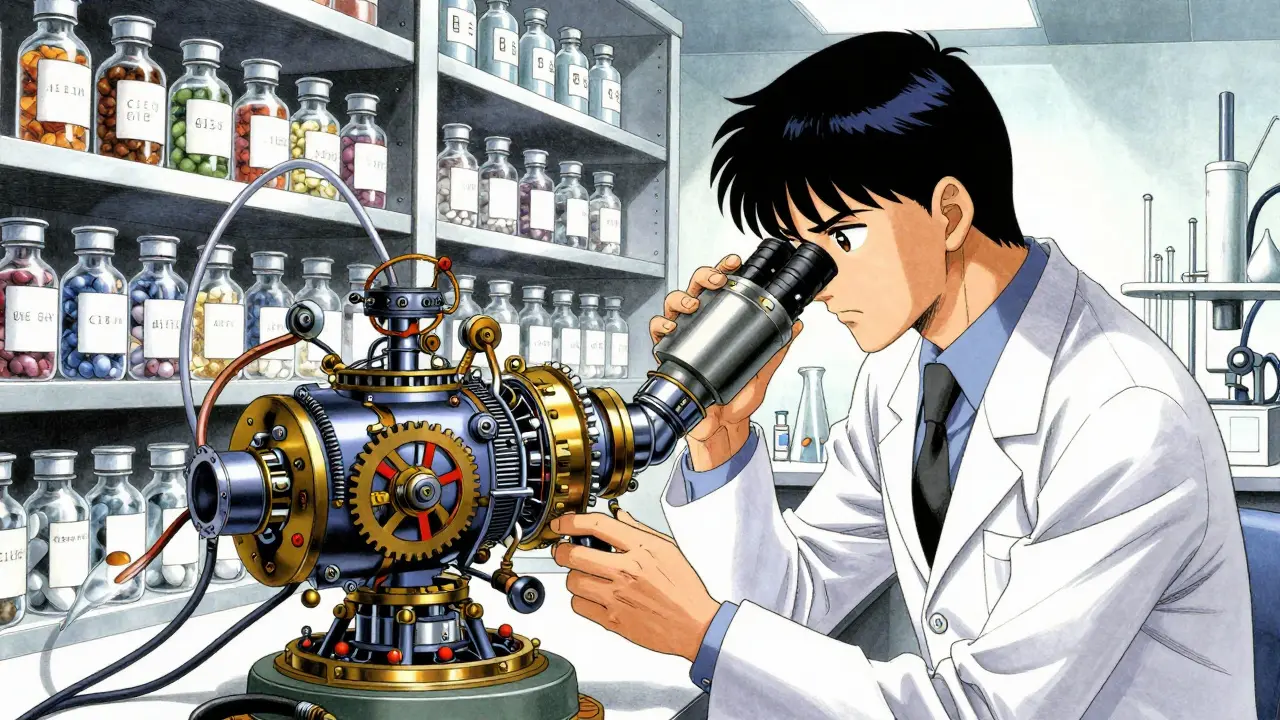
Sometimes, the barrier isn’t legal-it’s scientific. Generic drugs must be bioequivalent to the brand-name version, meaning they deliver the same amount of active ingredient into the bloodstream within a specific range (80%-125%). For simple pills, this is straightforward. But for complex formulations, replication is nearly impossible.
Consider Premarin, a hormone replacement therapy derived from pregnant mares' urine. It contains a mixture of estrogen compounds that are not fully characterized. Because the exact composition varies naturally, creating a precise synthetic copy that matches every component is scientifically unfeasible. Without a clear blueprint, generic manufacturers cannot prove bioequivalence, so no generic version exists despite the original patent expiring decades ago.
Another challenge lies in delivery systems. Drugs like Advair Diskus or Spiriva HandiHaler use specialized inhalers that control exactly how much medicine reaches the lungs. The device itself is patented and technically intricate. A generic manufacturer would need to reverse-engineer the entire device to ensure the drug disperses correctly. If the generic inhaler doesn't perform identically, the FDA won't approve it. This technical complexity deters many companies from attempting to create a generic version.
Biosimilars vs. Generics: The Biologic Barrier
A major shift in modern medicine is the rise of biologics-drugs made from living organisms rather than synthesized chemically. Examples include Humira (adalimumab) for autoimmune diseases and Enbrel (etanercept) for rheumatoid arthritis. These drugs are large, complex molecules that vary slightly between batches, unlike small-molecule drugs which are identical every time.
Because of this complexity, you can't make a true "generic" biologic. Instead, you create a "biosimilar," which is highly similar but not identical. The regulatory pathway for biosimilars is stricter and more expensive. Under the Biologics Price Competition and Innovation Act of 2009, originator biologics receive 12 years of data exclusivity. This means no biosimilar can even apply for approval during that window, regardless of patent status.
Humira serves as a prime example. Its core patents expired in 2016, but due to litigation and the complex biosimilar approval process, the first biosimilar didn't reach the U.S. market until 2023. That seven-year gap allowed AbbVie to maintain near-total market dominance, generating billions in revenue without competitive pressure.
Market Dynamics: Why Some Companies Stay Away
Even when patents expire and science allows for a generic, market forces sometimes prevent entry. Developing a generic drug still costs money-often millions for clinical trials and FDA submissions. If a drug treats a rare disease (an orphan drug), the potential customer base is tiny. The return on investment may not justify the risk, so no generic company steps up.
Additionally, "pay-for-delay" settlements play a role. In these deals, a brand-name manufacturer pays a generic company to stay out of the market. While controversial, these settlements are legal if structured carefully. They effectively delay competition, keeping prices high for consumers. The Federal Trade Commission has estimated that such practices cost American consumers billions annually.
There’s also the issue of "product hopping." Just before a patent expires, a brand company might launch a new version of the drug-a different formulation, a new dosage, or a combination pill. They then aggressively market this new version to doctors and patients, encouraging them to switch. By the time the old version’s patent expires, most users have moved to the new, still-protected product, leaving little incentive for generic makers to target the older version.
Impact on Patients and Healthcare Costs
The lack of generic alternatives has real-world consequences. According to GoodRx, brand-name drugs without generic competition cost an average of 437% more than those with generic options. For chronic conditions requiring lifelong treatment, this difference can mean tens of thousands of dollars over a lifetime.
Patients on specialty medications, such as those for cancer or autoimmune disorders, are disproportionately affected. Approximately 68% of oncology drugs lack generic alternatives due to their complexity. Medicare Part D data shows that beneficiaries taking non-generic medications spend significantly more out-of-pocket compared to those on generics. This financial burden can lead to skipped doses or abandoned treatments, worsening health outcomes.
| Drug Type | Generic Availability | Primary Barrier | Example |
|---|---|---|---|
| Small Molecule (Simple) | High | Patent Expiration | Lipitor (Atorvastatin) |
| Complex Formulation | Low | Manufacturing/Delivery Tech | Advair Diskus |
| Biologic | Very Low (Biosimilars Only) | Regulatory Exclusivity & Complexity | Humira (Adalimumab) |
| Orphan Drug | Low | Small Market Size | Gleevec (Imatinib) |
Navigating the System: What Can You Do?
If you’re stuck on a high-cost brand-name drug, don’t accept it as inevitable. Here are practical steps to explore alternatives:
- Talk to Your Pharmacist: Pharmacists are experts in therapeutic equivalence. Ask if there’s a different brand or generic that treats the same condition. For instance, if Viibryd was unavailable generically, pharmacists successfully switched many patients to sertraline, a generic antidepressant with similar efficacy.
- Check Patient Assistance Programs: Many brand-name manufacturers offer copay cards or assistance programs for uninsured or underinsured patients. Visit the drug’s official website to see if you qualify.
- Ask About Biosimilars: If you’re on a biologic, ask your doctor if a biosimilar is available. While not identical, they are clinically proven to be effective and often come with lower costs and manufacturer savings programs.
- Monitor Patent Status: Resources like the FDA Orange Book list patent expirations. Knowing when a patent is set to expire can help you plan for potential price drops or generic availability.
The Future of Generic Access
Regulatory bodies are cracking down on anti-competitive tactics. The CREATES Act of 2019 now requires brand-name companies to provide samples to generic developers for testing, removing a common stalling tactic. Additionally, the FDA’s recent initiatives prioritize the review of complex generics, leading to a 27% increase in approvals in 2022.
Looking ahead, biosimilar adoption is expected to grow significantly. By 2025, the number of approved biosimilars could reach 75, bringing more competition to the biologic market. However, ultra-complex drugs and orphan medications will likely remain without true generic alternatives for the foreseeable future due to insurmountable scientific and economic barriers.
Are generics always cheaper than brand-name drugs?
Yes, generics are typically 80-85% cheaper than their brand-name counterparts once they hit the market. However, if no generic exists, the brand-name price remains high due to lack of competition.
Is a biosimilar the same as a generic?
No. Generics are identical copies of small-molecule drugs. Biosimilars are highly similar versions of complex biologic drugs. They are not identical but are proven to have no clinically meaningful differences in safety or efficacy.
Why does the FDA allow brand-name drugs to stay expensive?
The FDA regulates safety and efficacy, not price. As long as a drug meets safety standards and patents/exclusivity periods are respected, the FDA does not intervene in pricing. Price competition is driven by market entry of generics or biosimilars.
Can I request a specific brand instead of a generic?
Yes, you can ask your doctor to write "dispense as written" on the prescription. However, this may result in higher out-of-pocket costs if your insurance plan favors generics. Always check with your insurer first.
How long does it take for a generic to appear after patent expiration?
It varies. For simple drugs, generics can appear immediately. For complex drugs or those involved in litigation, it can take several years. On average, patent thickets and legal challenges delay generics by 3-7 years beyond the initial patent expiry.

Aswin Narayan J
Let me tell you something about this whole patent thicket nonsense, it is absolute robbery on a global scale. In India, we see these pharma giants trying to block life-saving drugs for HIV and cancer because they want to protect their profit margins instead of saving lives. It makes my blood boil when I read about companies like AstraZeneca extending exclusivity for Nexium just by filing patents on the packaging or the delivery method. That is not innovation, that is greed dressed up in a lab coat. The fact that they can keep prices high for decades while people suffer is morally bankrupt. We need stronger laws that prioritize human health over corporate stock prices.
Jennifer Legore
This is such an incredibly informative post! :) I had no idea that the complexity of biologics was such a huge barrier to generic competition. It really highlights why healthcare costs are so out of control in the US. I appreciate how clearly you explained the difference between generics and biosimilars. It gives me hope that with more regulatory pressure, we might see some relief soon. Keep sharing these important insights!
Alyssa Zucker
I feel so overwhelmed reading this. My sister has been on Humira for years and the cost has always been a source of stress for our family. Knowing that the first biosimilar didn't even hit the market until 2023 after the patent expired in 2016 feels like a betrayal. It's hard to stay optimistic when the system seems designed to keep us paying through the nose. I just wish there was a simpler way to navigate all this without needing a law degree.
Brian Irwin
look i get that R&D is expensive but the pay-for-delay settlements are just plain shady. its basically bribery legalized. if a company wants to compete let them compete. the FDA needs to stop letting these tactics slide under the rug. also checking the orange book is a good tip but most patients dont have time to be patent lawyers. doctors should be doing more to push back on these prices
William Storm
Oh, please. Do you truly believe that the primary issue here is merely 'greed'? One must consider the immense capital risk undertaken by pharmaceutical firms. Without the promise of exclusive rights, who would invest billions into developing novel therapies? The 'patent thicket' is a necessary legal safeguard against free-riders who would otherwise drain the resources of innovators. Your simplistic view ignores the complex economic realities of drug development. It is charmingly naive, really.
Wendy Engelmann
I think William misses the point entirely. Innovation shouldn't come at the cost of accessibility. While I understand the need for ROI, the current system allows companies to game the rules rather than innovate. Product hopping is a clear example of this. They launch a slightly different version just before the patent expires and force everyone to switch. It's not about new science; it's about maintaining monopoly power. We need a balance that doesn't sacrifice patient welfare.
Lisa Thomas
Wow. Just wow. The part about Premarin being derived from pregnant mares urine blew my mind. Like seriously?? And no generic exists because its too complex to replicate exactly. This feels like a conspiracy theory but its real. I am so done with this industry. Why do we accept this level of absurdity in our healthcare system. Its outrageous and frankly terrifying :/
Nicholas Bowling
everyone is acting like generics are the holy grail. what if the generic doesnt work as well for you. i switched once and felt terrible. maybe the brand name is worth the money for some people. stop hating on big pharma so much. they provide jobs and research. you guys are just whining about prices without understanding the value. typical reddit mob mentality
Jay Foreman
Nicholas, you are absolutely wrong. Generics are bioequivalent by definition. If you felt terrible, it was likely due to other factors or the placebo effect. Blaming the generic manufacturer for your personal experience is lazy thinking. The fact that brand names cost 437% more on average is a moral failing of the system. Pretending that this price gouging is justified because 'they provide jobs' is disgusting. People are dying because they can't afford insulin. Wake up.
Stephanie Francis
This article is spot on. The CREATES Act is a step in the right direction, but it's not enough. We need stricter penalties for pay-for-delay agreements. It is unacceptable that consumers are footing the bill for these anti-competitive practices. I will definitely be asking my pharmacist about therapeutic alternatives next time I refill my prescription. Knowledge is power, folks! :)
Daniel Tremblay
Down here in Canada, we deal with similar issues, though our single-payer system mitigates some of the worst effects. But even we struggle with the lack of biosimilars for certain complex drugs. The 'orphan drug' argument is often used as an excuse to charge exorbitant prices for tiny markets. It's a cynical game. Asserting that this is 'just how it works' is surrendering to corporate tyranny. We need global cooperation to break these monopolies.
Henri-Paul Soulodre
The moral decay of our society is evident in how we tolerate this exploitation. To allow a corporation to hold a hostage situation over human health is abhorrent. These executives sleep soundly while families go bankrupt. It is a disgrace. We must demand immediate reform. No more excuses. No more delays. Justice for the patients who are being failed by this broken system. It is time for accountability.