Generic Drug Cost Savings Calculator
How Much Can You Save?
Enter the cost of your brand-name prescription to see your potential savings with the generic version.
Your Savings
Important: For most drugs, generics are FDA-approved and cost 80-85% less. However, for narrow therapeutic index drugs like warfarin, levothyroxine, or phenytoin, consult your doctor before switching.
The FDA requires generic drugs to be bioequivalent to brand-name versions. This means they work exactly the same way in your body.
Why Your Generic Pill Looks Nothing Like the Brand Name
You pick up your prescription and freeze. The little white oval you’ve been taking for months is now a big blue capsule with a weird stamp on it. Your first thought? Is this the right medicine? You’re not alone. Thousands of people panic when their generic drug changes shape, color, or size. But here’s the truth: generic drugs aren’t inferior. They’re not cheap knockoffs. They’re exact chemical twins to the brand-name versions - just with different packaging.
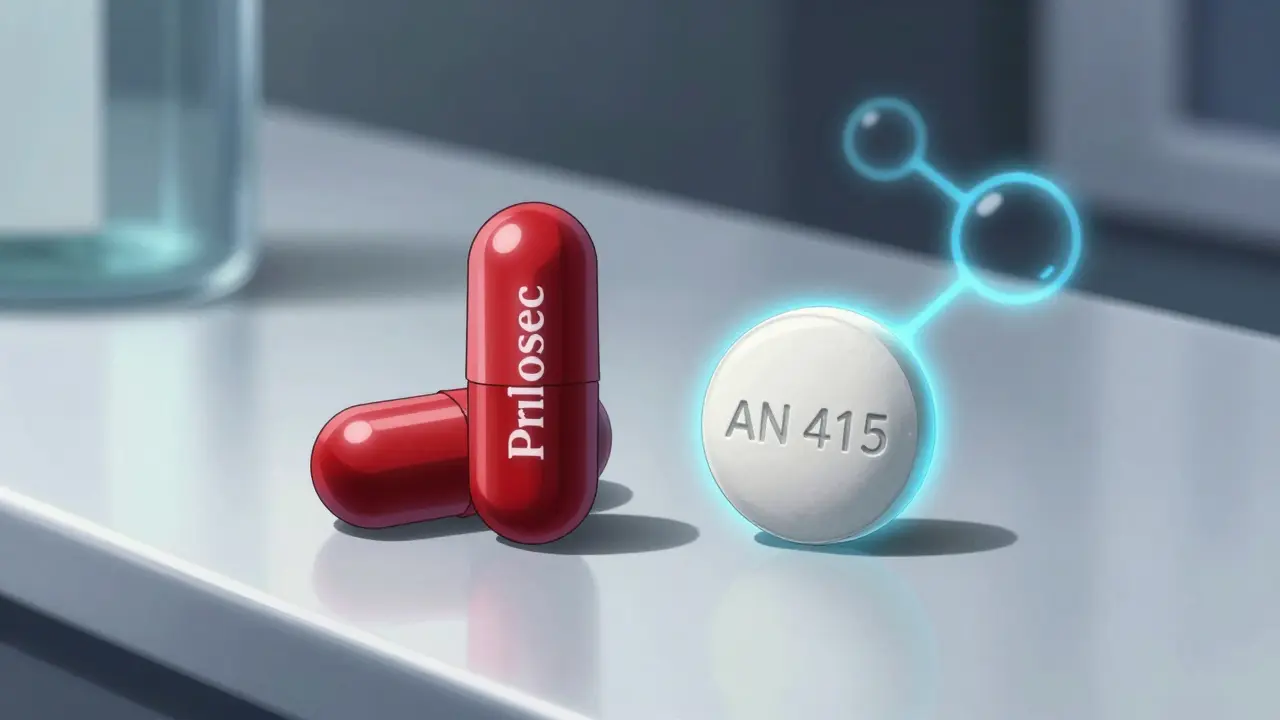
The U.S. Food and Drug Administration (FDA) doesn’t allow generic manufacturers to copy the look of brand-name pills. That’s trademark law, not safety. So if your omeprazole used to be a red capsule labeled "Prilosec," now it’s a white tablet with "AN 415" stamped on it. Same active ingredient. Same dose. Same effect. Just a different appearance.
What’s Actually in the Pill? The Active Ingredient Doesn’t Lie
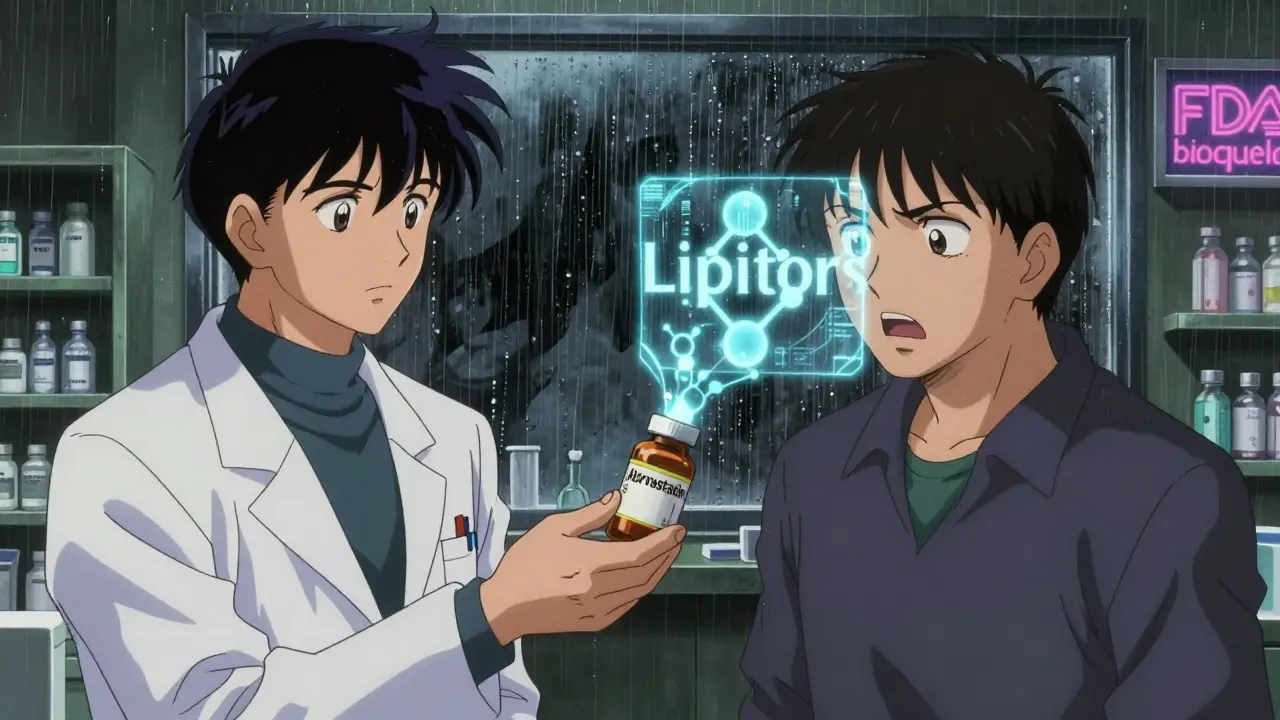
Every generic drug must contain the same active pharmaceutical ingredient (API) as the brand-name version. That means if you’re taking atorvastatin for cholesterol, your generic version has exactly the same molecule as Lipitor. No more, no less. The FDA requires this. It’s not a suggestion. It’s a legal requirement.
But here’s where people get confused: the inactive ingredients. These are the fillers, dyes, binders, and coatings - the stuff that holds the pill together or makes it easier to swallow. Generics can use different ones. That’s why one brand of levothyroxine might use cornstarch and another uses lactose. For most people, this doesn’t matter. But for those with rare allergies or sensitivities, it can. That’s why pharmacists ask if you have any allergies when filling a new prescription.
The FDA’s 2021 guidance says generic drug labels must match brand-name labels in every way that matters: indications, dosage, warnings, side effects, contraindications. The only difference? The brand name is gone. Instead, you see the chemical name - metformin, not Glucophage. losartan, not Cozaar. It’s simpler, cheaper, and just as accurate.
How Do We Know Generics Work the Same? The Bioequivalence Test
It’s not enough to say two drugs have the same ingredient. You need proof they behave the same way in your body. That’s where bioequivalence comes in.
The FDA requires generic manufacturers to run tests on 24 to 36 healthy volunteers. They measure two things: how fast the drug gets into your bloodstream (Cmax) and how much of it gets absorbed over time (AUC). The generic must fall within 80% to 125% of the brand-name drug’s numbers. That’s not a wide gap - it’s tighter than the natural variation between two batches of the same brand-name drug.
Dr. Ameet Nagpal, a pharmacy expert at Northwestern Medicine, put it plainly: "The 20% variability allowed in bioequivalence studies is actually smaller than what you see between different lots of the same brand-name pill." In other words, your brand-name drug today might be slightly different from the one you took last month - and that’s normal. The generic has to meet the same standard.
And the data backs it up. A 2021 study in JAMA Internal Medicine tracked over 2 million patients on generic versus brand-name cardiovascular drugs. No difference in heart attacks, strokes, or deaths. Another review in BMJ Open in 2023 analyzed 47 clinical trials. Same result: no drop in effectiveness.
Cost: The Real Difference
Here’s the part that matters most to most people: price.
Generic drugs cost 80% to 85% less than their brand-name counterparts. In 2023, a month’s supply of brand-name Lipitor (atorvastatin) cost $375.22. The generic? $4 at Walmart. That’s not a typo. That’s the power of competition.
From 2007 to 2016, generic drugs saved the U.S. healthcare system $1.67 trillion. In 2023 alone, they saved $313 billion. That’s not just money in your pocket - it’s money keeping people on their meds. A Kaiser Permanente survey found 78% of patients said generic cost savings helped them actually fill their prescriptions instead of skipping doses.
And it’s not just big drugs. The FDA says 90% of generics cost less than $10 per month. That’s less than a coffee. For people on fixed incomes, that’s life-changing.
When Generics Might Need Extra Care
Most of the time, switching from brand to generic is seamless. But there are exceptions.
Drugs with a narrow therapeutic index (NTI) are the tricky ones. These are medications where even tiny changes in blood levels can cause serious problems - either the drug stops working or becomes toxic. The FDA specifically flags three: warfarin (blood thinner), levothyroxine (thyroid hormone), and phenytoin (seizure medication).
For these, doctors and pharmacists often recommend sticking with one manufacturer. Why? Because even though each generic meets FDA standards, switching between different generic brands can cause small shifts in absorption. That’s why your endocrinologist might say, "Stick with the blue pill," even if it’s generic. It’s not about quality - it’s about consistency.
Some complex drugs are harder to copy. Insulins, monoclonal antibodies, and auto-injectors like EpiPens have delivery systems that are tough to replicate. That’s why you still see few generics for these. But that’s changing. In 2023, the FDA approved the first generic version of semaglutide (Ozempic), and 79 complex generics were approved that year - up 22% from 2021.
What Your Pharmacist Knows That You Don’t
In 49 out of 50 U.S. states, your pharmacist can automatically swap your brand-name drug for a generic - unless your doctor writes "Dispense as Written" on the prescription. That’s not a loophole. It’s policy. And it’s working.
Pharmacists switch thousands of patients to generics every week. One Reddit user, u/MedReviewExpert, said: "I’ve switched thousands of patients from brand to generic with zero therapeutic issues, except for a few cases with levothyroxine where we monitored TSH levels closely."
Doctors are on board too. The American Medical Association found 94% of physicians feel comfortable prescribing generics. The real issue isn’t clinical - it’s psychological. People worry about the change in appearance. A University of Michigan study found 12% of patients hesitated when their pill looked different. But after a quick explanation? 97% said they were fine.
How to Check if Your Generic Is Approved
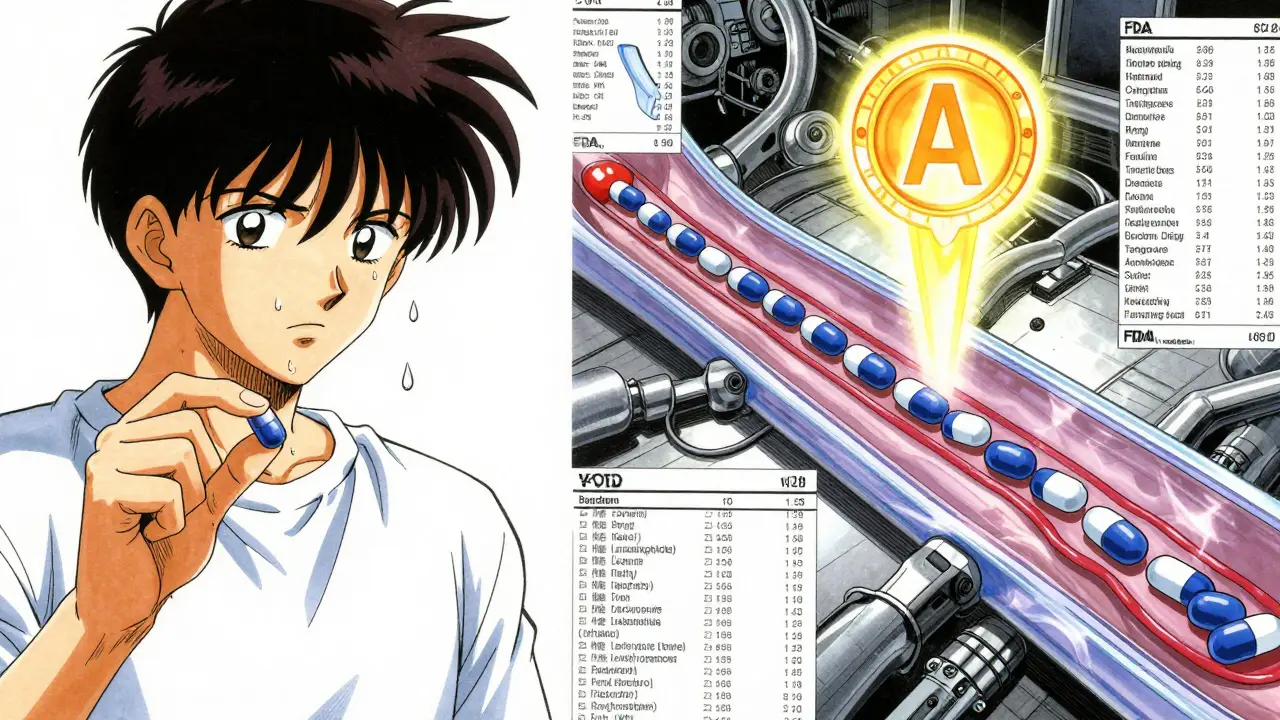
Don’t guess. Check the FDA’s Orange Book. It’s free. It’s public. And it’s the official list of all approved generic drugs and their therapeutic equivalence ratings.
Look for an "A" rating. That means the generic is therapeutically equivalent to the brand-name drug. An "B" rating? That means it’s not considered equivalent - usually because of delivery issues or formulation problems. You’ll rarely see "B" ratings for common pills. They’re mostly for complex drugs like inhalers or patches.
You can also use the FDA’s Generic Drug Program Dashboard. It shows you the real-time status of pending applications. If your generic is approved, it’s already in the system. No need to wait for your pharmacist to tell you.
What Patients Really Say
On Drugs.com, generic atorvastatin has a 6.6/10 rating from over 1,800 reviews. Brand-name Lipitor? 6.3/10 from 873 reviews. The difference? Not statistically meaningful. People praise the price. Some complain about side effects - but those side effects are the same as the brand. The pill didn’t change. Your body just reacted to the medicine, not the color.
One common complaint? "I thought the generic wasn’t working." But when they checked, they’d switched between two different generic brands. One had a different coating. One absorbed slightly faster. That’s why, for NTI drugs, staying with one manufacturer matters.
Bottom Line: Trust the Science, Not the Logo
Generic drugs are not second-rate. They’re not "cheap versions." They’re FDA-approved, bioequivalent, clinically proven copies of brand-name drugs - at a fraction of the cost.
The label differences? That’s trademark law. The color change? That’s to avoid confusion. The lower price? That’s competition working as it should.
If your doctor prescribes a brand-name drug and you’re worried about cost, ask: "Is there a generic?" If your pharmacist switches your pill, don’t panic. Check the name on the bottle. If it’s the same active ingredient, you’re fine. And if you’re on warfarin, levothyroxine, or phenytoin? Just let your doctor and pharmacist know you’re switching - and they’ll monitor you.
For 90% of prescriptions, generics are the smart, safe, and affordable choice. The science is clear. The data is solid. And the savings? They’re real.
Are generic drugs as safe as brand-name drugs?
Yes. The FDA requires generic drugs to meet the same strict standards for quality, safety, strength, purity, and performance as brand-name drugs. Every generic must prove it works the same way in your body through bioequivalence testing. There’s no difference in safety between the two.
Why do generic pills look different from brand-name ones?
U.S. trademark laws prevent generic manufacturers from making pills that look exactly like brand-name drugs. That’s why color, shape, size, or markings change. These differences are purely cosmetic and have zero effect on how the drug works in your body.
Can I switch between different generic brands?
For most drugs, yes. But for narrow therapeutic index drugs like warfarin, levothyroxine, or phenytoin, switching between generic brands can cause small changes in how your body absorbs the drug. Your doctor or pharmacist may recommend sticking with one manufacturer to keep levels stable.
How do I know if my generic is FDA-approved?
Check the FDA’s Orange Book online. It lists all approved generic drugs and their therapeutic equivalence ratings. Look for an "A" rating - that means it’s equivalent to the brand-name version. If your drug is listed and rated "A," it’s approved and safe to use.
Do generics take longer to work than brand-name drugs?
No. Bioequivalence testing ensures that generics reach the same level in your bloodstream at the same rate as the brand-name version. Any perceived delay is usually due to placebo effect or confusion from a different pill appearance - not slower absorption.
Why are some drugs still expensive even when generics exist?
Some drugs are complex - like biologics, insulin, or auto-injectors - and harder to copy. These are called complex generics or biosimilars, and they take longer to develop. Also, if only one generic manufacturer enters the market, prices may stay high until more companies compete. But the trend is moving toward more affordable options.

steve rumsford
I swear the first time my omeprazole switched from red to white I thought I got someone else's meds. Took it anyway. Still alive. Still not heartburning. Weird how your brain freaks out over color but not the actual chemical inside.
Aparna karwande
In India, we've been using generics for decades-no drama, no panic. The FDA’s 80-125% bioequivalence window? That’s not a loophole, it’s science. Meanwhile, Americans pay $400 for Lipitor like it’s a luxury watch. Your healthcare system is broken, not the pill.
Jessie Ann Lambrecht
I’m a pharmacist and I can’t tell you how many times I’ve had someone come in terrified because their metformin went from green to blue. I show them the bottle: same active ingredient, same dose, same expiration. 99% of the time they sigh and say, ‘Oh. So it’s just a costume change?’ Exactly. And yes, it’s still saving lives at $4 a month.
For NTI drugs like levothyroxine? We track TSH. But for statins, blood pressure meds, antibiotics? Switch away. The science is rock solid.
Kyle King
They’re not telling you the whole story. The FDA lets generics in because Big Pharma bribes them. You think the color change is about trademarks? Nah. It’s so you don’t realize they’re swapping in cheaper fillers that cause bloating, headaches, and depression. I’ve seen it. My cousin went from Lipitor to generic and started having panic attacks. They buried the reports.
Kamlesh Chauhan
generic good cheap no problem but why they change shape every time i get it like i dont even know what im taking anymore its just a pill in a bottle
Rachel Steward
Let’s deconstruct the myth. The FDA’s bioequivalence range of 80-125% is statistically meaningless when applied to individual pharmacokinetics. You’re assuming population averages translate to individual outcomes. They don’t. The JAMA study? It measured endpoints-heart attacks, strokes-but never looked at subclinical biomarkers. What about endothelial function? Inflammatory markers? Adherence rates? You’re conflating survival with physiological equivalence. And don’t get me started on the placebo effect of pill color. The mind is the most powerful drug delivery system we have. If you believe the generic is weaker, it will be. The pill doesn’t change. Your belief does.
Elen Pihlap
I just switched to generic levothyroxine and now I’m exhausted all the time and my hair is falling out. I know it’s probably in my head but I can’t stop thinking about it. I miss my pink pill.
Sai Ganesh
In India, generics are the norm. We don’t have the luxury of brand-name drugs. But here’s the thing-quality control matters more than the label. I’ve seen Indian generics that were better than some U.S. brand-name versions. It’s not about country or cost. It’s about manufacturer. Check the batch. Check the approval. Trust the data, not the logo.
Paul Mason
I used to be skeptical too. Then I switched my dad’s blood pressure med to generic. He saved $200 a month. No side effects. No issues. He’s still alive and kicking. I’m not saying everyone’s the same, but for 90% of people? It’s fine. Stop overthinking it.
Andrew N
The real issue isn’t the drug. It’s the lack of transparency. If the FDA approved it, why isn’t there a public database showing which manufacturer made which batch? Why can’t you choose? Why do pharmacies switch without consent? It’s not about safety. It’s about control. And the fact that we’re told to trust the system while being denied the right to know? That’s the real problem.