Did you know that only half of patients actually take their chronic medications as prescribed? That’s not a typo. According to the World Health Organization, adherence rates for long-term conditions hover around 50%. This gap often isn’t about willpower; it’s about understanding. You might have left the pharmacy with a bag of pills but without a clear map of how they fit into your life. This is where patient education materials become your most powerful tool.
Your pharmacist is more than a dispenser of drugs. They are the healthcare professional who knows your specific medication regimen better than almost anyone else. Yet, many patients passively accept whatever handout is handed over the counter. To get the best outcomes, you need to be proactive. You need to ask for the right things at the right time. Here is exactly what you should request to turn a quick pickup into a comprehensive care plan.
The Core Components of Effective Medication Guidance
Not all printed sheets are created equal. The American Society of Health-System Pharmacists (ASHP) established guidelines in 1997 that define what quality education looks like. These standards were updated significantly by the Joint Commission of Pharmacy Practitioners (JCPP) in May 2025 under the new Pharmacists' Patient Care Process. If you are receiving a generic flyer, it might miss critical details specific to your situation.
When you pick up a new prescription, ensure the material covers these nine essential elements. If one is missing, ask for clarification immediately:
- Medication Identity and Purpose: Not just the brand name, but the generic name and exactly what condition it treats.
- Dosage Details: How much to take, how often, and for how long. Does it matter if you take it with food?
- Administration Technique: For inhalers, injections, or eye drops, technique matters as much as the drug itself.
- Missed Dose Protocol: What to do if you forget? Should you double up or skip? This varies by drug.
- Expected Benefits and Timeline: When will you feel better? Some meds work in hours, others take weeks.
- Common Side Effects: Which ones are normal and which require a call to the doctor?
- Self-Monitoring Methods: Do you need to check blood pressure, blood sugar, or weight regularly?
- Storage Requirements: Does it need refrigeration? Away from light?
- Interactions and Contraindications: Foods, other drugs, or supplements to avoid.
Requesting this level of detail ensures you aren't guessing. It transforms vague instructions into actionable steps.
Why Pharmacist Materials Beat Doctor Notes on Specifics
You might wonder why you can't just rely on what your doctor said. While doctors diagnose, pharmacists specialize in the mechanics of medication. A 2023 workforce survey by the American College of Clinical Pharmacy found that pharmacists average 6.2 years of clinical experience specifically in medication therapy management. This depth of focus allows them to catch nuances that broader medical training might overlook.
Consider insulin injections. A doctor might prescribe Lantus and tell you to inject it subcutaneously. A pharmacist, however, can show you *how* to rotate sites to prevent lipodystrophy. In a 2024 Reddit thread, one user noted that a customized handout from their pharmacist showing injection site rotation improved their adherence immediately because their doctor had never explained the 'why' behind the rotation. Similarly, for inhalers, 87% of patients report greater clarity from pharmacist demonstrations compared to physician instructions, according to a 2022 study in the Journal of the American Pharmacists Association.
Pharmacists also bridge the gap between complex pharmaceutical data and daily life. They translate technical jargon into plain language. If you have limited health literacy, this is crucial. The National Assessment of Adult Literacy indicates that 80 million U.S. adults struggle with reading comprehension. Standard medical documents are often written at a college-level reading grade. Your pharmacist should provide materials written at a sixth-grade level or lower. If the handout you receive feels like a textbook, ask for a simpler version.
Overcoming Barriers: Language, Literacy, and Cost
Education fails if it doesn't reach you in a way you can understand. This means addressing three major barriers: language, visual ability, and financial strain.
Language Access If English isn't your first language, don't settle for a translation app. The Patient Education Reference Center (PERC) offers over 15,000 evidence-based handouts in both English and Spanish. As of recent updates, 92% of common medications have Spanish versions available. Ask your pharmacist specifically for the Spanish-language monograph if applicable. UpToDate, another major resource used by 85% of U.S. teaching hospitals, provides patient education topics in 18 languages. Ensure the material matches your preferred language to avoid misinterpretation of dosing schedules.
Visual and Cognitive Accessibility For elderly patients or those with visual impairments, standard text is often insufficient. ASHP guidelines recommend that materials be field-tested on visually impaired consumers. Look for large fonts, high-contrast colors, and bulleted lists rather than dense paragraphs. If you wear glasses or have low vision, ask for a digital version you can enlarge on a tablet, or request verbal confirmation of key points while looking at the actual pill bottles. Showing the physical color and size of the pill helps distinguish similar-looking medications, a practice that increases proper administration techniques from 41% to 76%, according to a 2023 Pharmacy Times survey.
Financial Transparency This is the most overlooked area. Only 18% of patients report that their pharmacist discussed lower-cost alternatives, even though 62% of them needed them, according to Kaiser Family Foundation data. Non-adherence costs the U.S. healthcare system $300 billion annually, largely driven by out-of-pocket expenses. When picking up a new med, ask: "Are there generic options? Are there manufacturer coupons? Is there a different formulation that might be cheaper?" Your pharmacist has access to real-time pricing tools that you likely don't. Making this part of your routine requests can save hundreds of dollars per year.
The Power of Personalized Schedules and Return Demonstrations
A generic schedule says "Take twice daily." A personalized schedule says "Take one with breakfast and one with dinner." The difference sounds small, but it impacts adherence significantly. The American College of Clinical Pharmacy recommends asking for a personalized medication schedule that fits your daily routine. A 2023 study in the Annals of Pharmacotherapy found that 73% of patients reported improved adherence when provided with such tailored schedules.
If you are on multiple medications, ask for a Med Sync service. This aligns all your prescriptions to be picked up on the same day each month. A 2022 University of Michigan study showed 89% patient satisfaction with this program, primarily because it simplified the process and allowed for a single, comprehensive counseling session.
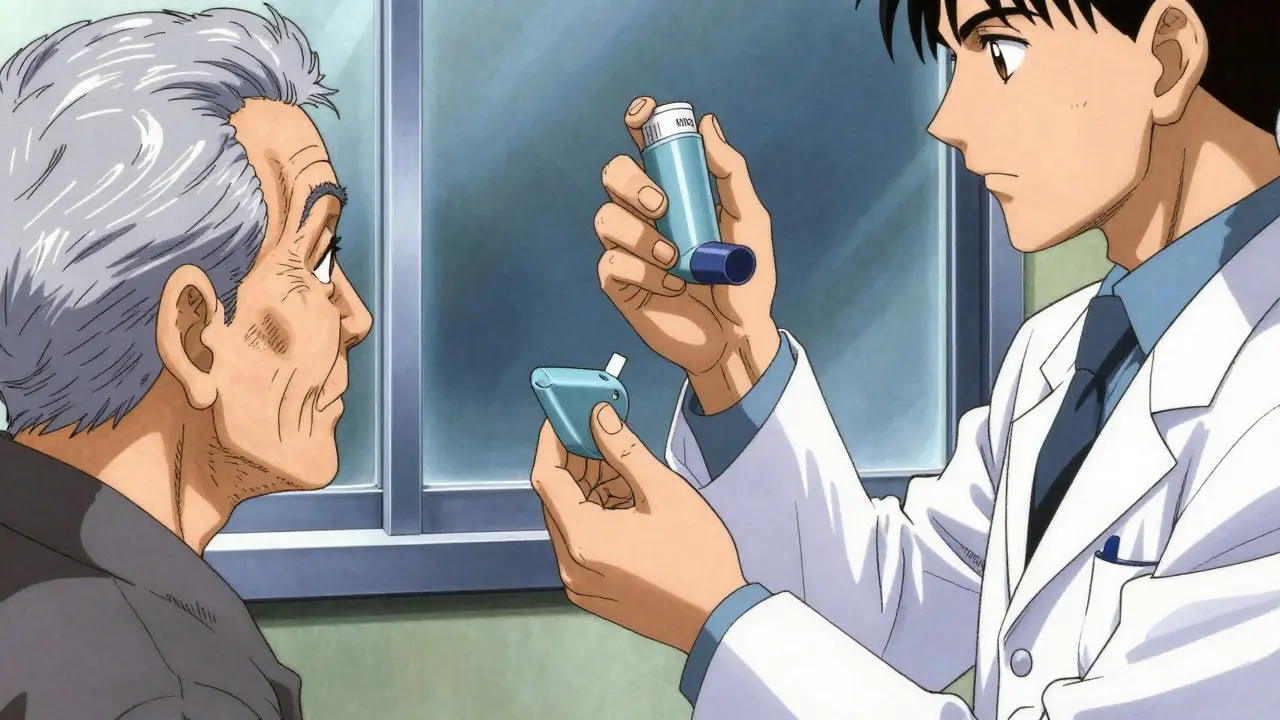
Another critical request is a "return demonstration." Don't just listen to the explanation; show them you understand. If you are starting an inhaler, use a spacer or dummy device to demonstrate your technique. If you are starting an injection, practice on a cotton ball or foam pad. Asking your pharmacist to watch you perform the task confirms that you have the skill to execute it safely at home. This active participation is a core component of the 2025 JCPP framework, which emphasizes confirming patient understanding before they leave the counter.
What to Ask For: A Practical Checklist
Next time you visit the pharmacy, keep this list in mind. You don't need to memorize it; you can even print it out and hand it to the pharmacist. It signals that you are an engaged partner in your own care.
- Verified Handouts: Ask for medication-specific handouts that align with current JCPP or ASHP guidelines, not just old brochures.
- Technique Demonstration: Request a live demo for any device-based medication (inhalers, pumps, patches).
- Return Demonstration Opportunity: Ask to show the pharmacist how you will administer the med.
- Plain Language Version: If the material is complex, ask for a simplified summary or a video link.
- Written Documentation: Confirm that the counseling was documented in your record, especially if you have complex needs.
- Barrier-Specific Resources: Ask for large-print, translated, or digital formats based on your needs.
- Cost Analysis: Ask about generics, coupons, or alternative therapies that might be more affordable.
Using the "7 Essential Questions" framework endorsed by ASHP can also guide your conversation: 1. What is this medication for? 2. How and when should I take it? 3. What should I do if I miss a dose? 4. What side effects should I expect? 5. How will I know if it's working? 6. How should I store it? 7. Is there anything else I need to know?
Navigating the Digital Shift and Future Standards
The landscape of patient education is changing fast. By January 2026, Medicare Part D plans will be required to include pharmacist-conducted medication therapy management with comprehensive education as a benefit. This affects 52 million beneficiaries and means that structured education is becoming a standard expectation, not a luxury.
Digital tools are also expanding. Platforms like UpToDate Patient Education offer multimedia resources, including videos and interactive modules. The FDA is even proposing QR codes on Medication Guides that link to video demonstrations. When you pick up a high-risk medication, ask if there is a digital companion or a video tutorial available. This can be particularly helpful for caregivers who need to assist with administration.
However, technology shouldn't replace human interaction. The average counseling time in chain pharmacies is only 1.8 minutes, according to a 2024 University of Illinois study. This is rarely enough for deep dives. By requesting specific materials and asking targeted questions, you extend that interaction effectively. You turn a transactional exchange into a therapeutic partnership.
Frequently Asked Questions
Do pharmacists have to give me written information?
While federal law (OBRA '90) mandates oral counseling for Medicaid patients, 47 states have additional requirements for documentation or written materials. Even where not strictly mandated, ASHP guidelines recommend providing supplemental written materials to reinforce oral counseling. You always have the right to request them, and most pharmacies are happy to provide them from databases like PERC or UpToDate.
What if my pharmacist rushes through the counseling?
A 2024 Consumer Reports survey found that 42% of patients felt rushed, particularly in chain pharmacies. If this happens, politely say, "I'd like to make sure I understand this correctly," and pause. Ask for a specific handout or a follow-up appointment if the issue is complex. You can also request a callback number for questions that arise later.
Are online drug information sites as good as pharmacist materials?
Online sites like Epocrates or WebMD provide general information, but they lack personalization. A 2022 study showed that pharmacist-provided materials offer greater clarity on administration techniques. Online resources are good for background reading, but pharmacist materials are tailored to your specific dose, interactions, and lifestyle, making them more reliable for daily use.
How can I check if my medication is safe to take with my other drugs?
Bring all your current prescriptions, over-the-counter meds, and supplements to the pharmacy. Ask the pharmacist to run a full interaction check. They have access to comprehensive databases that flag potential conflicts. This is a free service in most settings and is one of the most valuable uses of your pharmacy visit.
What is a Medication Guide and why is it important?
A Medication Guide is a document required by the FDA for certain high-risk drugs. It explains serious risks and benefits. However, a former FDA Division Director noted that pharmacist-led counseling doubles the effectiveness of these guides in patient comprehension. Always read the guide, but also ask your pharmacist to explain the key points in plain language.
