
What Immunosuppressants Do and Why They’re Lifesaving
After a transplant, your body sees the new organ as an invader. It’s not being ungrateful-it’s just doing what its immune system was designed to do: fight anything foreign. That’s where immunosuppressants come in. These drugs calm down your immune system so it doesn’t attack the kidney, heart, liver, or lung you just received. Without them, rejection happens fast-sometimes within days. Today, thanks to these medications, most transplant patients live for decades with their new organs.
But here’s the catch: suppressing your immune system isn’t harmless. It’s like turning down the volume on an alarm system. You stop the false alarms (rejection), but you also miss the real ones (infections, cancer). That’s why safety isn’t optional-it’s the core of long-term survival.
The Four Main Types of Immunosuppressants and Their Risks
Doctors don’t use just one drug. They combine them to get the best balance. Each class works differently-and each has its own set of dangers.
- Calcineurin inhibitors (cyclosporine, tacrolimus): These are the backbone of most regimens. They stop T-cells from sounding the alarm. But they’re tough on the kidneys. About 30-50% of people on these drugs develop long-term kidney damage. High blood pressure, high potassium, and low magnesium are common. They also raise cancer risk by 2 to 4 times.
- Corticosteroids (prednisone): These reduce inflammation and immune activity across the board. But they cause weight gain, bone thinning (affecting 30-50% of long-term users), diabetes (10-40% of patients), and heart problems. Many centers now try to reduce or stop them after the first year.
- Antiproliferatives (mycophenolate, azathioprine): These stop immune cells from multiplying. Side effects? Nausea, vomiting, diarrhea in up to half of patients. Low white blood cell counts (neutropenia) happen in 10-20%. That means you get sick more easily.
- mTOR inhibitors (sirolimus, everolimus): These are used when kidney damage from calcineurin inhibitors becomes a concern. They’re gentler on the kidneys but bring new risks: delayed wound healing (20-30%), dangerous lung inflammation (pneumonitis in 1-5%), and high cholesterol. Everolimus has a black box warning: it can cause kidney clotting and graft loss within 30 days after transplant.
Why Missing a Dose Can Be Deadly
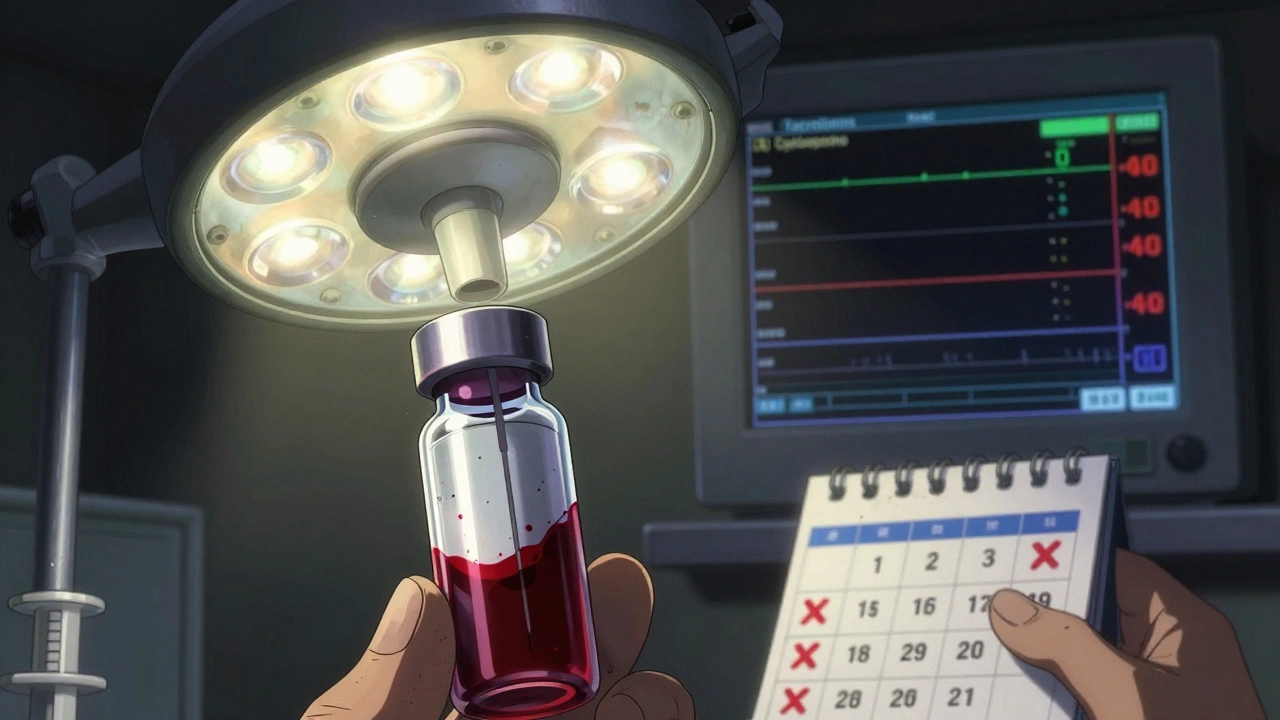
One missed pill won’t kill you-but missing one every week? That’s a different story.
A study of 161 kidney transplant patients found that 55% were nonadherent. That means more than half weren’t taking their meds as prescribed. Some skipped doses because they forgot. Others couldn’t afford them. Some thought they felt fine and didn’t need them anymore. All of these choices lead to the same place: rejection.
Heart transplant patients who skip meds are 3.5 times more likely to develop transplant coronary disease. For lung transplant patients, nonadherence can mean losing the organ within months. The data is clear: adherence is the single most important factor between living 10 years and living 20.
Simple fixes help: once-daily pills, pillboxes, phone alarms, and apps that send reminders. One study showed these tools boosted adherence by 15-25%. If your regimen feels overwhelming, talk to your transplant team. There are simpler combinations available.
Infection Risk: The Hidden Enemy
Your immune system isn’t just fighting rejection-it’s also fighting off colds, flu, and worse. With immunosuppressants, even a minor cold can turn serious.
That’s why everyone gets antibiotics and antivirals for the first 3-6 months after transplant. Cytomegalovirus (CMV) is the biggest threat. If you get a kidney from a donor who had CMV and you didn’t, your risk of infection jumps to 30-70% without prevention.
But it’s not just viruses. Fungi and bacteria can sneak in too. That’s why handwashing isn’t just advice-it’s survival. Wear a mask in crowded places. Avoid gardening or cleaning cat litter. Stay away from people who are sick. Even a small cut can become a portal for infection if your defenses are down.
Long-Term Side Effects: What No One Tells You
Most patients focus on the first year. But the real battle lasts decades.
Chronic kidney damage from calcineurin inhibitors is common. Many end up needing dialysis again-not because the transplant failed, but because the drugs damaged the new kidney. That’s why some patients switch to mTOR inhibitors later on, even if they’re less convenient.
Diabetes from steroids? It’s not rare. Osteoporosis? Up to half of long-term users lose bone density. Skin cancer risk? It’s 100 times higher than in the general population. That’s why annual skin checks are mandatory.
And then there’s the emotional toll. Taking five pills every day, forever. Worrying about every fever. Feeling like a patient even when you feel fine. It’s exhausting. That’s why mental health support is part of care-not a bonus.
When and How Medications Are Adjusted
At first, you’ll take 3-4 drugs daily. After a year, most people drop to 2-3. Doses are slowly lowered as your body learns not to reject the organ.
Doctors don’t guess. They monitor drug levels in your blood. Too high? You risk kidney damage and infections. Too low? Rejection kicks in. That’s why regular blood tests aren’t optional. They’re your early warning system.
Some centers now use biomarkers-tiny signals in your blood-to predict rejection before it happens. This lets them reduce drug doses safely in low-risk patients. In some cases, CNI exposure is cut by 30-50% without increasing rejection rates. Personalized medicine is here.
What Happens If the Transplant Fails?
If your new organ stops working, stopping immunosuppressants is often the right move. Why keep taking drugs that harm you if they’re no longer protecting anything?
But don’t quit cold turkey. Abruptly stopping can cause sudden inflammation in the organ, leading to severe symptoms: reduced urine output (kidney), abdominal pain and swelling (liver), cough and shortness of breath (lungs), or heart failure (heart).
Your team will guide you through a safe taper. You’ll still need monitoring because your immune system can bounce back fast. And if you’re eligible, you might be put back on the waiting list.
What You Can Do Today
- Take every pill, every time-even if you feel great.
- Set phone alarms for each dose. Use a pill organizer.
- Know your drug names and why you take them.
- Report every fever, rash, or unusual symptom immediately.
- Get skin checks every year. Ask your doctor about cancer screening.
- Don’t take herbal supplements or over-the-counter meds without approval. Many interfere with immunosuppressants.
- Connect with other transplant patients. You’re not alone.
Transplant medicine has come a long way since 1954. Back then, rejection was almost guaranteed. Today, most people live years longer than they would on dialysis. But the drugs that make this possible are powerful-and dangerous if misused. The goal isn’t just to survive. It’s to live well. And that means treating your meds with the respect they deserve.
Can I stop taking immunosuppressants if I feel fine?
No. Feeling fine doesn’t mean your immune system has stopped trying to reject the organ. Stopping these drugs-even for a few days-can trigger acute rejection, which may lead to organ failure. Always consult your transplant team before making any changes.
Do all transplant patients take the same medications?
No. Medications are tailored to the organ type, your health history, and how your body responds. For example, sirolimus is avoided in liver and lung transplants due to higher risks. Heart transplant patients often get different combinations than kidney recipients. Your team designs your regimen based on your unique needs.
How often do I need blood tests?
Right after transplant, you may need blood tests twice a week. After the first few months, it usually drops to once a month. By the second year, many patients go every 2-3 months. But if your levels are unstable or you’re sick, you may need more frequent checks. Always follow your center’s schedule.
Can immunosuppressants cause cancer?
Yes. Long-term use increases cancer risk by 2 to 4 times compared to the general population. Skin cancer is the most common, but lymphoma and other cancers also occur more frequently. Regular skin checks, sun protection, and cancer screenings are essential parts of lifelong care.
Are there new drugs coming that are safer?
Yes. Researchers are working on drugs that teach the immune system to accept the new organ without suppressing the whole system. Some are testing biomarker-guided therapy to lower doses safely. Others are exploring tolerance induction-where the body learns not to attack the transplant. These aren’t widely available yet, but they’re the future of transplant care.
Next Steps for Transplant Patients
If you’re new to immunosuppressants, start with these three actions: write down your meds and times, set three daily alarms, and schedule your first follow-up blood test. If you’ve been on them for years, check if you’re due for a skin exam or bone density scan. Don’t wait for symptoms to act. Prevention is your best defense.

Tejas Bubane
This post reads like a pharmaceutical ad with footnotes. Who the hell decided we need five different drugs just to keep a kidney from being a traitor? And don't get me started on the 'annual skin checks'-like I'm gonna spend my weekends getting zapped by dermatologists while my insurance laughs all the way to the bank.
Maria Elisha
I took my tacrolimus at 7am like clockwork but still got a cold last week. Guess my immune system just needed a vacation.
Lisa Whitesel
You people are so naive. The real reason they keep you on these drugs is because pharma owns the FDA. Look up the 2017 Congressional testimony on CNI profit margins. They don't care if you live 20 years-they care if you buy 20 years of pills.
Andrea Petrov
I read this and immediately thought-what if the organ isn't even *real*? What if it's a bioengineered implant and they're just using 'rejection' as a cover to keep you hooked on drugs? I know a guy whose cousin's neighbor got a transplant and then vanished. No obituary. Just... gone. And his meds? Still being billed monthly.
Sabrina Thurn
The shift toward biomarker-guided dosing is genuinely revolutionary. We're moving from population-based protocols to dynamic, patient-specific immunosuppression. Studies from Mayo and Johns Hopkins show that T-cell receptor clonality and donor-derived cell-free DNA can predict subclinical rejection with >90% specificity. This allows for CNI minimization without increasing rejection risk-finally, precision medicine in transplant care.
Richard Eite
USA has the best transplant outcomes in the world. Other countries? They're still using 1980s protocols. If you're on immunosuppressants and you're not in America, you're basically playing Russian roulette with your new organ. Period.
Ronald Ezamaru
I'm a liver transplant recipient from '19. Took prednisone for 3 years. Gained 60 lbs, got diabetic, broke my hip falling out of bed. But I'm alive. And I'm not mad. The drugs are hell, but the alternative was dying on a gurney. I still take my pills. Every. Single. Day. No excuses.
Larry Lieberman
Just got my first CMV prophylaxis script 😅 I'm now officially a walking immunocompromised NPC. Anyone else feel like they're in a video game where the only quest is 'Don't Die From a Common Cold'?
Ajit Kumar Singh
In India we dont have access to these fancy drugs or blood tests or alarms or pill boxes so we take what we get and pray to god and our ancestors and hope for the best if you think your life is hard just imagine trying to survive on a single pill a day when your family has to sell their cow to afford it
Simran Chettiar
The existential burden of perpetual pharmacological dependence is not merely physiological but ontological-each pill becomes a sacrament of survival, a daily ritual that reifies the boundary between self and other, between the body that was and the body that must be maintained through chemical subjugation. We are no longer patients-we are custodians of synthetic harmony, forever negotiating the paradox of life sustained by systemic suppression.
Iris Carmen
i took my meds yesterday but forgot today so i just doubled it today lol whoops
Rich Paul
The real issue isn't adherence-it's that most docs still use CNI trough levels like they're reading tea leaves. We need more pharmacogenomics. I've seen patients with identical troughs but wildly different rejection rates because of CYP3A5 polymorphisms. Stop guessing. Start sequencing.