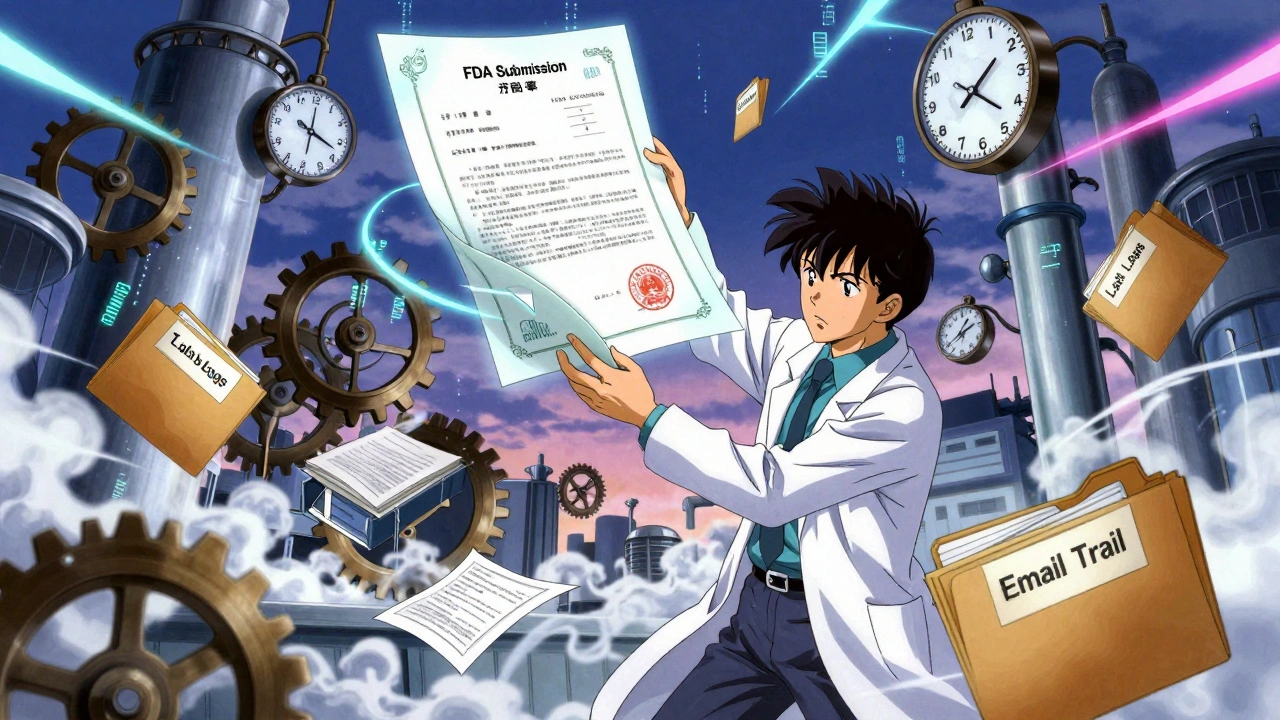
When a pharmaceutical company spends over a decade and $2.6 billion to develop a new drug, they don’t just want to recover costs-they need to make a return before generics take over. But here’s the catch: the clock on their patent starts ticking the moment they file it, often years before the FDA even approves the drug. By the time the drug hits the market, half the patent life might already be gone. That’s where patent term restoration comes in. It’s not a loophole. It’s a legal fix built into U.S. law to balance innovation and access.
What Is Patent Term Restoration (PTE)?
Patent Term Restoration, or PTE, is a mechanism that lets patent holders get back some of the time lost during FDA review. It’s not about extending patents for no reason. It’s about making up for the years a drug sits in regulatory limbo-waiting for approval, running clinical trials, submitting paperwork-while the patent countdown keeps ticking. Without PTE, many drugs would lose patent protection before they even made a profit. The system was created by the Hatch-Waxman Act of 1984. That law did two big things: it made it easier for generic drugs to enter the market after patents expired, and it gave innovators a way to recover lost time. It was a compromise. The goal? Keep new drugs coming while still letting cheaper versions become available eventually. PTE applies to human drugs, medical devices, food additives, color additives, and animal drugs. But it doesn’t cover everything. You can’t just file for it on any patent. The patent must claim the specific product that went through FDA review. And only one patent per product can get extended.How Long Can a Patent Be Extended?
There are hard limits. The maximum extension you can get is five years. But that’s not the whole story. Even if you get five years added, the total time your drug has market exclusivity after FDA approval can’t go beyond 14 years. So if your drug was approved in 2020, the latest it could stay exclusive is 2034-even if your original patent would’ve lasted longer. The formula looks complicated, but here’s the basic idea: they take the total time your product was under FDA review, subtract any delays caused by you (like missing deadlines), then add back half of what’s left. The math is designed to reward consistent progress, not slow motion. For example, if your drug took 7 years to get approved and you were fully on top of your paperwork, you might get up to 3.5 years added. But if you missed a key submission window or delayed responding to FDA requests, those days get deducted. The FDA requires day-by-day proof you were moving forward. No vague summaries. No “we were working on it.” They want emails, lab logs, meeting notes, submission receipts.Who Can Apply and When?
Only the patent owner can apply-and they have to act fast. You have 60 days after your product gets FDA approval to file for PTE. Miss that window, and you lose the chance forever. That’s why pharmaceutical companies have entire teams dedicated to this. Regulatory affairs, patent attorneys, and clinical documentation teams all have to be synced up. You also can’t have used this extension before on the same product. And your patent can’t have expired already. If it’s already dead, no amount of paperwork will bring it back. There’s a special option called an interim extension. If your patent is about to expire but FDA approval is still pending, you can apply for a temporary extension. This keeps your protection alive while you wait. It’s like hitting pause on the countdown clock. You can file for this between six months and 15 days before your patent expires.
Why Do So Many Applications Get Denied?
About 12.7% of PTE applications get rejected. And the #1 reason? Poor documentation. The FDA doesn’t just want to know when you submitted your NDA. They want to know what you did every single day during the review process. Did you respond to their questions within 30 days? Did you fix the labeling issue immediately? Did you submit the required stability data on time? If you didn’t, they’ll count those days against you. A patent attorney from a major pharma company said on Reddit: “We’ve seen companies lose years of extension because they didn’t save emails from FDA inspectors. One team thought ‘we’re just talking’-but the FDA considered that a delay.” Another big problem? Misunderstanding what’s eligible. Some companies try to extend patents on delivery methods or formulations, not the active ingredient. That’s a no-go. The patent must cover the actual product approved by the FDA.PTE vs. Patent Term Adjustment (PTA)
Don’t confuse PTE with PTA. They’re totally different. Patent Term Adjustment (PTA) is about USPTO delays. If the patent office takes too long to examine your application, you get extra days added. It’s automatic. No application needed. PTE is about FDA delays. You have to apply. You have to prove it. And it’s only for products that went through clinical trials and regulatory review. So a drug might get both: 2 years from PTA because the USPTO was slow, and 3 years from PTE because the FDA took 8 years to approve it. That’s not stacking-it’s two separate fixes for two separate delays.The Bigger Picture: Why This Matters
PTE isn’t just legal paperwork. It’s economic fuel for the drug industry. The Congressional Budget Office estimates PTE adds $4.2 billion a year to U.S. drug spending because it pushes back generic competition. Drugs with PTE keep 92% of their market share during the extension period. Once generics arrive, that drops to 37%. Critics say this system lets companies stretch monopolies longer than Congress intended. A 2022 Yale study found that 91% of drugs with PTE still kept high prices years after the extension ended-thanks to secondary patents on dosages, uses, or delivery methods. The FDA’s Orange Book lists over 22,000 patents tied to approved drugs, and 83% of new drugs have at least one eligible for extension. But here’s the flip side: without PTE, companies wouldn’t risk investing billions into drugs that might never make it to market. The average development time is 10-15 years. If you only had 10 years of protection after approval, you’d never break even. Biologics-complex drugs made from living cells-are now the fastest-growing category for PTE. In 2018, only 19% of applications were for biologics. By 2023, that jumped to 34%. These drugs are harder to copy, so companies rely even more on PTE to protect their investments.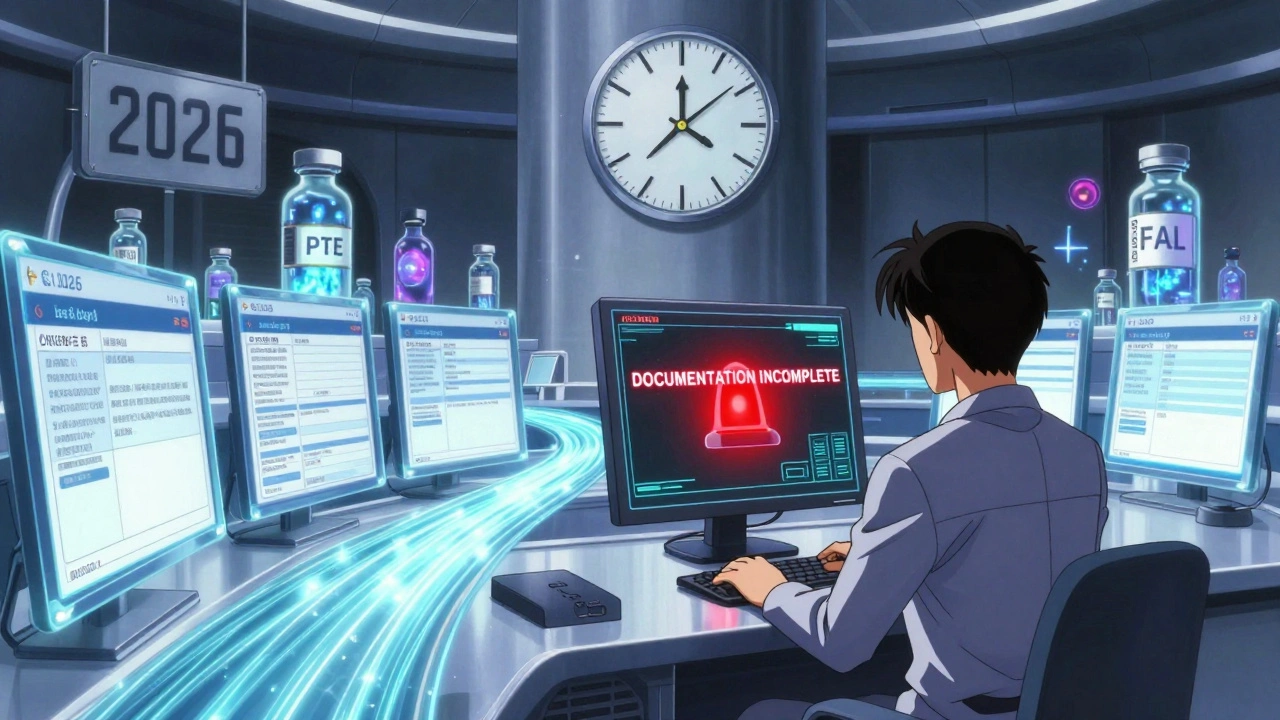
What’s Changing in 2025-2026?
The system is under pressure. In January 2024, the FDA released new guidance on what counts as “due diligence.” They’re cracking down on vague records. Expect more denials if your paperwork isn’t bulletproof. The USPTO is also tightening standards. A 2024 court case (Eli Lilly v. USPTO) ruled that delays during the pre-approval phase-like waiting for animal studies to finish-can’t be counted if the company didn’t actively push them forward. That could shave months off future extensions. The FDA’s 2024 Strategic Plan says they’re building a digital platform for PTE applications. Right now, most submissions are paper-based or PDFs. By 2026, they want everything online, with real-time tracking. That should cut processing times from 217 days down to under 100. Meanwhile, Congress is considering the Preserve Access to Affordable Generics and Biosimilars Act. If it passes, it could block companies from using PTE to delay generics in clever ways-like filing multiple patents on minor changes.What Should You Do If You’re Affected?
If you’re a drug developer: start tracking your regulatory timeline the moment you file your patent. Save every email, every submission receipt, every FDA response. Use a dedicated system-not a shared drive or a folder on someone’s laptop. If you’re a generic manufacturer: check the FDA’s Orange Book regularly. Look for drugs with recent PTE approvals. That’s your signal: generics won’t be able to launch for another 5-10 years. If you’re a patient or policymaker: understand that PTE isn’t evil. It’s necessary to keep innovation alive. But it’s also being used to delay competition longer than originally planned. The real issue isn’t PTE-it’s what happens after it ends.Final Thoughts
Patent Term Restoration isn’t magic. It’s a carefully balanced tool. It gives innovators a fair shot at recouping their investment. But it’s not a free pass to extend monopolies forever. The system works-when it’s used right. And right now, it’s being tested by rising costs, new technologies, and public pressure. The next few years will show whether PTE evolves into a cleaner, faster process-or becomes another layer in the complex web of drug pricing debates.Can any patent get a term extension?
No. Only patents claiming a product that went through FDA regulatory review qualify. This includes human drugs, medical devices, food additives, color additives, and animal drugs. The patent must be active, not expired, and must not have been extended before. You can’t extend patents on methods of use or manufacturing unless they’re directly tied to the approved product.
How long does the PTE application process take?
The FDA processes PTE applications in an average of 217 days. But this doesn’t include the time needed to prepare the application. Companies often spend 3-6 months gathering documentation before even filing. Once submitted, the USPTO reviews the FDA’s recommendation and makes the final decision. Delays happen if documentation is incomplete or unclear.
What’s the difference between PTE and a patent renewal?
Patent renewal (or maintenance fees) keeps a patent alive by paying fees at 3.5, 7.5, and 11.5 years after issuance. If you miss a payment, the patent lapses. PTE doesn’t involve fees. It’s a time extension granted by law to compensate for regulatory delays. You don’t pay to get it-you prove you deserve it.
Can you extend a patent after it expires?
No. Once a patent expires, it’s gone for good. You must file for PTE within 60 days of FDA approval-and your patent must still be active at that time. If it expired before approval, you lose the chance. That’s why timing is everything in pharma patent strategy.
Why do biologics get more PTE now than before?
Biologics are complex drugs made from living cells-like monoclonal antibodies or gene therapies. They take longer to develop and approve than traditional pills. The 21st Century Cures Act of 2016 expanded PTE eligibility to include these products. Since then, 34% of PTE applications in 2023 were for biologics, up from 19% in 2018. Their high cost and long approval timelines make PTE essential for recouping R&D investment.

Rupa DasGupta
This is such a scam 😤 I mean, $2.6 BILLION? Bro, you’re charging me $1000 for a pill that costs 2 cents to make. And now you get EXTRA time? Like, cool, I’ll just stop breathing until you fix this. 💀
Marvin Gordon
Honestly, I get both sides. Pharma needs to recoup costs, but the system’s been gamed so hard it’s barely recognizable anymore. I’m not mad at innovation-I’m mad at the loopholes. We need transparency, not just more paperwork.
Kylee Gregory
It’s fascinating how law and science collide here. The Hatch-Waxman Act was meant to be a compromise, but like all compromises, it got warped by incentives. The real question isn’t whether PTE should exist-it’s whether we’re measuring success the right way. Is it about profit? Or patient access? Or both?
Lucy Kavanagh
You know who’s really behind this? Big Pharma + the FDA. They’re in bed together. You think they don’t have private meetings? You think the ‘due diligence’ rules are fair? Nah. It’s all a front. The real goal is to keep you dependent on overpriced drugs. Wake up. 🇺🇸
Chris Brown
It is deeply regrettable that the current regulatory framework permits such prolonged market exclusivity. The ethical implications are profound. One cannot justify the denial of affordable medicine under the guise of innovation when millions are left without access. This is not progress. It is exploitation.
Stephanie Fiero
Okay but like-why do companies still mess this up? I’ve seen so many startups lose PTE because they saved emails in a folder called ‘random stuff’ on someone’s desktop. USE A DAMN SYSTEM. It’s not rocket science. Save the damn emails. Label the damn files. You’re not doing this for fun, you’re doing it to make money.
Michael Dioso
Let me break it down for the folks who think this is ‘fair.’ You think a 5-year extension is generous? Try living in a country where your insulin costs $300 a month and your drug got 3 extra years. That’s not a reward. That’s a tax on sick people. And the FDA? They’re just the bouncer letting the VIPs in.
Ali Bradshaw
I’ve worked in biotech for 15 years. The paperwork for PTE is brutal. We had one team spend 6 months just organizing lab logs. But here’s the thing-it works. When done right, it lets us keep developing drugs that save lives. It’s not perfect, but it’s the best system we’ve got. And honestly? The digital shift coming in 2026? Long overdue.
Annie Grajewski
So you’re telling me we spend 10 years developing a drug, then get 14 years of exclusivity after approval? That’s like getting a 24-hour pizza delivery… but you only get to eat it for 14 hours. And then you’re like ‘oh wait, I’ll patent the box it came in.’ 🤡
Jimmy Jude
This whole system is a pyramid scheme disguised as science. They patent the molecule, then patent the color of the pill, then the shape, then the packaging, then the app that reminds you to take it. It’s not innovation. It’s legal harassment. And the FDA? They’re just playing along. Sad.
ashlie perry
They’re lying about the 12.7% denial rate. It’s higher. I know people. The FDA hides the real stats. And the digital platform? It’s just so they can track your every move. They’re building a drug surveillance state. You think you’re safe? You’re not.
William Chin
It is imperative to note that the Patent Term Restoration mechanism, as codified under Title 35 of the United States Code, Section 156, is neither a subsidy nor a privilege, but a statutorily mandated adjustment to ensure equitable compensation for regulatory delay. Any deviation from rigorous documentation standards constitutes a breach of fiduciary duty to the public interest and the integrity of the patent system.