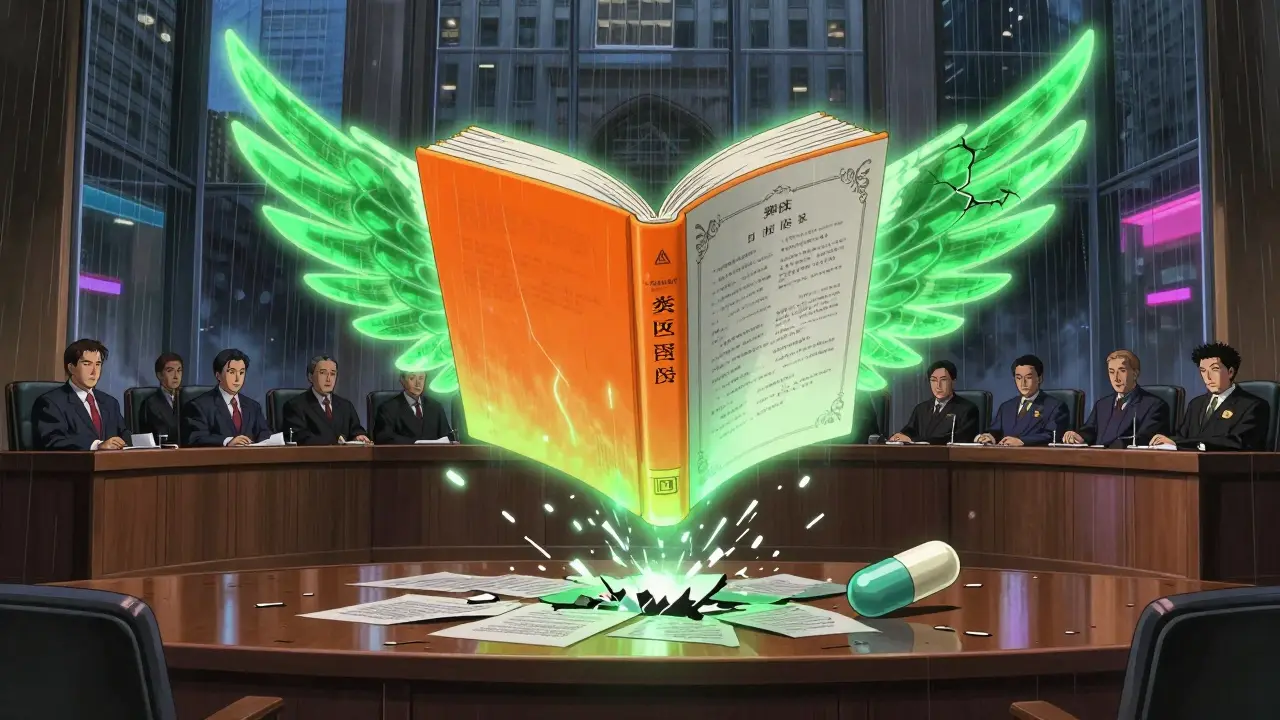
The Federal Circuit Court doesn’t just hear patent cases-it decides them. And when it comes to pharmaceutical patents, its rulings shape whether a generic drug hits the market or gets stuck in court for years. This isn’t just legal technicality. It’s about who gets access to life-saving medications, how much they cost, and how fast new treatments reach patients.
Why the Federal Circuit Holds All the Cards
Unlike other federal courts, the U.S. Court of Appeals for the Federal Circuit is the only appellate court in the country that handles every patent case from every district. That means if you’re challenging a drug patent in Texas, California, or Delaware, your appeal goes to the same 12 judges in Washington, D.C. There’s no regional variation. No competing interpretations. Just one court setting the national standard. This wasn’t always the case. Before 1982, patent cases were scattered across different circuit courts, leading to conflicting rulings. A patent that was valid in New York might be thrown out in Illinois. The Federal Courts Improvement Act fixed that by creating a specialized court. For pharmaceutical companies, that meant predictability. For generic drug makers, it meant a single, high-stakes battleground.The Hatch-Waxman Act and the Orange Book
The Hatch-Waxman Act of 1984 created the modern system for bringing generic drugs to market. It balances two goals: letting brand-name companies protect their patents, and letting generics enter quickly once those patents expire or are invalidated. The key tool? The Orange Book. Officially called Approved Drug Products with Therapeutic Equivalence Evaluations, it’s a list published by the FDA that links each approved drug to the patents held by the brand-name company. If a generic company wants to launch a cheaper version, they file an Abbreviated New Drug Application (ANDA) and must either wait for the patents to expire or challenge them. The Federal Circuit has made it clear: if a patent isn’t actually claiming the drug in the Orange Book, it can’t stay listed. In the Teva v. Amneal case in December 2024, the court ruled that patents must directly cover the drug’s active ingredient or formulation to be eligible for listing. This blocked companies from listing patents that were only tangentially related-like a patent on the pill’s color or packaging. That decision alone saved generic manufacturers millions in legal fees and months of delays.ANDA Filings Create Nationwide Jurisdiction
Here’s where things get real for drug companies. In 2016, the Federal Circuit ruled in Mylan v. Teva that filing an ANDA with the FDA isn’t just paperwork-it’s a nationwide announcement of intent to sell. The court said: if you’re asking the FDA to approve a generic drug for sale across all 50 states, then you’ve consented to being sued anywhere in the country. That decision flipped the script on where lawsuits could be filed. Before, brand-name companies had to sue in the generic company’s home state. Now, they can pick the most favorable court. Delaware became the go-to venue because its courts are experienced in patent law and known for fast rulings. Between 2017 and 2023, 68% of all ANDA lawsuits were filed there-up from 42% in the decade before. For generic manufacturers, this means legal bills skyrocket. A single ANDA case now costs an average of $8.7 million, up from $5.2 million since 2016. For smaller companies, that’s a dealbreaker.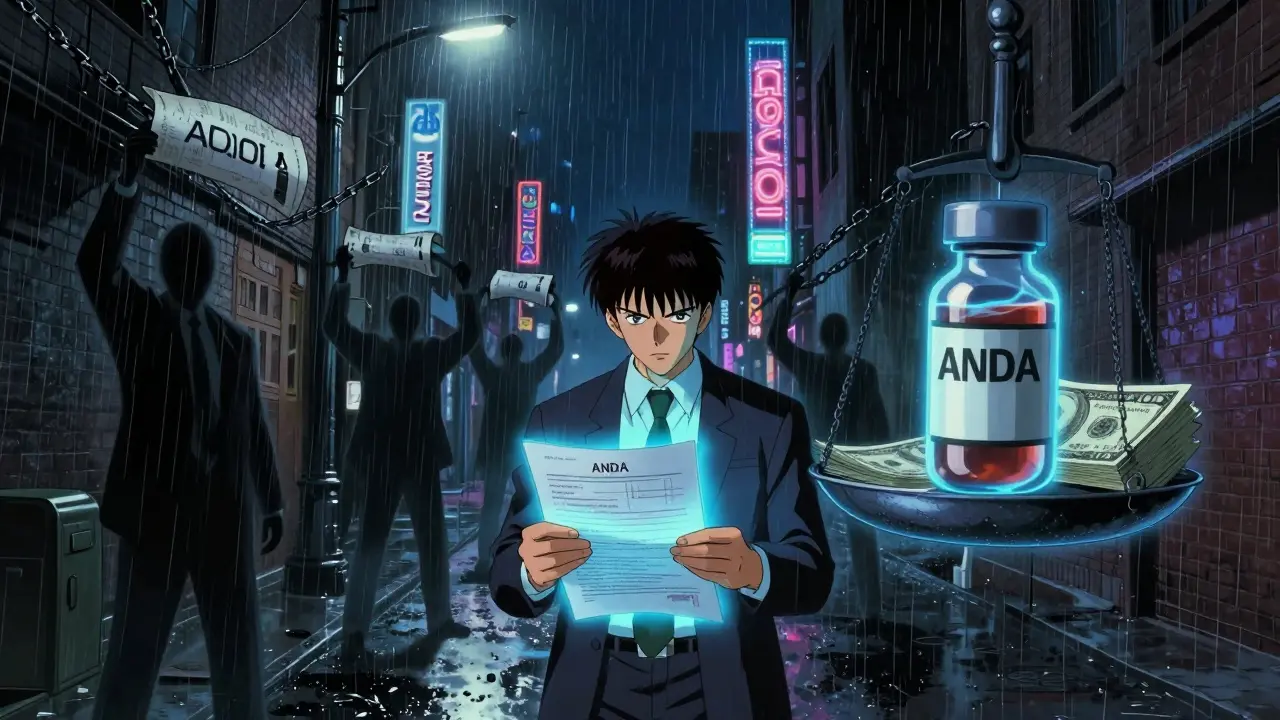
Obviousness and Dosing Regimens: The New Battleground
One of the biggest fights in pharma patent law isn’t about new molecules. It’s about how you take the drug. Take dosing: if a drug is already known, but someone claims a new dosage schedule-say, taking it once a week instead of daily-is that patentable? The Federal Circuit says no, unless there’s something truly unexpected. In April 2025, the court ruled in ImmunoGen v. Sarepta that a dosing regimen for a cancer drug wasn’t patentable because the prior art already showed the drug worked. The only difference was the frequency of doses. The court said: “Because both sides admitted that the use of IMGN853 to treat cancer was known in the prior art, the only question to resolve was whether the dosing limitation itself was obvious.” That’s a huge shift. Before, companies could get patents just by tweaking the schedule. Now, they need proof that the new dose does something the old one couldn’t-like fewer side effects, better survival rates, or a completely new mechanism. A 2024 Clarivate analysis found that after this ruling, pharmaceutical companies cut back on dosing-related patents by 37% and shifted R&D toward entirely new compounds.Standing: Can You Even Sue?
You can’t just walk into court and say, “I think this patent is invalid.” You have to show you’re actually harmed by it. In May 2025, the Federal Circuit ruled in Incyte v. Sun Pharma that a company must have concrete plans to develop a drug before it can challenge a patent. That means: you need clinical trial data, manufacturing agreements, or FDA feedback-not just a business plan. Judge Hughes, in his concurrence, warned this standard is becoming a barrier. “A party seeking to develop a drug that may infringe an existing patent has a significant interest in trying to invalidate that patent before making the large financial and time investments such development efforts demand.” That’s why the Patent Quality Act of 2025 was introduced. Senators Tillis and Coons are pushing to lower the bar so generic developers can challenge patents earlier-before spending hundreds of millions on clinical trials.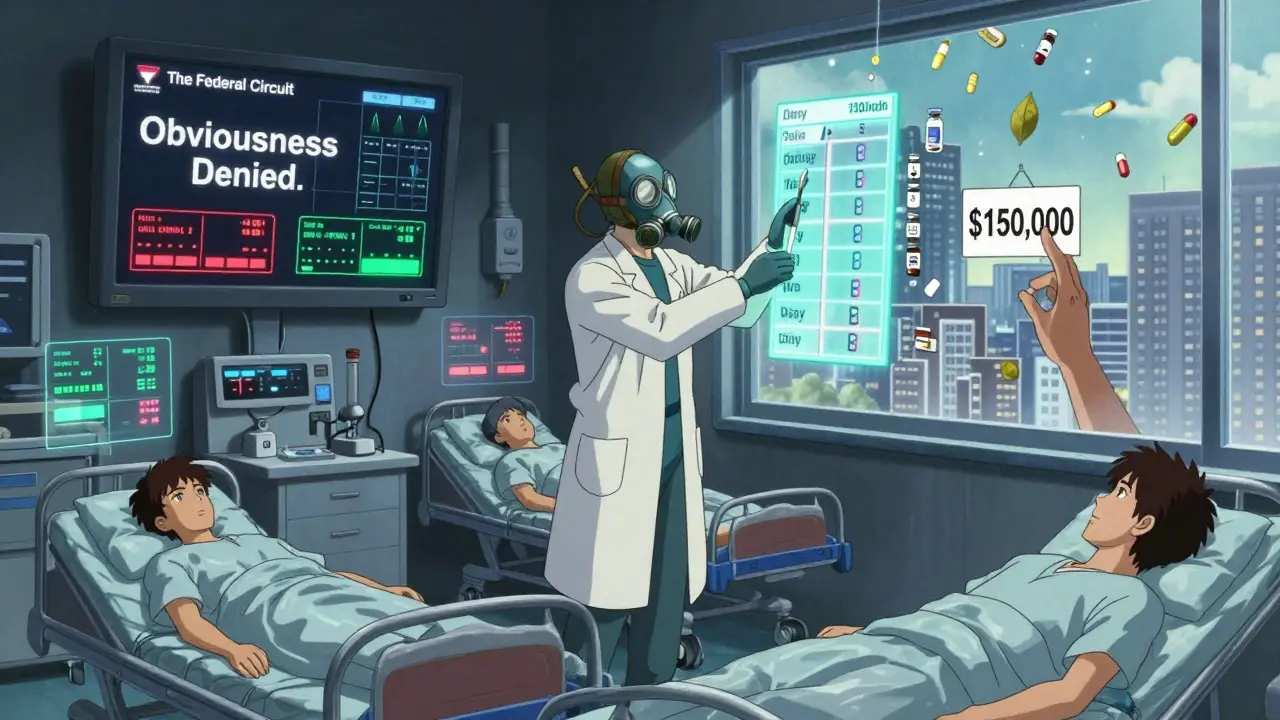
How This Affects Real People
Behind every patent case is a patient waiting for a cheaper drug. The average brand-name cancer drug costs $150,000 a year. A generic version? Often under $10,000. The Federal Circuit’s rulings delay that switch. When a patent stays on the Orange Book because of vague claims, or when a generic company can’t challenge it because it lacks standing, patients pay more. When the court strikes down a weak patent, prices drop fast. The court’s strict stance on obviousness has also pushed companies to focus on real innovation instead of “evergreening”-slight tweaks to extend patent life. That’s good for long-term progress. But the cost? Slower access to generics.What Comes Next?
The Federal Circuit isn’t slowing down. In February 2025, it ruled that even expired patents can still be challenged in the Patent Trial and Appeal Board for validity-though damages can only be pursued in district court. That keeps the door open for legal challenges long after a drug’s patent expires. Biosimilars-generic versions of biologic drugs-are now caught in the same net. The court extended the ANDA jurisdiction rule to them in the Samsung Bioepis case. That means biosimilar makers face the same nationwide lawsuits and high costs as traditional generics. Looking ahead, analysts predict a 15-20% drop in “evergreening” patents by 2027. But core compound patents? They’re still strong. The court has affirmed 82% of those challenges. The message is clear: the Federal Circuit wants real innovation, not legal tricks. But the system it built is expensive, complex, and uneven. For patients, the stakes couldn’t be higher.What is the Federal Circuit Court’s role in pharmaceutical patent cases?
The U.S. Court of Appeals for the Federal Circuit is the only appellate court in the United States that hears all patent appeals, including those involving pharmaceutical drugs. It sets the national legal standard for patent validity, infringement, jurisdiction, and standing in cases involving drugs, dosing regimens, ANDA filings, and Orange Book listings.
Why does the Federal Circuit have exclusive jurisdiction over patent cases?
Before 1982, patent cases were heard by regional circuit courts, leading to inconsistent rulings. The Federal Courts Improvement Act created the Federal Circuit to unify patent law across the country. This ensures predictability for companies and reduces legal confusion, especially in complex areas like pharmaceuticals.
How does filing an ANDA trigger nationwide jurisdiction?
When a generic drug company files an Abbreviated New Drug Application (ANDA) with the FDA, it declares its intent to market the drug across all 50 states. The Federal Circuit ruled in 2016 that this act alone creates sufficient “minimum contacts” with any state to allow a patent holder to sue in that state’s court-even if the generic company has no physical presence there. This opened the door for forum shopping, especially in Delaware.
Can a patent on a new dosing schedule be patented?
Only if the new dosing regimen produces unexpected results. The Federal Circuit ruled in 2025 that simply changing how often a drug is taken isn’t enough to make it patentable if the drug itself is already known. The patent must show something new-like significantly fewer side effects, improved efficacy, or a novel biological effect-not just a different schedule.
What is the Orange Book and why does it matter?
The Orange Book is the FDA’s official list of approved drugs and their associated patents. Generic manufacturers must address every listed patent when filing an ANDA. The Federal Circuit ruled in 2024 that only patents that directly claim the drug’s active ingredient or formulation can be listed. This prevents companies from listing irrelevant patents to delay generics.
Can a company challenge a patent before developing the drug?
No, not anymore. The Federal Circuit requires “concrete plans” and “immediate development activities” to establish legal standing. That means clinical trial data, manufacturing agreements, or FDA feedback are needed. A business plan or intention isn’t enough. This rule was reinforced in the 2025 Incyte decision and is now a major hurdle for generic companies.
How do Federal Circuit rulings affect drug prices?
Each ruling delays or accelerates generic entry. Striking down weak patents lowers prices fast-sometimes by 90%. But extending patent life through vague claims or strict standing rules keeps prices high. The court’s decisions directly impact billions in annual drug spending and determine how quickly affordable alternatives reach patients.
Are biosimilars treated the same as generics under Federal Circuit rules?
Yes. The court extended the same jurisdiction and litigation rules from ANDA cases to biosimilars in the 2020 Samsung Bioepis decision. That means biosimilar makers face nationwide lawsuits, high legal costs, and the same hurdles as traditional generics when challenging patents.

Juan Reibelo
Wow. This is one of those posts that makes you realize how much of our healthcare is dictated by courtroom drama, not science. I’m from Canada, and we don’t have this mess-but I watch it like a horror movie. The Orange Book being weaponized like a legal trapdoor? That’s not innovation. That’s extortion with a law degree.
And don’t even get me started on Delaware. It’s like the Vegas of patent lawsuits-everyone goes there because the house always wins. Generic companies don’t stand a chance when the deck is stacked with jurisdictional trickery.
Someone needs to pull the plug on this system before another patient dies waiting for a $10k drug instead of a $150k one.
Gina Beard
The court isn’t the problem. The system is.
Don Foster
You guys are overthinking this. The Federal Circuit exists because the rest of the courts were incompetent. Patent law is complex and needs uniformity. If you can't handle that then go work at a pharmacy and stop complaining about litigation costs. The fact that you think dosing regimens should be patentable shows you don't understand what a patent even is. The law is clear. The problem is people who want free medicine without paying for R&D. Deal with it.
Also Delaware is not a loophole it's a logical consequence of the law. Stop being dramatic.
siva lingam
So let me get this straight. A bunch of rich lawyers in DC decide if a cancer drug costs 150k or 10k. And we’re supposed to be impressed by how ‘predictable’ it is? Cool. My grandma’s insulin just got more expensive. Thanks for the legal clarity.
Also who wrote this post? It’s 90% case names and 10% actual human suffering. I’m impressed.
Shanta Blank
OH MY GOD. THIS IS A THRILLER. A DRAMA. A NIGHTMARE WITH LEGAL FOOTNOTES.
The Orange Book isn’t a directory-it’s a minefield. Every patent listed like a trapdoor in a horror movie. ‘Oops, your generic drug is illegal because we patented the color of the pill.’
And then the ANDA filings? It’s like saying ‘I’m going to rob every bank in America’ and then getting sued in every state. The Federal Circuit didn’t just create law-they created a legal gladiator arena where only the deepest pockets survive.
And now biosimilars are getting dragged into this? Are you kidding me? We’re not just killing competition. We’re killing hope. This isn’t innovation. This is a corporate chokehold dressed in black robes.
I need a drink. And a new system.
Chloe Hadland
Thanks for breaking this down. I didn’t realize how much of this was about where you file a lawsuit, not whether the patent makes sense.
It’s scary how much power one court has over something as basic as medicine access. I hope something changes soon. Patients shouldn’t have to gamble their health on legal technicalities.
Amelia Williams
This is actually one of the most important things I’ve read all year. I work in public health and I see patients every day who can’t afford their meds.
That 37% drop in dosing patents? That’s huge. It means companies are finally being forced to invent real stuff instead of just rebranding old drugs.
But the standing rule? That’s cruel. You can’t even fight a patent until you’ve already spent millions? That’s like saying you can’t challenge a parking ticket until you’ve bought the car.
Let’s push for the Patent Quality Act. This system is broken but fixable. We just need to care enough to act.
venkatesh karumanchi
It’s not just about patents. It’s about who gets to live. When a court makes a ruling that delays a generic by six months, that’s six months of people paying $150,000 instead of $10,000. That’s not law. That’s a death sentence written in legalese.
I’m from India. We know what it means to wait for medicine. The Federal Circuit doesn’t see faces. It sees filings. And that’s the tragedy.
Jenna Allison
Quick clarification: the Hatch-Waxman Act was meant to balance innovation and access. But the Federal Circuit has tilted it hard toward patent holders. The ‘concrete plans’ standing requirement? That’s a de facto barrier for small biotechs. They don’t have the cash to run clinical trials before challenging a patent. So only Big Pharma wins.
Also-yes, the Orange Book ruling in Teva v. Amneal was a win. But it’s still patchy enforcement. Many patents are still listed with vague claims. The FDA needs teeth. And Congress needs to stop listening to lobbyists.
Bottom line: the law isn’t broken. It’s being weaponized. And patients are the collateral damage.