When a brand-name drug loses its patent, the race is on. Not for who can make the drug cheapest, but who can get it to market first. The company that wins that race doesn’t just get a head start - it often walks away with 80% of the generic market and keeps a strong grip for years. This isn’t luck. It’s the first-mover advantage, a powerful, long-lasting edge built into the U.S. drug system since 1984.
How the First Generic Wins Before It Even Launches
The game is set by the Hatch-Waxman Act. This law didn’t just open the door for generics - it gave the first company to challenge a patent a 180-day window where no other generic can legally sell the same drug. That’s not a bonus. It’s the entire playbook. During those six months, the first generic manufacturer faces almost no competition. They set the price. They control supply. And pharmacies, doctors, and patients all start using their version.
Here’s the catch: the advantage doesn’t vanish after 180 days. In fact, it gets stronger. Why? Because once a pharmacist stocks one generic version of a pill, they rarely switch. Why add more inventory for the same drug? Why retrain staff? Why risk confusion for patients on long-term medication? The system is built to stick with the first choice. Data from DrugPatentWatch shows that the first generic often holds 90% of the market share during exclusivity - and even after five other companies enter, they still hold 30-40% while later entrants fight over scraps.
It’s Not Just About Speed - It’s About Timing
Getting there first isn’t enough. You need to get there way before anyone else. A gap of just a few months between the first and second generic doesn’t matter. But a lead of over a year? That’s gold. Research from McKinsey found that if the second generic enters more than a year after the first, the first mover keeps a market share advantage of 10-13 percentage points. If the gap is under six months? That edge disappears. The market resets.
And it’s not just about timing - it’s about what kind of drug you’re launching. Injectable generics, inhalers, complex formulations - these are harder to copy. Fewer companies can do it. That means less competition. First movers in these areas often capture 15-20 percentage points more market share than they would with a simple oral pill. Meanwhile, in crowded markets like statins or blood pressure meds with five or more generics, the first-mover edge shrinks fast. The system gets noisy. Patients and pharmacies start switching. The advantage fades.
The Hidden Enemy: Authorized Generics
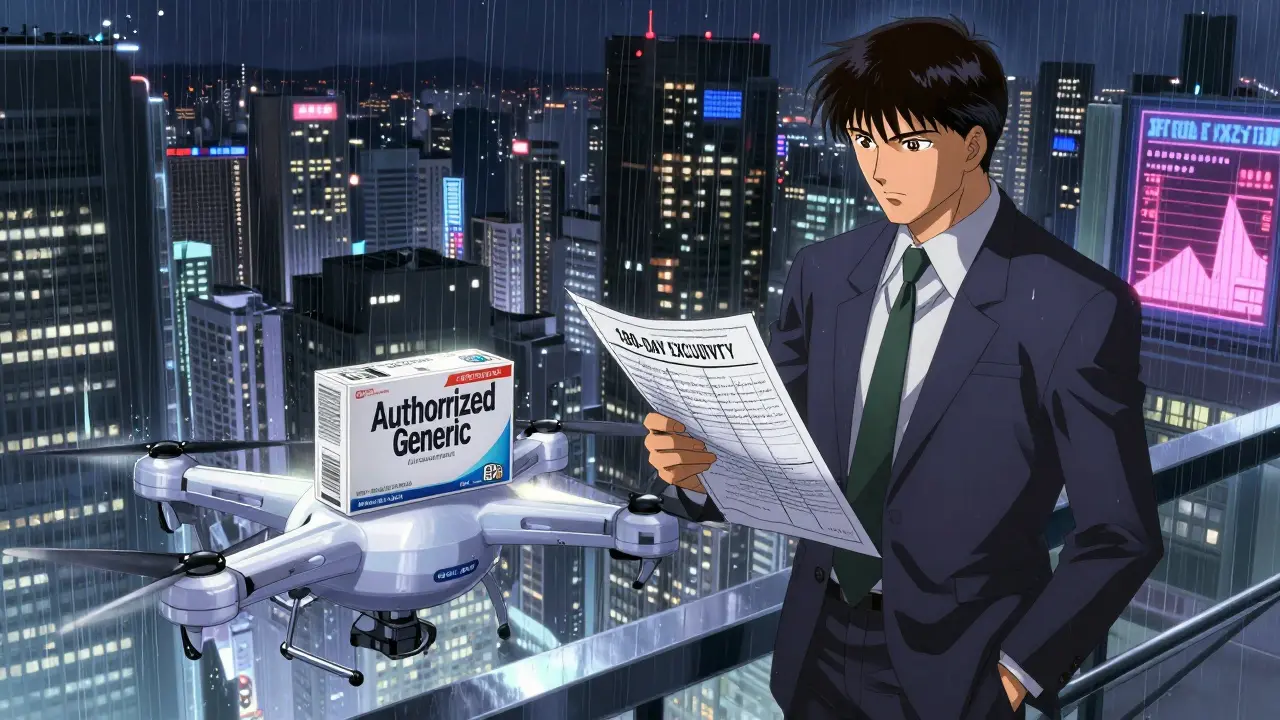
Here’s where things get dirty. The brand-name company doesn’t just sit back and wait. They can launch their own version - an Authorized Generic - during your 180-day exclusivity. It’s the same drug, same packaging, same manufacturer… just sold under a different label. And it’s devastating.
The Federal Trade Commission found that when an Authorized Generic enters, the first generic’s retail price drops 4-8%. Wholesale prices fall 7-14%. Suddenly, instead of being the only generic on the shelf, you’re in a three-way battle: brand, you, and the brand’s own generic. Revenue plummets. Some first filers lose up to half their expected profits. The best companies plan for this. They lock in cheaper active ingredients. They build relationships with multiple API suppliers. That way, they can cut costs by 12-15% compared to competitors who didn’t prepare.
Size Matters - But Not How You Think
Big pharma doesn’t always win. But when a large generic manufacturer is first to market, they usually crush it. Why? They have the infrastructure. Regulatory teams that know the FDA inside out. Manufacturing lines that can scale overnight. Supply chains that don’t break under pressure.
McKinsey’s data shows that big companies gain over 10 market-share points more than smaller ones when they’re first. Smaller players? They often end up with less than their fair share. Why? They can’t respond fast enough to FDA requests. They don’t have backup suppliers. They can’t afford to run multiple batches to guarantee quality. The first-mover advantage isn’t just about being first - it’s about being ready.
Therapy Matters More Than You Realize
Not all drugs are created equal. If you’re launching a generic for a chronic condition - like diabetes, high cholesterol, or rheumatoid arthritis - you’re in the sweet spot. Patients take these drugs for years. They don’t switch unless forced. A doctor who prescribes your version once? They’ll keep prescribing it. A pharmacy that stocks your bottle? They won’t replace it.
But try launching a generic for a short-term antibiotic or a seasonal medication? The advantage vanishes. No patient loyalty. No pharmacy inertia. No long-term habit. The market resets quickly. The same goes for primary care drugs with thousands of prescribers. In specialty areas with just a few hundred doctors treating rare diseases? The first mover owns the market. That’s why companies now target complex, niche drugs - where competition is low and the payoff is huge.
What Happens After the First Mover?
After the exclusivity period, the market doesn’t collapse - it stabilizes. The first generic keeps 30-40% of the market. The second gets 15-20%. The third? Maybe 5%. The rest are fighting for pennies. Why? Because the first mover already owns the relationships. Pharmacies don’t want to stock five versions of the same pill. Doctors don’t want to explain switches to patients. Insurers don’t want to manage multiple formularies.
And here’s the kicker: the first generic often gets to expand the drug’s use. If they’re the first to get approval for a new dosage or a new indication - say, using a blood pressure pill for kidney protection - they lock in even more prescribers. McKinsey found that first movers who do this within five years gain 13 extra percentage points of market share. That’s not just a win. That’s a fortress.
What’s Changing Now?
The game is shifting. The FTC is cracking down on ‘pay-for-delay’ deals - where brand companies pay first generics to delay entry. These deals used to slow down competition. Now, with more enforcement, first generics are launching 6-9 months earlier on average. That’s good for patients. Bad for companies that relied on shady deals to protect profits.
At the same time, the FDA is making it easier to file complex generics. That means more companies will try. But here’s the twist: the more complex the drug, the harder it is to copy. Inhalers, injectables, topical gels - these aren’t pills you can make in a garage. So while the number of challengers may rise, the number of successful ones won’t. First movers in these areas still have a massive edge.
Domestic manufacturers also have an advantage. Studies show they achieve 22% higher market saturation than overseas suppliers. Why? Faster shipping. Better FDA communication. Less risk of supply chain disruption. In a game where timing is everything, that matters.
Why This Matters for Everyone
This isn’t just corporate strategy. It’s about your wallet. In 2020 alone, generic drugs saved the U.S. healthcare system over $338 billion. That’s because generics are 80-90% cheaper than brand-name drugs. The first generic kicks off that savings. Without them, we’d still be paying $500 for a month’s supply of a drug that costs $10 to make.
But if the first mover doesn’t succeed - if they’re delayed, undercut, or blocked - the savings don’t happen as fast. Patients wait longer. Insurers pay more. The system drags.
The first-mover advantage isn’t about greed. It’s about momentum. It’s the engine that turns patent expiration into real, lasting price drops. The system is designed to reward speed, preparation, and execution. And for the companies that get it right? They don’t just win a race. They shape the market for years.

Josh McEvoy
bro this is wild 😳 i had no idea the first generic could own the market for YEARS. like... why does the system even let this happen? 🤯
Chloe Hadland
this makes so much sense now. i’ve always wondered why my pharmacy keeps giving me the same generic even when it’s cheaper elsewhere. turns out they’re just lazy lol
Amelia Williams
i love how the first mover isn’t just about being first-it’s about being ready. it’s like a marathon where you’ve trained for 5 years while everyone else showed up in flip flops 🏃♀️💪
Vatsal Patel
ah yes, the american healthcare system: reward the fastest, punish the poor, and call it ‘innovation’. genius.
Jenna Allison
the authorized generic thing is such a dirty trick. brand companies basically weaponize their own patents to crush the first generic. it’s not competition-it’s sabotage.
Tiffany Wagner
i didn’t realize how much pharmacy inertia mattered. once they stock one version, they just never switch. it’s like choosing a coffee brand and never trying another
Helen Leite
this is all orchestrated. the FDA, big pharma, the FTC-they’re all in on it. they want you to think generics are saving you money, but really they’re just letting one company monopolize it. 🕵️♀️💊 #pharmabrainwash
Kevin Waters
this is actually really cool how infrastructure matters more than speed. it’s not just who files first-it’s who can actually deliver without screwing up. that’s the real win.
Sushrita Chakraborty
The first-mover advantage in generic pharmaceuticals is a fascinating illustration of market dynamics shaped by regulatory architecture. The Hatch-Waxman Act, while ostensibly promoting competition, inadvertently creates a structural monopoly for the initial filer, which then benefits from path dependency in pharmacy formularies and prescriber habits. This phenomenon is not unique to pharmaceuticals but is particularly pronounced due to the high stakes of patient adherence and clinical continuity.
Husain Atther
It is worth noting that while the first-mover advantage is significant, it is not absolute. In markets with high generic competition, such as statins, the advantage dissipates rapidly. The true winners are those who anticipate regulatory shifts and invest in supply chain resilience.
Elizabeth Cannon
yo the authorized generic thing is straight up evil. brand companies are like ‘hey we made this drug, now we’re selling it cheaper to kill the real generic’?? nope. that’s not competition, that’s corporate bullying. 🤬
Viola Li
So let me get this straight-this system rewards companies that can afford to game the FDA and punish patients who need affordable meds? And you call this capitalism? More like corporate feudalism.
Izzy Hadala
The empirical data presented in this analysis is compelling, particularly the correlation between lead time and persistent market share. The 10–13 percentage point advantage observed when the second entrant is delayed beyond one year suggests that temporal barriers to entry are more potent than price competition in this context.
Marlon Mentolaroc
I love how you said the first generic 'shapes the market for years'-but let’s be real: they just lock in the cheapest option and then do nothing for a decade. The real innovation is how they milk it without improving anything. Congrats, you made a pill and then did nothing else for 5 years. Amazing.