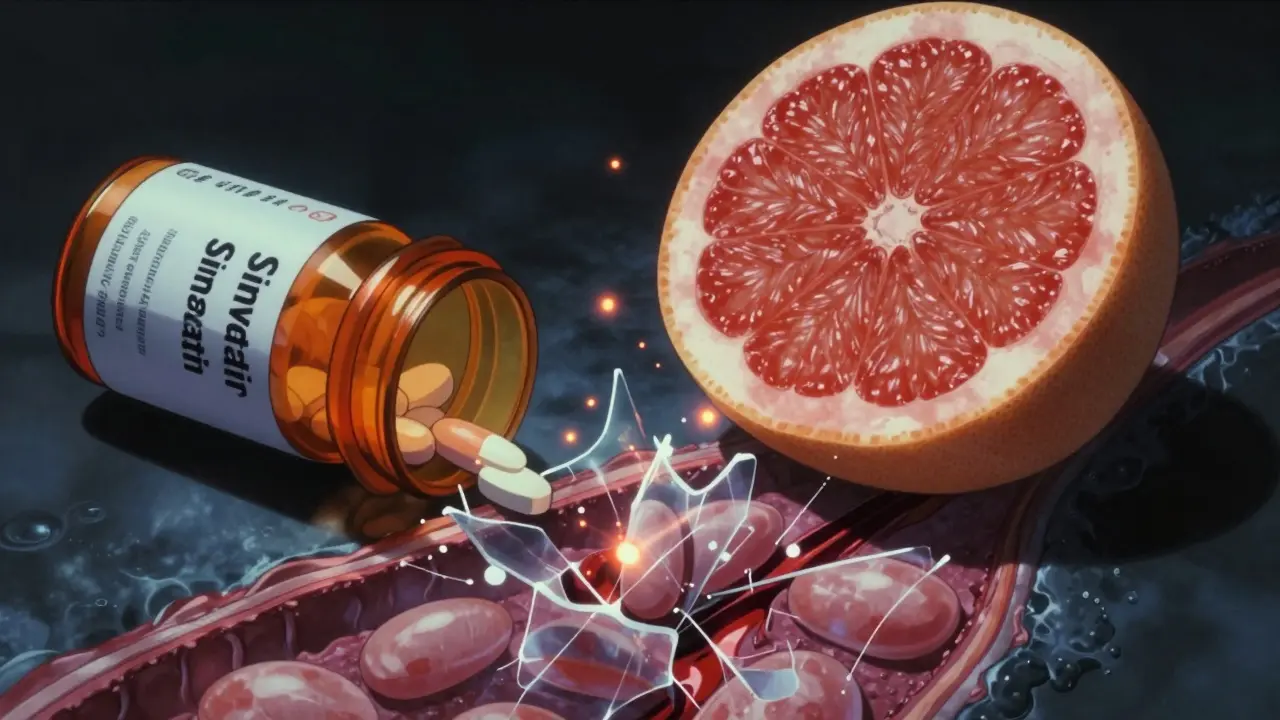
Drinking a glass of grapefruit juice in the morning might seem like a healthy habit-until you realize it could be silently changing how your medicine works. This isn’t just a myth or a vague warning. It’s a well-documented, potentially life-threatening interaction that affects more than 85 prescription drugs. And if you’re taking one of them, even a single glass can push your drug levels into dangerous territory.
How Grapefruit Juice Messes With Your Medicines
The problem starts in your gut. When you swallow a pill, your body uses an enzyme called CYP3A4 to break down many medications before they enter your bloodstream. This enzyme acts like a filter-it keeps too much of the drug from flooding your system. Grapefruit juice doesn’t just slow this process. It shuts it down.
The culprits are chemicals called furanocoumarins, found in high amounts in grapefruit (especially white varieties). These compounds bind to CYP3A4 in your small intestine and permanently disable it. Unlike most drug interactions that happen when you take two things at once, grapefruit’s effect lasts for days. Once the enzyme is knocked out, your body has to make new ones-and that takes 24 to 72 hours.
That means even if you drink grapefruit juice at breakfast and take your pill at night, you’re still at risk. The FDA says you must avoid grapefruit the whole time you’re on these medications-not just around the time you take your dose.
Which Medications Are Most at Risk?
Not all drugs are affected equally. But some of the most common ones carry serious dangers when mixed with grapefruit.
Statins (cholesterol-lowering drugs) are the most concerning. Simvastatin (Zocor) is especially risky. Just 200 milliliters of grapefruit juice-about one cup-taken daily for three days can triple the amount of simvastatin in your blood. That raises your risk of rhabdomyolysis, a condition where muscle tissue breaks down and can lead to kidney failure. Studies show the risk jumps from 0.04 cases per 100 people per year to 0.44. That’s more than a tenfold increase.
Atorvastatin (Lipitor) also increases blood levels, but only by about 30%. Pravastatin and rosuvastatin? No significant interaction. If you’re on simvastatin and drink grapefruit juice, talk to your doctor about switching.
Calcium channel blockers used for high blood pressure show wide variation. Felodipine (Plendil) sees a fivefold spike in concentration. Nifedipine (Procardia) goes up 3.3 times. But amlodipine (Norvasc)? Almost no change. The difference comes down to how much each drug relies on CYP3A4 for breakdown.
Immunosuppressants like cyclosporine (Neoral) and tacrolimus are another red flag. Grapefruit can boost cyclosporine levels by 50-60%, which can cause kidney damage. This is especially dangerous for transplant patients who need precise drug levels to prevent organ rejection.
Antiarrhythmics like amiodarone (Cordarone) can lead to irregular heart rhythms if grapefruit juice raises blood levels by 30-40%. And drugs like trazodone (for depression) and zolpidem (Ambien for sleep) show little to no interaction-so not all meds are affected.
It’s Not Just Grapefruit Juice
Many people think it’s only the juice. But it’s not. Whole grapefruit? Same risk. Grapefruit supplements? Same risk. Even some citrus-flavored sodas and candies made with real grapefruit extract can trigger the interaction.
And it’s not just grapefruit. Seville oranges (used in marmalade) and pomelos contain the same furanocoumarins. So if you’re on a high-risk medication, skip those too.
Good news? Sweet oranges, lemons, limes, and tangerines are safe. They don’t contain enough of the harmful chemicals to cause problems. So if you want citrus, stick to those.
Who’s Most at Risk?
You might think this only matters if you drink a whole pitcher of juice every day. But that’s not true. Even small amounts can be dangerous.
Older adults are especially vulnerable. People over 65 make up 40% of grapefruit consumers in the U.S., and they’re also the ones most likely to be taking three to five medications at once. Many of those meds-like blood pressure pills, statins, and heart rhythm drugs-are on the danger list.
Genetics also play a role. Some people naturally have more CYP3A4 enzymes in their gut. For them, grapefruit juice can cause drug levels to spike 8 times higher than normal. Others barely see a change. But there’s no test to know which group you’re in. So the safest rule? Avoid grapefruit entirely if you’re on a high-risk medication.
What Should You Do?
If you’re taking any prescription medication, here’s what to do:
- Check your medication label. Since 2014, the FDA requires drugmakers to include grapefruit interaction warnings on packaging. Look for phrases like “avoid grapefruit” or “do not consume grapefruit products.”
- Ask your pharmacist. Community pharmacists screen for this interaction in 89% of cases when dispensing prescriptions. Don’t assume they’ll bring it up-ask directly.
- Keep a full list of everything you take. That includes over-the-counter meds, herbal supplements, and vitamins. Some supplements, like St. John’s Wort, also interact with CYP3A4.
- Consider alternatives. If you’re on simvastatin, ask about pravastatin or rosuvastatin. If you’re on cyclosporine, ask if tacrolimus is an option. These alternatives work just as well but don’t interact with grapefruit.
- Don’t rely on memory. Even if you’ve taken grapefruit with your med for years without issue, that doesn’t mean it’s safe. The interaction can suddenly become dangerous due to changes in your metabolism, age, or other medications.

What’s Being Done About It?
Regulators are taking notice. The FDA now requires all new oral drugs metabolized by CYP3A4 to be tested for grapefruit interactions during development. The European Medicines Agency has similar rules. Drugmakers have lost over $1.2 billion annually because patients stop taking simvastatin to avoid grapefruit.
There’s also hope on the horizon. In October 2023, the USDA announced that CRISPR-edited grapefruit with 90% less furanocoumarin had passed early safety trials. These “safe grapefruit” varieties might one day let people enjoy the fruit without the risk. But that’s still years away. For now, the advice remains the same: if you’re on a high-risk medication, skip it.
Why This Matters More Than You Think
A 2022 survey found only 38% of patients recalled being warned about grapefruit interactions when they got their prescription. That’s shocking. This isn’t a rare edge case-it’s a widespread, preventable danger. People end up in the hospital because they didn’t know. Others stop taking their meds altogether because they’re scared. Neither is the right answer.
The truth? You don’t have to give up citrus. You don’t have to live in fear. You just need to know which drugs are risky and which aren’t. And if you’re unsure? Ask. Always.
Can I drink grapefruit juice if I take my medication at night?
No. The enzymes in your gut that break down your medication are blocked for 24 to 72 hours after you drink grapefruit juice. Even if you take your pill at night and juice in the morning, the enzyme is still disabled. The interaction doesn’t depend on timing-it depends on whether the enzyme is active when the drug passes through your gut.
Does it matter if I eat the fruit instead of drinking the juice?
No. The furanocoumarins are in the pulp and peel, not just the juice. Eating a whole grapefruit has the same effect as drinking a glass of juice. Some studies even show whole fruit causes a stronger interaction because you’re consuming more of the peel and membrane.
Are all statins affected by grapefruit?
No. Simvastatin and atorvastatin are affected, but pravastatin and rosuvastatin are not. The difference is in how they’re processed by the body. Simvastatin relies heavily on CYP3A4, so grapefruit blocks its breakdown. Pravastatin and rosuvastatin use different pathways, so grapefruit doesn’t interfere. If you’re on simvastatin and drink grapefruit juice, talk to your doctor about switching.
Can I have grapefruit once in a while if I’m on a low dose?
No. There’s no safe amount for high-risk medications. Even a small glass can cause a dangerous spike in drug levels. The effect is unpredictable-some people see a 2-fold increase, others 8-fold. Since you can’t know how your body will react, the only safe choice is complete avoidance.
What if I accidentally drank grapefruit juice while on a risky medication?
If it was just one time and you feel fine, don’t panic. But stop drinking it immediately and monitor for unusual symptoms like unexplained muscle pain, weakness, dark urine, dizziness, or irregular heartbeat. Contact your doctor or pharmacist. They may want to check your drug levels or adjust your dose. Going forward, avoid grapefruit entirely.
