Statin Interaction Checker
How to use: Select your current statin medication from the list below to see its metabolic pathway, interaction risk level, and medications to be cautious with.
Disclaimer: This tool is for educational purposes only. Always consult your healthcare provider before changing medication.Statin Profile
Select a statin to see details.
Click on a statin card above to analyze its interaction profile.
Taking a cholesterol medication usually feels straightforward until you're prescribed something else for an infection, a flare-up of gout, or a different chronic condition. That's when things get complicated. Not all cholesterol drugs are the same; while they all belong to the same family, some are like a sponge for other medications, while others barely interact with anything at all. If you're one of the millions of people taking these drugs, understanding which drug interactions with specific statins to watch for can be the difference between a successful treatment and a dangerous trip to the ER.
Why Some Statins Interact More Than Others
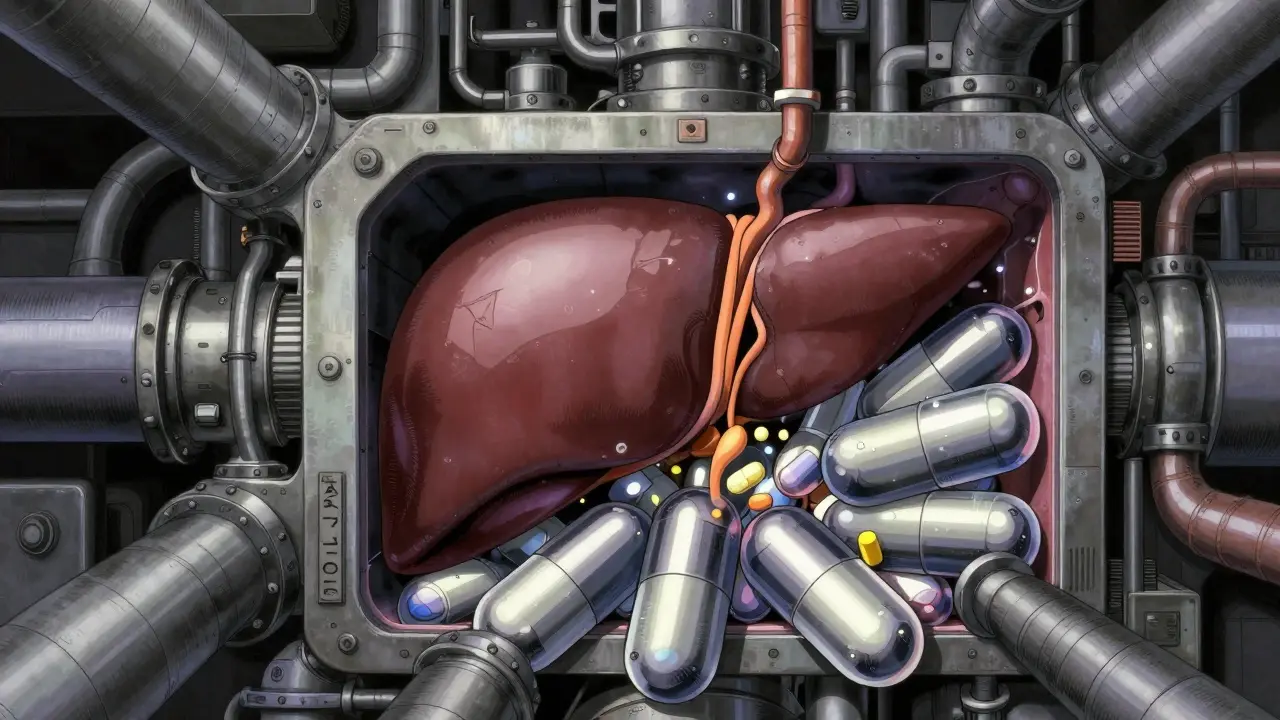
You might wonder why your doctor switched you from one statin to another when you started a new medication. It usually comes down to how your body breaks the drug down. Most statins are processed by the liver using specific pathways. The "problem children" in this group are the ones that rely on the CYP3A4 enzyme system.
Think of CYP3A4 as a narrow doorway. If another medication-like certain antibiotics or antifungals-stands in that doorway, the statin can't get through to be processed. It builds up in your bloodstream, increasing the risk of muscle toxicity. On the flip side, some statins, like Pravastatin a hydrophilic statin with minimal CYP metabolism, use a completely different exit route, making them much safer to pair with other drugs.
The High-Risk Group: CYP3A4 Dependents
If you are taking Simvastatin, Lovastatin, or Atorvastatin, you're using drugs that are heavily processed by the CYP3A4 enzyme. This makes them susceptible to "inhibitors"-drugs that shut down that enzyme.
- Strong Inhibitors: Medications like clarithromycin or erythromycin can skyrocket the levels of simvastatin in your blood by up to 10 times. This isn't just a minor bump; it's a massive increase that can lead to severe muscle breakdown.
- Heart Meds: Calcium channel blockers like diltiazem or verapamil can increase the exposure of simvastatin and lovastatin by 3 to 8 times.
- HIV Medications: Protease inhibitors like ritonavir or atazanavir are notorious for clashing with these specific statins.
Because of this, doctors often limit the dose of simvastatin to 40 mg when you're also taking ticagrelor, a common antiplatelet drug, to keep you out of the danger zone.
The Moderate to Low-Risk Group
Not all statins are created equal. Some are designed to be "stealthier" in your system. For example, Rosuvastatin and Pitavastatin don't rely on the CYP3A4 pathway, which means those common antibiotics won't affect them nearly as much.
However, they have their own Achilles' heel: the OATP1B1 transporter a protein that helps move drugs into the liver. If you're taking Cyclosporine an immunosuppressant used after organ transplants, it blocks this transporter. This can cause pitavastatin or rosuvastatin levels to jump by nearly 5 to 7 times. This is why cyclosporine is strictly contraindicated with lovastatin and simvastatin, while pravastatin is generally allowed at doses up to 40 mg.
| Statin | Primary Metabolism | Interaction Risk | Key Warning Drug |
|---|---|---|---|
| Simvastatin | CYP3A4 | High | Clarithromycin, Verapamil |
| Atorvastatin | CYP3A4 | Moderate | HIV Protease Inhibitors |
| Rosuvastatin | CYP2C9 / OATP1B1 | Low/Moderate | Cyclosporine |
| Pravastatin | Minimal CYP | Very Low | Gemfibrozil |

Spotting the Danger: Myopathy and Rhabdomyolysis
What actually happens when a drug interaction goes wrong? The biggest fear is Rhabdomyolysis a severe condition where muscle tissue breaks down and releases proteins into the blood. This can lead to permanent kidney failure if not caught early.
It usually starts as Myopathy muscle disease characterized by pain and weakness. If you're taking a statin and suddenly feel unexplained muscle soreness, weakness, or notice your urine turning a dark, tea-like color, you need to call your doctor immediately. This is especially true if you've just started a new medication for a different illness.
Interestingly, some of this risk isn't just about other drugs-it's in your DNA. A specific genetic variation called the SLCO1B1 polymorphism can make some people 4.5 times more likely to develop myopathy when taking simvastatin, regardless of other drugs.
Managing Common Combinations
You'll often see statins paired with other cholesterol drugs, like fibrates. But be careful here. Gemfibrozil is a risky partner because it inhibits the enzymes that clear most statins from your system, potentially doubling the drug levels in your blood. If you need a fibrate, Fenofibrate is usually a much safer bet because it has minimal interaction potential.
Then there's colchicine, used for gout. While you don't usually have to avoid statins entirely, your doctor might keep a closer eye on your muscle enzymes (creatine kinase) or lower your dose to be safe. The goal isn't to stop the medication, but to adjust the dose to fit your body's current processing capacity.

The Future: Moving Beyond Broad Brushes
We're moving toward a world where "one size fits all" dosing is dead. Pharmacogenetic testing is becoming more common, allowing doctors to see if you have that SLCO1B1 variation before they even write the prescription.
There are also new alternatives like Bempedoic Acid a non-statin cholesterol medication that targets a different enzyme. Because it's not a statin and has a different metabolic path, it offers a way to lower LDL-C without the same muscle-interaction risks associated with the older drugs.
Can I take antibiotics while on a statin?
It depends on the antibiotic and the statin. Macrolides like clarithromycin are strong CYP3A4 inhibitors and can be dangerous with simvastatin or lovastatin. However, they are generally safer to use with rosuvastatin or pravastatin. Always tell your pharmacist which statin you are taking before starting an antibiotic.
What are the safest statins for people taking many other medications?
Pravastatin and rosuvastatin are typically the preferred choices for "polypharmacy" patients. This is because they undergo minimal CYP metabolism, meaning they are less likely to be affected by the wide variety of drugs that interfere with the liver's cytochrome P450 system.
Is muscle pain always a sign of a drug interaction?
Not necessarily, but it's a major red flag. While muscle aches can be caused by exercise or aging, new or worsening pain after starting a second medication is a classic sign of increased statin levels. You should have your creatine kinase (CK) levels checked to see if there is actual muscle damage.
Why did my doctor switch me from simvastatin to atorvastatin?
Your doctor may have done this because atorvastatin has a slightly more moderate interaction profile than simvastatin and is often more potent at lowering LDL-C. It might also be because you started a medication that specifically interferes with the way simvastatin is absorbed or metabolized.
Does grapefruit juice actually affect statins?
Yes, specifically for those processed by CYP3A4 (simvastatin, lovastatin, atorvastatin). Grapefruit juice inhibits that enzyme in the gut, which means more of the drug enters your bloodstream than intended, increasing the risk of side effects. If you love grapefruit, talk to your doctor about switching to pravastatin or rosuvastatin.
Next Steps and Troubleshooting
If you're worried about your current regimen, don't just stop taking your meds. Heart health depends on consistency. Instead, try these steps:
- Audit your list: Write down every supplement, over-the-counter drug, and prescription you take. Include things like St. John's Wort, which can also affect liver enzymes.
- Ask about

Harveer Singh
I'm Peter Farnsworth and I'm passionate about pharmaceuticals. I've been researching new drugs and treatments for the last 5 years, and I'm always looking for ways to improve the quality of life for those in need. I'm dedicated to finding new and innovative solutions in the field of pharmaceuticals. My fascination extends to writing about medication, diseases, and supplements, providing valuable insights for both professionals and the general public.
Ben Jima
It is absolutely vital to keep a comprehensive list of all supplements and over-the-counter medications you are taking. Many people overlook things like St. John's Wort or high-dose omega-3s, which can actually influence how your liver processes these drugs. I always suggest using a dedicated app or a simple notebook that you carry to every appointment to ensure your provider has the full picture.
Jaclyn Vo
Ugh, the grapefruit juice thing is literally the most iconic warning in medicine 🙄 Like, imagine just wanting a healthy breakfast and accidentally sending yourself to the ER because of a CYP3A4 inhibitor! Absolute madness! 😱
Majestic Blue Band
It is simply fascinating how they want us to trust these pharmaceutical giants to "adjust" our doses when in reality the entire system is designed to keep us dependent on a rotating door of chemicals that they know cause muscle breakdown, and if you actually look into the SLCO1B1 genetic marker, you will see it is just a convenient way for them to blame our own DNA for the failure of their toxic products instead of admitting that the statins themselves are the poison, and honestly, the push for pharmacogenetic testing is just the next step in their plan to map our genomes and control who gets what based on a corporate algorithm that serves no one but the shareholders of the big labs.
Andre Ojakäär
basically just dont take simva with clarithromycin if u dont want your muscles to melt off your bones lol it is that simple
Anand Mehra
pill pushers calling it a a narrow doorway just to simplify biochemistry for the masses pure comedy
Michael Chukwuma
I can totally relate to the anxiety of starting a new med while on a statin. It's a bit scary when you realize how these things interact.
Jon Moss
Yeah, the feeling of uncertainty is real. Just taking it one step at a time helps.
suresh kumar
This is some spicy chemistry right here. My cousin tried to self-medicate and ended up with legs like jelly because he ignored the pharmacy leaflet. Absolute circus of a situation!
Carol Yang
Glad there are safer options like rosuvastatin for people on a lot of meds. That's a relief!
Eric Mwiti
Oh sure, because trusting a generic table in a blog post is definitely the gold standard of medical advice these days. Truly revolutionary.
James Harrison
It's wild how much our internal chemistry dictates our health. We're basically just walking tubes of chemical reactions trying to find a balance.
Beena Garud
One must contemplate the duality of the pharmaceutical intervention, where the cure for one ailment potentially precipitates another through the intricate pathways of the liver.
Edwin Perez
Big Pharma just wants you on the a newer, more expensive non-statin like Bempedoic Acid because the old ones are too cheap. Same scam, different name
Karyn Tindall
I literally cannot believe people just ignore the warnings about tea-colored urine! That is a medical emergency! Absolute horror!
Elle Torres Sanz
It's so important to bridge the gap between complex medical jargon and what we actually need to know to stay safe. Let's just keep supporting each other in managing these regimens.