
You take your morning pill for anxiety or depression. It’s been working fine for months. Then, you catch a bad cold, pick up some cough syrup at the pharmacy, and suddenly, within hours, you’re sweating profusely, shivering uncontrollably, and feeling like your muscles are vibrating. This isn’t just a side effect; it could be serotonin syndrome, a potentially life-threatening reaction caused by too much serotonin in your brain.
For millions of people taking Selective Serotonin Reuptake Inhibitors (SSRIs), this scenario is a real danger. SSRIs are among the most prescribed medications in the world, but they don't work in isolation. When combined with certain other drugs-some prescription, some over-the-counter-they can trigger a dangerous cascade of symptoms. Understanding these interactions is not just medical trivia; it’s a matter of safety.
What Is Serotonin Syndrome?
To understand the risk, you first need to know what serotonin does. Serotonin is a neurotransmitter that helps regulate mood, sleep, and appetite. SSRIs work by blocking the reabsorption of serotonin, keeping more of it available in your brain to improve your mood. But when you add another substance that also boosts serotonin levels, you can overwhelm the system.
Serotonin syndrome is a condition resulting from excessive serotonergic activity in the central nervous system. It was first formally described in the 1960s, but it gained significant attention after high-profile cases in the 1980s. The condition ranges from mild discomfort to severe, life-threatening complications like seizures, irregular heartbeat, and unconsciousness.
The key to identifying it lies in the Hunter Serotonin Toxicity Criteria. Doctors use this checklist to diagnose the condition. You likely have serotonin syndrome if you are taking a serotonergic agent and exhibit at least one of the following:
- Spontaneous clonus (involuntary muscle spasms)
- Inducible clonus accompanied by agitation or sweating
- Ocular clonus (rapid eye movements) with agitation or sweating
- Tremor and hyperreflexia (overactive reflexes)
- Hypertonia (stiff muscles) with a temperature above 38°C (100.4°F) and ocular or inducible clonus
If you recognize these signs, especially after starting a new medication, seek emergency care immediately. Time matters.
High-Risk Drug Combinations
Not all drug combinations are created equal. Some mixtures pose a negligible risk, while others are deadly. The risk depends on how strongly each drug affects serotonin levels and how long it stays in your body.
| Drug Class / Specific Drug | Risk Level | Relative Risk Increase | Key Notes |
|---|---|---|---|
| MAOIs (e.g., Phenelzine, Selegiline) | Critical / Contraindicated | RR: 28.7 | Fatal interaction possible. Requires 2-5 week washout period. |
| Linezolid (Antibiotic) | High | RR: 2.9 | Often used for serious infections; acts as a weak MAOI. |
| Tramadol, Pethidine, Dextromethorphan | High | RR: 4.7 | Common painkillers and cough suppressants. |
| Methadone, Fentanyl | Medium | RR: 2.1 | Monitor closely; avoid if possible. |
| Morphine, Codeine, Oxycodone | Low | RR: 1.05 | No significant increase in risk reported. |
| St. John's Wort (Herbal Supplement) | High | Varies | Often overlooked because it is "natural". |
The MAOI Danger Zone
Monoamine oxidase inhibitors (MAOIs) represent the highest risk category. These older antidepressants block the enzyme that breaks down serotonin. When you combine an MAOI with an SSRI, serotonin levels can skyrocket to toxic levels rapidly. Medical guidelines strictly contraindicate this combination. If you switch between these drugs, you must observe a washout period. For most SSRIs, this is two weeks. However, for fluoxetine (Prozac), which has a very long half-life, you may need to wait five weeks before starting an MAOI.
The Hidden Threat: Linezolid
Linezolid is an antibiotic often prescribed for resistant bacterial infections. Many patients and even some healthcare providers forget that linezolid has mild MAOI properties. A 2022 study published in JAMA Network Open found that while the absolute risk is low (0.14% vs 0.05% in controls), the relative risk is nearly three times higher. Because linezolid is often used in acute hospital settings, patients on home SSRIs might not realize the danger until symptoms appear.
Opioids: Not All Are Equal
Pain management complicates SSRI therapy significantly. The CDC’s 2024 Clinical Practice Guideline explicitly recommends avoiding tramadol, pethidine, and dextromethorphan in patients taking SSRIs. Tramadol, widely used for moderate pain, inhibits serotonin reuptake directly. Combining it with an SSRI increases the risk of serotonin syndrome by 4.7 times. Conversely, opioids like morphine and oxycodone do not significantly affect serotonin levels and are generally safer alternatives for pain relief in these patients.
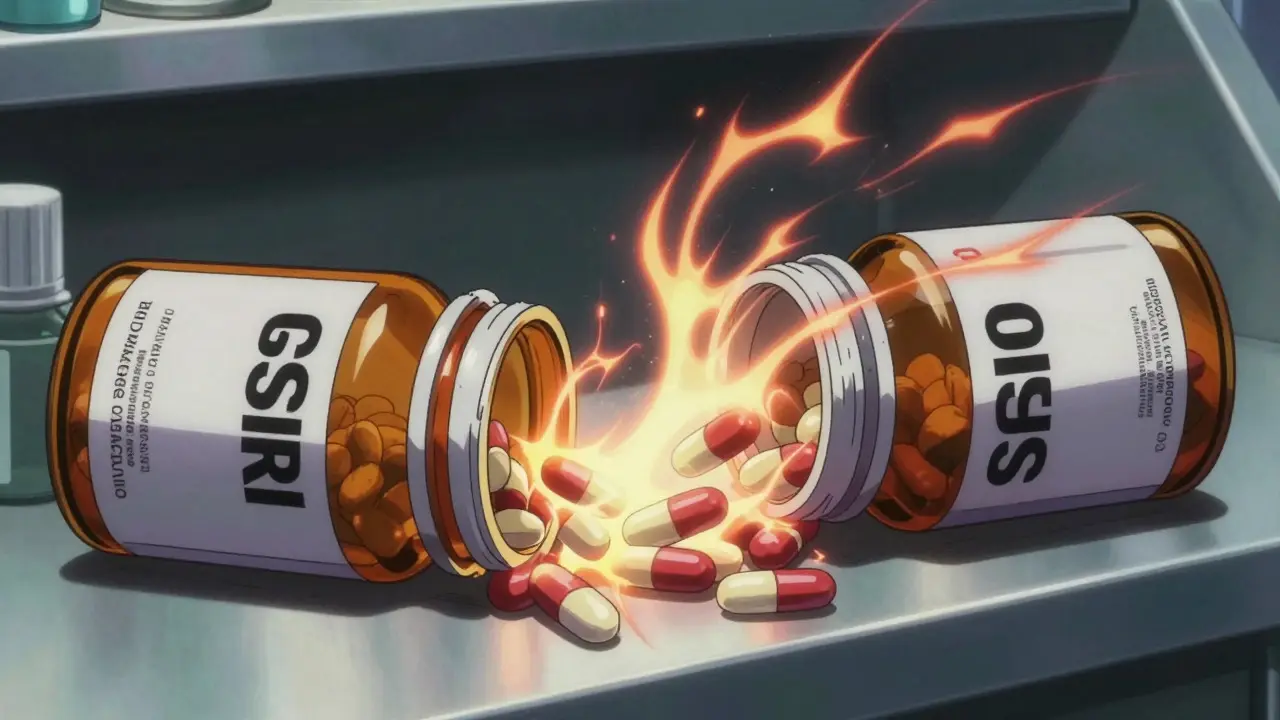
Recognizing the Symptoms Early
Serotonin syndrome usually develops quickly, often within six hours of taking a new medication or increasing a dose. The symptoms can be confusing because they mimic other conditions like meningitis or heat stroke. However, there is a pattern.
Think of the "5 S's" recommended by the Cleveland Clinic for patient monitoring:
- Shivering: Uncontrollable trembling, often starting in the legs.
- Sweating: Profuse sweating, even in cool environments.
- Stiffness: Muscle rigidity, particularly in the lower limbs.
- Seizures: Rare in mild cases, but possible in severe toxicity.
- Sudden Confusion: Agitation, restlessness, or altered mental status.
Other common signs include dilated pupils, rapid heart rate, high blood pressure, and diarrhea. If you experience these symptoms after adding a new drug, do not wait. Go to the nearest emergency room.
Who Is Most Vulnerable?
While anyone can develop serotonin syndrome, certain groups face higher risks. Age plays a significant role. According to the National Council on Aging, 22% of Americans over 65 take five or more medications daily. This polypharmacy creates a "perfect storm" for interactions. Older adults also metabolize drugs more slowly, meaning medications stay in their system longer, increasing the window for interaction.
Genetics also matter. Research from the University of California, San Francisco (2023) highlights that individuals who are "poor metabolizers" due to variations in the CYP2D6 enzyme gene have a 2.4 times higher risk of serotonin syndrome when combining SSRIs with tramadol. If you have a family history of unusual reactions to medications, mention this to your doctor.
Additionally, women are statistically more likely to be prescribed SSRIs and pain medications, placing them in a higher statistical bracket for potential interactions. Awareness is crucial for these demographics.

How to Prevent Serotonin Syndrome
Prevention is far easier than treatment. Here are practical steps to protect yourself:
1. Maintain a Master Medication List
Keep an updated list of every substance you ingest. This includes prescription drugs, over-the-counter medications, herbal supplements, and vitamins. St. John’s wort, tryptophan, and 5-HTP are popular supplements that boost serotonin. Taking them with an SSRI is a common cause of accidental serotonin syndrome. Show this list to every doctor and pharmacist you see.
2. Ask About OTC Cold and Flu Meds
Many cold remedies contain dextromethorphan, a cough suppressant that interacts with SSRIs. Before buying any box from the shelf, ask the pharmacist: "Does this interact with my antidepressant?" They can often suggest a safe alternative.
3. Utilize Pharmacist-Led Reviews
A 2023 study in the Journal of Managed Care & Specialty Pharmacy found that pharmacist-led medication therapy management reduced potential serotonin syndrome events by 47%. Don’t skip the consultation. Pharmacists are experts in drug interactions and can spot risky combinations that doctors might miss in a busy clinic visit.
4. Monitor for Changes
When starting a new medication, pay close attention to your body for the first 24-48 hours. If you feel unusually agitated, sweaty, or shaky, contact your healthcare provider immediately. Do not assume it’s just anxiety or a side effect that will pass.
Treatment and Outlook
If diagnosed with serotonin syndrome, the primary treatment is stopping the offending agents. In mild cases, this may be sufficient, along with supportive care like hydration and sedatives to control agitation. In severe cases, hospitalization is required. Patients may need cooling blankets for hyperthermia, intravenous fluids, and sometimes intubation to protect the airway.
With prompt treatment, most patients recover fully. However, delays can lead to rhabdomyolysis (muscle breakdown), kidney failure, or death. The mortality rate for untreated severe cases involving MAOIs can reach 30-50%, underscoring the importance of prevention.
As we move into 2026, technology is helping to bridge the gap. The FDA mandated in 2024 that electronic prescribing systems implement mandatory alerts for high-risk serotonin syndrome combinations. While these alerts help, they are not foolproof. Human vigilance remains the final safeguard.
Can I take Tylenol (acetaminophen) with an SSRI?
Yes, acetaminophen (Tylenol) is generally considered safe to take with SSRIs. Unlike NSAIDs (like ibuprofen), which can increase bleeding risk when combined with SSRIs, acetaminophen does not significantly affect serotonin levels or platelet function. However, always follow dosage instructions to avoid liver damage.
How long does it take for serotonin syndrome to develop?
Symptoms typically appear within 6 hours of ingesting the interacting medication, though they can occur up to 72 hours later. Onset is usually rapid, especially after a dose increase or adding a new serotonergic drug.
Is St. John's Wort safe to take with Zoloft or Prozac?
No, St. John's Wort is not safe to combine with SSRIs like sertraline (Zoloft) or fluoxetine (Prozac). It acts similarly to an SSRI by inhibiting serotonin reuptake. Combining them significantly increases the risk of serotonin syndrome. Always consult your doctor before adding herbal supplements.
What is the difference between serotonin syndrome and Neuroleptic Malignant Syndrome (NMS)?
Both conditions involve muscle stiffness and fever, but they have different causes. Serotonin syndrome is caused by excess serotonin and typically presents with hyperreflexia (overactive reflexes) and tremors. NMS is caused by antipsychotic medications and presents with "lead-pipe" rigidity and hyporeflexia (underactive reflexes). Diagnosis requires careful clinical evaluation.
Do all opioids cause serotonin syndrome?
No. Only certain opioids affect serotonin levels. High-risk opioids include tramadol, pethidine (meperidine), methadone, fentanyl, and dextromethorphan. Low-risk opioids like morphine, codeine, and oxycodone do not significantly inhibit serotonin reuptake and are safer options for patients on SSRIs.
Living with depression or anxiety doesn’t mean you have to navigate medication risks alone. By staying informed, communicating openly with your healthcare team, and being vigilant about new prescriptions, you can safely manage your mental health without falling prey to dangerous interactions. Your health is worth the extra question at the pharmacy counter.
