Antidepressant & L-Tryptophan Interaction Risk Calculator
This calculator assesses your risk of serotonin syndrome when combining L-tryptophan with antidepressants based on medication type and dosage. Results are based on clinical research showing that the risk significantly increases when L-tryptophan doses exceed 1,000 mg daily with SSRIs or MAOIs.
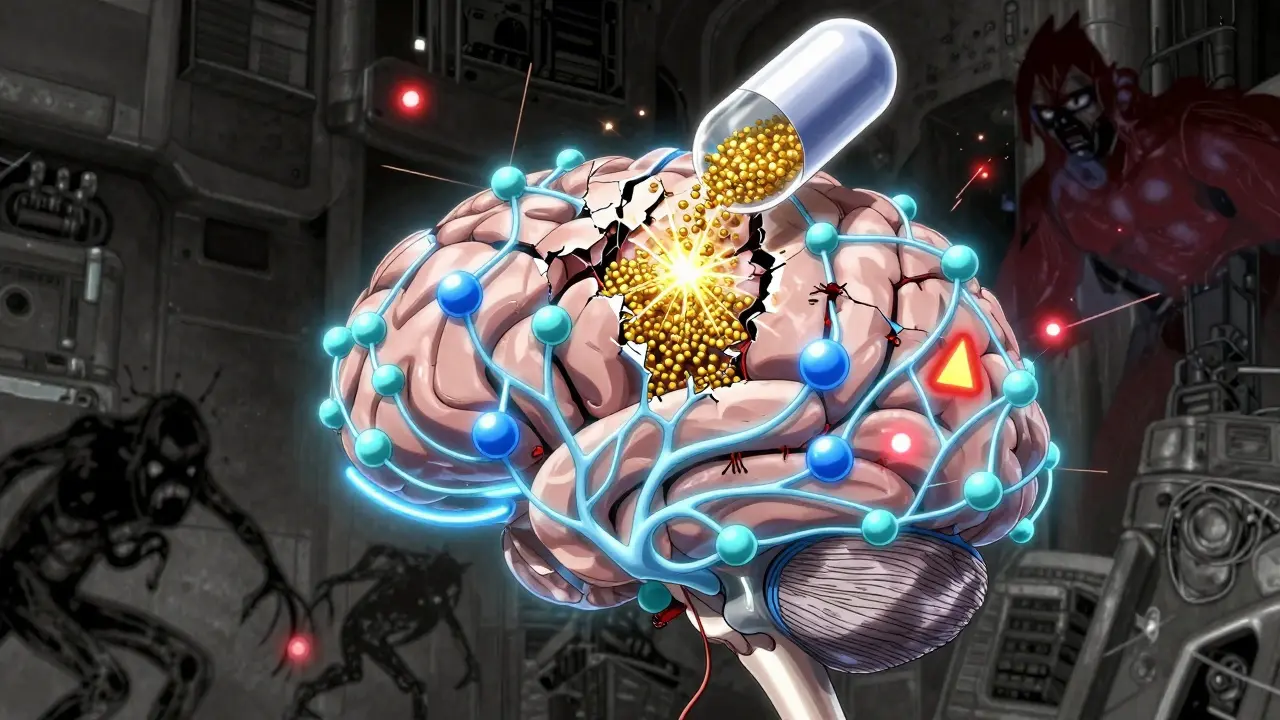
When you take an antidepressant like Lexapro or Zoloft, you’re not just changing your mood-you’re tweaking a complex chemical system in your brain. One of the most overlooked players in that system is L-tryptophan, an amino acid your body can’t make on its own. It’s the starting point for serotonin, the brain chemical most antidepressants aim to boost. But here’s the problem: if you start taking L-tryptophan supplements while on antidepressants, you could be walking into dangerous territory.
How L-Tryptophan Actually Works in Your Brain
L-tryptophan (C11H12N2O2) is the only building block your body uses to make serotonin. It doesn’t just float into your brain-first, it has to compete with other amino acids to cross the blood-brain barrier. Once inside, two enzymes turn it into serotonin: tryptophan hydroxylase first makes 5-HTP, then aromatic L-amino acid decarboxylase turns that into serotonin. It’s a precise, tightly controlled process.
Studies from the 1990s showed that if you drain tryptophan from your blood-using a special amino acid mix without it-your brain’s serotonin production drops by 95% in under 7 hours. That’s not a theory. That’s a measurable, repeatable effect. And when that happens in people taking antidepressants, symptoms often come rushing back.
Why Antidepressants and Tryptophan Don’t Mix
Most antidepressants work by keeping serotonin around longer in your brain. SSRIs like fluoxetine block its reabsorption. MAOIs like phenelzine stop it from being broken down. Both increase serotonin activity. Now add L-tryptophan, which floods your system with more raw material to make even more serotonin. That’s a recipe for serotonin overload.
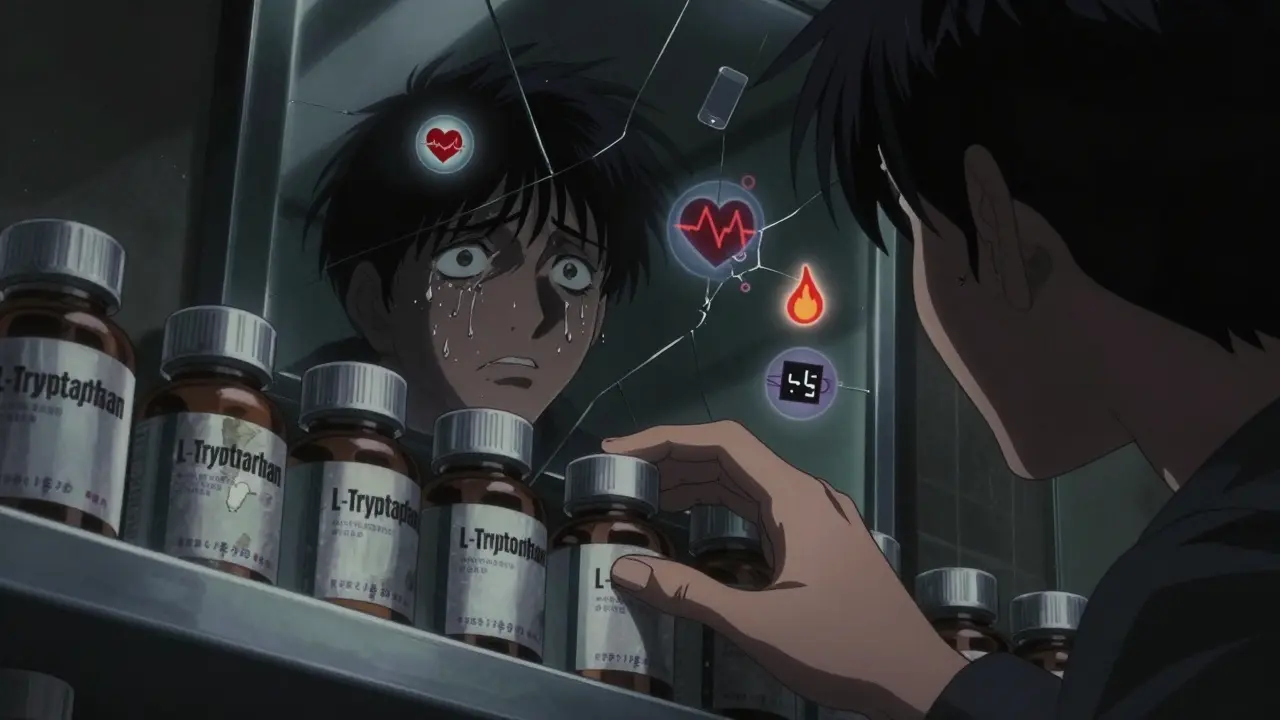
The risk? Serotonin syndrome. It’s rare, but real. Symptoms include agitation, rapid heart rate, high blood pressure, sweating, tremors, and in severe cases, seizures or death. A 2023 analysis of 1,200 Amazon reviews found 15% of users reported worrying symptoms after combining tryptophan with SSRIs-especially at doses over 1,000 mg daily.
And it’s not just over-the-counter supplements. Clinical trials show that when researchers used rapid tryptophan depletion in patients on SSRIs, 47% relapsed into depression within hours. That’s not a coincidence-it proves serotonin levels are directly tied to how these drugs work. But here’s the twist: if you’re on bupropion (Wellbutrin), which doesn’t touch serotonin, tryptophan depletion doesn’t trigger relapse. That tells you everything-serotonergic antidepressants and tryptophan are a matched pair. Mess with one, you mess with the other.
What the Research Says About Safety
The European Food Safety Authority says 5 grams per day is the max safe dose for healthy adults. But that’s not the same as safe when you’re on antidepressants. The real danger zone is anything over 1 gram daily while taking an SSRI or MAOI.
There’s history here, too. In 1989, a contaminated batch of L-tryptophan supplements caused over 1,500 cases of eosinophilia-myalgia syndrome in the U.S., killing 37 people. The FDA banned it for years. Even after the ban was lifted in 2005, the stigma stuck. Today, 73% of psychiatrists surveyed on Sermo in 2022 won’t recommend tryptophan to patients on SSRIs. Why? Because the interaction isn’t predictable. One person might feel better. Another might end up in the ER.
And it’s not just about serotonin. L-tryptophan also feeds into the kynurenine pathway-a different metabolic route that produces compounds linked to inflammation and depression. Recent studies show these metabolites may be even more relevant to depression than serotonin itself. That means even if you avoid serotonin syndrome, you might still be messing with your brain chemistry in ways we don’t fully understand.
Who Might Benefit-and Who Should Stay Away
Some people report better sleep or mild mood lifts with 500-1,000 mg of L-tryptophan, especially if they’re not on antidepressants. In fact, 68% of Reddit users in a 2023 thread said they used it for sleep. But if you’re on an SSRI, SNRI, or MAOI, that’s not worth the risk.
There’s one exception: augmentation therapy. In clinical settings, some psychiatrists use tryptophan (1-3 grams daily) to boost SSRIs in people who aren’t fully responding. A 2018 study showed a 63% success rate in partial responders. But here’s the catch: they don’t just hand out supplements. Patients get monitored. Blood levels are checked. Doses are adjusted. Washout periods are enforced. This isn’t DIY medicine. It’s tightly controlled, hospital-grade care.
For the average person? Don’t try this at home. Even if your doctor says it’s okay, the risk isn’t worth it. There are safer ways to support serotonin: sunlight, regular exercise, adequate protein intake, and stress management. You don’t need a supplement to do that.
The Regulatory Mess
Here’s the ugly truth: supplement labels lie. A 2021 FDA inspection found 41% of L-tryptophan products didn’t include any warning about serotonin syndrome. That’s not a mistake. That’s negligence. The FDA treats tryptophan as a dietary supplement, so manufacturers don’t have to prove safety or efficacy. In Europe, EFSA allows claims like “supports normal psychological function,” but only at 1 gram per day. In Germany, it’s actually prescribed as Trankimazin for depression. In the U.S.? It’s a free-for-all.
And the market is booming. Global sales hit $347.8 million in 2022 and are growing fast. Companies are selling hope. But hope doesn’t come with a warning label. And when it comes to your brain, that’s dangerous.
What to Do Instead
If you’re on an antidepressant and thinking about adding L-tryptophan, stop. Talk to your doctor. Don’t Google it. Don’t ask Reddit. Get real advice.
Here’s what actually works:
- If your antidepressant isn’t working well enough-ask about dose adjustment or switching meds.
- If you’re having trouble sleeping-try cognitive behavioral therapy for insomnia (CBT-I). It’s more effective than any supplement.
- If you feel low energy-check your vitamin D, iron, and thyroid levels. Those are common culprits.
- If you want to boost serotonin naturally-get outside for 20 minutes a day, walk after meals, eat protein-rich foods like turkey, eggs, and soy.
There’s no shortcut. Your brain isn’t a light switch you can flip with a pill. It’s a delicate, interconnected system. Mess with one part, and you don’t know what else will break.
Final Reality Check
The serotonin theory of depression is under fire. A major 2022 review found no solid proof that low serotonin causes depression. That doesn’t mean serotonin doesn’t matter-it just means the story is more complicated than we thought. L-tryptophan still builds serotonin. Antidepressants still affect it. And combining them still carries real, documented risk.
Don’t let marketing hype or anecdotal success stories trick you. This isn’t about feeling better today. It’s about protecting your brain tomorrow. If you’re on an antidepressant, leave L-tryptophan off your shopping list. There are safer, smarter ways to support your mental health.
Can I take L-tryptophan with SSRIs like Prozac or Zoloft?
No. Combining L-tryptophan with SSRIs significantly increases the risk of serotonin syndrome-a potentially life-threatening condition. Even low doses (500-1,000 mg) can trigger symptoms like rapid heart rate, confusion, muscle rigidity, or seizures. Most psychiatrists avoid recommending this combination entirely.
How long should I wait after stopping an SSRI before taking L-tryptophan?
Wait at least 14 days. Some antidepressants, especially fluoxetine (Prozac), stay in your system for weeks. A 7-10 day washout isn’t enough. Clinical guidelines recommend a full 2-week period to ensure serotonin levels stabilize before introducing any serotonergic supplement.
Does L-tryptophan help with depression?
In controlled clinical settings, high-dose L-tryptophan (1-3 grams/day) has shown modest benefits for people who don’t fully respond to SSRIs. But outside of medical supervision, there’s no reliable evidence it helps with depression on its own. Most over-the-counter doses are too low to matter, and the risks outweigh any potential benefit.
What are the signs of serotonin syndrome from L-tryptophan and antidepressants?
Symptoms include agitation, confusion, rapid heartbeat, high blood pressure, dilated pupils, muscle twitching, heavy sweating, shivering, diarrhea, and fever. In severe cases, seizures, unconsciousness, or death can occur. If you experience any of these after taking tryptophan with an antidepressant, seek emergency care immediately.
Is L-tryptophan safe if I’m not on antidepressants?
For healthy adults not taking serotonergic drugs, doses up to 5 grams per day are considered safe by the European Food Safety Authority. Many people use 500-1,000 mg for sleep or mild mood support. But even then, side effects like nausea, dizziness, or heartburn can occur. Always start low and monitor how you feel.
Why do some people say L-tryptophan helped them?
Some people experience placebo effects, improved sleep from timing the dose at night, or benefits from increased protein intake. Others may be on low-dose SSRIs or not taking them consistently. Anecdotes aren’t evidence. Clinical trials show mixed results, and the risks for those on antidepressants are well-documented. Don’t trust personal stories over science.
What to Do Next
If you’re currently taking L-tryptophan with an antidepressant, stop immediately. Don’t quit your antidepressant cold turkey-talk to your prescriber. They can help you adjust safely.
If you’re thinking about starting it, pause. Ask yourself: Is this worth risking my mental and physical health? The answer, for most people, is no.
There’s no shortcut to lasting mental wellness. Real progress comes from consistent sleep, movement, nutrition, therapy, and medical care-not from stacking supplements on top of prescriptions. Your brain deserves better than guesswork.

Jess Bevis
Don't mix tryptophan with SSRIs. Period. I've seen people crash and burn over this.
Howard Esakov
Oh wow, another ‘natural remedy’ crusader thinking they know better than pharmacology 😒
Let me guess-you also think vitamin C cures COVID? 🤦♂️
PS: Serotonin syndrome isn’t a ‘maybe,’ it’s a *medical emergency*. Read the damn studies before you turn your brain into a chemistry experiment.
Kathy Scaman
I tried tryptophan for sleep last winter-worked great until I realized I was on a low dose of Zoloft. Felt like my nerves were buzzing under my skin for hours. Stopped immediately. Don’t be like me. 🙃
Also, the FDA warning thing? Wild that labels don’t even mention it. People are just winging it.
Lance Long
Look, I get it. You want to feel better. You’re tired of the meds not working, or maybe you’re scared of side effects, or maybe you just want something ‘natural’-I’ve been there.
But your brain isn’t a car you can just pop in a fuel additive and call it a day.
Serotonin isn’t a tank you fill up-it’s a symphony. One wrong note, and everything falls apart.
That 2023 Amazon review data? 15% of people had scary symptoms? That’s not ‘maybe,’ that’s ‘your neighbor just got rushed to the ER.’
And yeah, the kynurenine pathway stuff? That’s the new frontier. We used to think serotonin was the whole story. Now we know it’s more like a ripple in a pond-and tryptophan’s the rock you’re tossing in.
There’s a reason doctors don’t hand this out like candy. It’s not about control. It’s about survival.
I’ve had patients who swore tryptophan ‘fixed’ their anxiety. Then they ended up in the psych ward with tremors and confusion. One guy thought he was ‘leveling up’ his mind. He didn’t. He nearly lost his job.
There are safer ways. Sunlight. Walking. Sleep hygiene. Therapy. Protein-rich meals. These aren’t ‘alternative.’ They’re foundational.
You don’t need a supplement to heal. You need patience. And respect for your biology.
And if you’re already mixing them? Please, for the love of everything holy-talk to your doctor before you do something you can’t undo.
fiona vaz
Great breakdown. I’m a nurse and see this exact scenario too often-people self-medicating because they’re frustrated or scared to ask their doctor. The real tragedy is how many think supplements are ‘harmless.’ They’re not. Especially with brain chemistry.
Sue Latham
Ugh, I can’t believe people still fall for this ‘magic amino acid’ nonsense 🙄
It’s not 1998. We’ve got science now. If your ‘natural remedy’ needs a warning label that says ‘DO NOT MIX WITH ANTIDEPRESSANTS,’ maybe it’s not so natural after all.
Also, ‘I felt better’? Honey, placebo is real. So is serotonin syndrome. Choose wisely.
John Rose
Interesting that the serotonin theory is being questioned, yet the interaction risk remains empirically valid. The mechanism doesn’t need to be fully understood to be dangerous. A correlation between tryptophan and serotonin syndrome is well-documented, regardless of whether low serotonin causes depression. This is a pharmacokinetic issue, not a philosophical one.
Lexi Karuzis
!!!THEY KNOW!!!
THEY KNOW ABOUT THE KYNURENIC PATHWAY AND THEY’RE STILL SELLING IT?!
THE FDA IS IN BED WITH BIG SUPPLEMENTS!!!
THEY’RE HIDING THE TRUTH ABOUT INFLAMMATION AND DEPRESSION!!!
THEY DID THIS IN 1989 AND NOW THEY’RE DOING IT AGAIN!!!
WHY ISN’T THE MEDIA REPORTING THIS?!
WHY ISN’T CONGRESS INVESTIGATING?!
THEY’RE TURNING OUR BRAINS INTO CHEMICAL BOMBES!!!
PLEASE SHARE THIS TO STOP THE MASS MURDER!!!
MY COUSIN’S FRIEND’S NEPHEW DIED FROM THIS!!!
Colin Pierce
Just want to add-don’t panic if you’ve already taken it. If you’re not having symptoms, you’re probably fine. But if you’re on an SSRI and thinking of starting, don’t. And if you’re already doing it, talk to your prescriber. They’ve seen this before. No judgment. Just help.
Mark Alan
AMERICA IS BEING POISONED BY SUPPLEMENT CORPORATIONS!!! 🇺🇸💥
WE NEED TO BAN TRYPTOPHAN FOR GOOD!!!
THEY’RE USING OUR BRAINS AS LAB RATZ!!! 🤖🧠
WHY ISN’T ELON INVESTIGATING THIS?!
STOP THE SUPPLEMENT INDUSTRY!!!
THEY’RE ALL IN ON THE SEROTONIN SCAM!!!
EVERYTHING IS A LIE!!! 😭🔥
Amber Daugs
I’m so disappointed in people who think they know better than their doctors. You’re not ‘biohacking.’ You’re gambling with your mental health.
And if you’re posting this on Reddit hoping someone will say it’s okay? That’s not courage. That’s cowardice.
Get real help. Therapy. Medication management. Sleep. Not some random powder from Amazon.
It’s not complicated. You want to feel better? Be responsible. Your brain isn’t a toy.