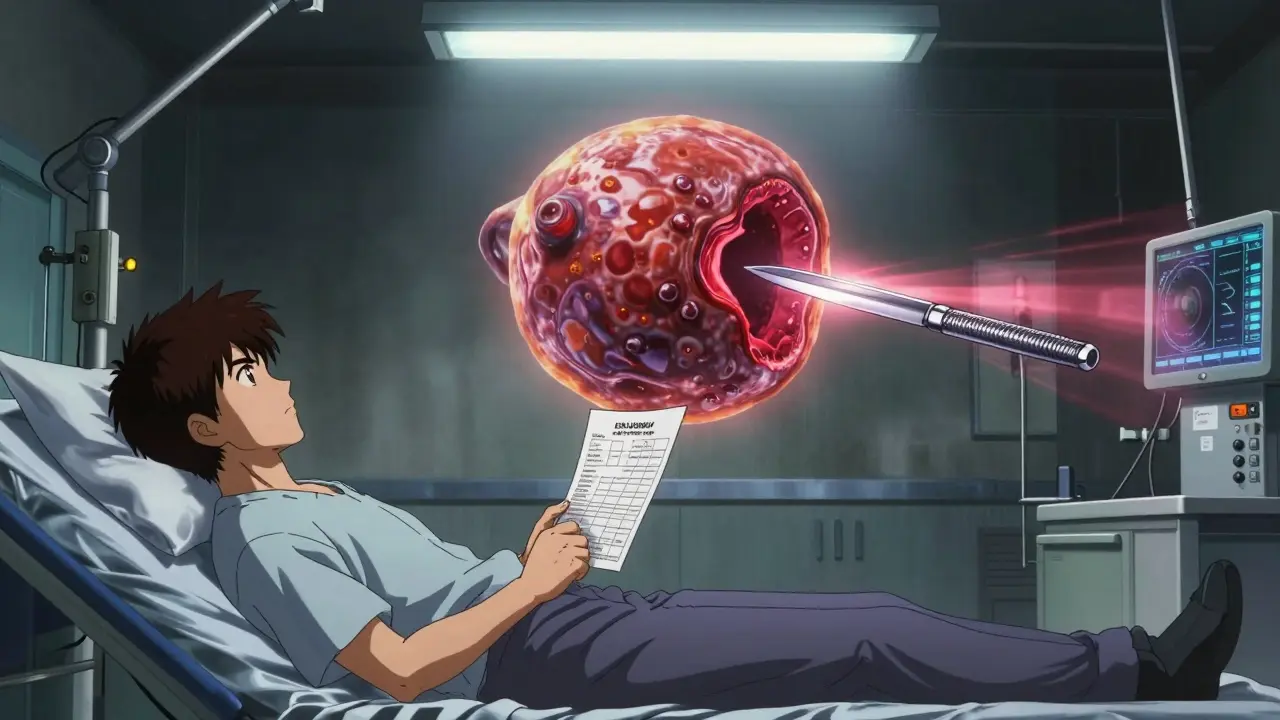
When you’re first told you have localized cancer, the word "treatment" can feel overwhelming. But here’s the truth: for many types of cancer-like prostate or early-stage lung cancer-you’re not being asked to choose between life and death. You’re being asked to choose between two powerful, proven ways to stop the cancer where it is. Radiation or surgery. Both can cure. Both have trade-offs. And neither is "better" for everyone.
What Does "Local Control" Actually Mean?
Local control means stopping cancer from growing or spreading in the area where it started. It doesn’t mean curing the whole body. That’s why it’s used for cancers that haven’t spread beyond the organ they started in-like a tumor stuck in the prostate or a small nodule in the lung. The goal isn’t to remove every last cancer cell in your body. It’s to remove or destroy the one that’s causing the threat right now.Surgery: Take It Out
Surgery means cutting the cancer out. For prostate cancer, that’s a radical prostatectomy. For lung cancer, it’s removing a lobe-or sometimes just a small piece-of the lung. It’s a one-time event. You go in, the tumor comes out, and the pathologist examines it under a microscope to tell you exactly what you’re dealing with. The big advantage? You get certainty. You know the size, the grade, whether it’s spread to nearby lymph nodes. That info guides everything that comes after. If the margins are clean-no cancer cells at the edges-you’ve got a strong chance of being done with treatment. But surgery isn’t gentle. For prostate surgery, you’re looking at 1-3 days in the hospital and 4-6 weeks to feel like yourself again. For lung surgery, it’s 3-7 days in the hospital, and recovery can stretch to 6-8 weeks. You’re not just healing from the cancer-you’re healing from the cut. And the side effects? They’re real. After prostate surgery, about 14% of low-risk men still have urinary leakage 10 years later. For high-risk men, that number jumps to 25%. Erectile dysfunction is also common-2.5 times more likely than after radiation in the first six months. Bowel problems? Less common than with radiation, but they still happen.Radiation: Zap It In Place
Radiation therapy doesn’t cut. It zaps. Using high-energy beams, it kills cancer cells without removing tissue. Modern machines can target tumors within 1-2 millimeters. You don’t feel anything during treatment. No pain. No needles. No hospital stay. For prostate cancer, traditional radiation means daily 15-30 minute sessions for 7-9 weeks. That’s a lot of trips. If you live far from the cancer center, it’s a logistical nightmare. But newer methods like SBRT (stereotactic body radiation therapy) cut that down to just 1-5 sessions. Same effectiveness. Less time. For early-stage lung cancer, SBRT is now a standard option-even for people who can’t have surgery. The 5-year survival rate? Around 40-50%. Not as high as surgery for those who are healthy enough to go under the knife, but still life-saving for those who aren’t. The trade-off? Side effects show up slower. You might feel fine during treatment, but months or years later, bowel issues can creep in. About 8% of men who get radiation for prostate cancer report serious bowel problems after 10 years. That’s double the rate of surgical patients. Bladder irritation, fatigue, and sexual side effects are also common, though often less severe than after surgery.What Do the Numbers Really Say?
Let’s talk data. The ProtecT trial, a 10-year study of over 1,600 men with low-risk prostate cancer, found no difference in survival between surgery, radiation, or just watching. Survival rates? All around 96%. That’s powerful. It means for low-risk cases, you’re not losing life expectancy by choosing radiation. But here’s the catch: the UCSF study of 91,000 men showed something different. For high-risk prostate cancer, surgery had a 15-year survival rate of 62%. Radiation? 52%. That’s a 10-point gap. Why the difference? ProtecT mostly studied low-risk men. UCSF included higher-risk cases. Your risk level changes everything. For lung cancer, the numbers lean harder toward surgery. A 2022 analysis of 30,000 patients found 71.4% of surgical patients survived five years. For those who got SBRT instead? 55.9%. That’s a big gap. But-and this matters-those who got SBRT were often older, sicker, or couldn’t have surgery. So surgery isn’t just better. It’s only an option for some.
Side Effects: What You’ll Actually Live With
Survival matters. But so does quality of life. You don’t just want to live longer. You want to live well. If you’re a man choosing between prostate cancer treatments, here’s what you’re trading:- Surgery: Higher risk of urinary leakage and erectile dysfunction right after treatment. These can improve over time, but some men live with them for years.
- Radiation: Lower risk of urinary issues early on, but higher chance of bowel problems later. Think frequent trips to the bathroom, urgency, even bleeding. It’s not as dramatic as leakage, but it’s persistent.
Who Gets Which Treatment?
It’s not about what’s "best." It’s about what’s right for you. If you’re young, healthy, and want to get it over with: Surgery might make sense. You can recover, get back to work, and move on. The treatment is done in weeks, not months. If you’re older, have other health issues, or want to avoid a major operation: Radiation-especially SBRT-is a strong, non-invasive option. No hospital stay. No big incision. Just daily (or weekly) appointments. If you’re worried about sexual function: Radiation often spares it better in the short term. But long-term, both can affect it. If you’re worried about bowel problems: Surgery is usually safer here. Radiation carries a higher long-term risk. If you live far from a cancer center: Radiation’s long course can be brutal. SBRT might be your best bet. Or surgery, if you can handle the recovery.What Experts Say
The National Comprehensive Cancer Network (NCCN) says this clearly: for localized prostate cancer, both surgery and radiation are standard options. For lung cancer, surgery is still the gold standard-if you’re healthy enough. The American Society of Clinical Oncology says: “All patients with localized prostate cancer should have access to both a urologist and a radiation oncologist before deciding.” That’s not a suggestion. It’s the standard of care. Dr. Christopher King at Cedars-Sinai puts it simply: "Radiation isn’t what people imagine. It’s precise. Personalized. And just as effective as surgery for many." But he also says: "Talk to both doctors. Don’t let one specialist sell you their tool. Get the full picture."
What About Newer Options?
Focal therapy for prostate cancer-zapping only the tumor, not the whole gland-is being tested. Proton beam therapy offers even more precise radiation. The PARTICLE trial, running through 2025, is comparing partial gland ablation to full treatment. These aren’t mainstream yet, but they’re coming. Right now, though, surgery and radiation are the two pillars. Everything else is still experimental.How to Decide
Here’s your simple checklist:- Know your cancer stage and risk level. Low-risk? High-risk? That changes everything.
- Ask for both consultations. One with a surgeon. One with a radiation oncologist. Don’t skip either.
- Ask about side effects-not just survival. What’s your quality of life going to look like in 5 years?
- Consider your life. Can you commit to 8 weeks of daily treatments? Do you have someone to help you recover after surgery?
- Don’t rush. This isn’t an emergency. Take 2-4 weeks to think, ask questions, and get second opinions.
What If You Choose Wrong?
Some people worry: "What if I pick radiation and then regret it? Can I still have surgery?" The short answer: sometimes. But it’s harder. Radiation changes tissue. Surgery after radiation is riskier-more bleeding, more complications. The same goes the other way: radiation after surgery is possible, but often less effective. That’s why getting it right the first time matters. That’s why you need both experts on your team.Final Thought
Cancer treatment isn’t about winning. It’s about choosing the path that lets you live the life you want-with as little disruption as possible. Radiation and surgery aren’t enemies. They’re tools. One cuts. One zaps. One is fast. One is slow. One leaves a scar. One leaves a memory. The best choice isn’t the one with the highest survival rate. It’s the one that fits your body, your values, and your life.Is radiation as effective as surgery for prostate cancer?
For low-risk prostate cancer, yes-radiation and surgery have nearly identical 10-year survival rates, according to the ProtecT trial. For high-risk cases, surgery shows a survival advantage in some studies, but the difference depends on patient age, overall health, and cancer biology. Both are considered standard options by major cancer guidelines.
Can you have surgery after radiation?
Yes, but it’s more complicated. Radiation changes tissue structure, making surgery riskier. There’s a higher chance of bleeding, incontinence, or bowel complications. Most surgeons prefer to avoid it unless absolutely necessary. That’s why getting the right first treatment matters.
Is SBRT better than traditional radiation for lung cancer?
For early-stage lung cancer patients who can’t have surgery, SBRT is the preferred radiation option. It delivers high doses in just 1-5 sessions instead of 20-40. Studies show it’s just as effective as traditional radiation and often better tolerated. But for patients who are healthy enough for surgery, surgical removal still offers higher long-term survival rates.
How long does recovery take after prostate surgery?
Most men spend 1-3 days in the hospital after prostate surgery. Full recovery takes 4-6 weeks. Urinary control can take months to return fully. Erectile function may take up to a year or longer to recover, if it returns at all. Recovery varies based on age, pre-surgery health, and whether nerves were spared.
Does radiation cause cancer later in life?
The risk is extremely low. Modern radiation is highly targeted, minimizing exposure to healthy tissue. While radiation can slightly increase the risk of a second cancer decades later, the chance is less than 1% over 20 years. For most patients, the benefit of treating the existing cancer far outweighs this tiny risk.
Can I choose radiation if I’m young?
Absolutely. Age alone doesn’t disqualify you from radiation. Many younger men choose it to avoid surgery’s impact on sexual and urinary function. The key is matching the treatment to your cancer risk level and personal priorities-not your age. Young, healthy men with low-risk cancer often do very well with radiation.

dean du plessis
Been through both sides with my dad-prostate cancer, low risk. Chose radiation because he didn’t want to risk incontinence. Five years later, he’s hiking again, no leaks, just a little more frequent bathroom breaks. Not perfect, but worth it for him. No regrets.
Kylie Robson
As a radiation oncologist, I have to say the data on SBRT for localized prostate cancer has evolved dramatically since 2020. The 5-year biochemical recurrence rates are now non-inferior to radical prostatectomy in low- and intermediate-risk cohorts, especially when combined with ADT. The real differentiator is not efficacy-it’s toxicity profile and patient-reported outcomes. SBRT’s reduced treatment burden is a game-changer for working patients.
Caitlin Foster
Ohhh so you’re telling me I have to choose between leaking for life OR pooping my pants in 10 years?? 🤯 I thought cancer was supposed to be the bad guy, not the bathroom police. Someone get me a Zen garden and a pelvic floor therapist.
Todd Scott
I’ve spent the last 18 months researching this exact topic after my diagnosis. The ProtecT trial gets cited a lot, but it’s mostly low-risk patients-what about those of us with Gleason 3+4? The UCSF data is more relevant for us. And honestly, the idea that radiation is "less invasive" ignores how exhausting it is to drive 45 minutes every day for eight weeks. My wife had to take three weeks off work just to drive me. Surgery was a one-time ordeal. Recovery was brutal, but it was over. Now I’m done. Radiation felt like living in limbo for months. Also, the bowel stuff? Yeah, it creeps up. I didn’t think about it until year three. Now I know why my favorite coffee shop has a sign that says "Bathroom is just past the espresso machine."
Andrew Gurung
Wow. Just… wow. You people treat cancer like it’s choosing between a Tesla and a Prius. 🤡 I mean, come on. This isn’t a lifestyle decision. This is your life. And if you’re not getting surgery, you’re basically gambling with your future. I’ve seen too many men who "chose radiation" and ended up needing salvage therapy anyway. And then? They’re stuck with complications from both. Don’t be one of them. Get it out. Period. 🙏
Paula Alencar
It is imperative that we, as a society, recognize the profound psychological weight carried by individuals navigating these therapeutic crossroads. The clinical data, while compelling, often obscures the existential vulnerability inherent in such decisions. To reduce this to a binary of "cut or zap" is to diminish the sacredness of bodily autonomy. One must consider not merely survival metrics, but the integrity of one’s daily existence-the quiet dignity of morning coffee without fear of urgency, the intimacy of touch unmarred by shame. The physician’s role is not to prescribe, but to illuminate. And the patient’s burden? To choose not just a treatment, but a version of themselves they can live with.
Nikki Thames
Let me be blunt: if you’re choosing radiation because you’re scared of surgery, you’re not being brave-you’re being cowardly. Cancer doesn’t care about your comfort. It doesn’t care if you hate needles or don’t want to be in the hospital. It’s in your body. And if you’re not willing to face the consequences of removing it, you’re not ready to fight. This isn’t a spa day. It’s survival. And if you’re going to live, you’ve got to be willing to bleed.
Chris Garcia
In my village in Nigeria, we say: "The knife cuts the flesh, but the fire burns the soul." Here in America, you have all these machines, all these studies, all these specialists-but you forget the human part. For some, surgery is a clean break. For others, radiation is peace. No one size fits all. But what matters is this: you must be heard. You must be seen. Not as a case number, not as a survival curve-but as a man who still wants to hold his child, who still wants to sleep without fear. The doctors give you options. But only you know what your soul can carry.
Satyakki Bhattacharjee
People these days think they can just pick and choose like it’s a menu. Cancer ain’t pizza. You don’t get to pick extra cheese and no pepperoni. If you got cancer, you got to cut it out. Radiation is for people who can’t handle the truth. And if you’re worried about your pee or your sex life, maybe you should’ve thought about that before you ate all that junk food.
Kishor Raibole
Interesting how everyone here acts like surgery is the "real" treatment. Let me remind you: the first successful radical prostatectomy was performed in 1904. The patient died of sepsis three weeks later. Modern radiation? It’s precision. It’s science. It’s evolution. And yes, I know the survival numbers favor surgery-but those numbers are skewed by selection bias. Who gets surgery? Younger, healthier men. Who gets radiation? Older, frailer, sicker men. Of course surgery wins. It’s not that surgery is better-it’s that the comparison is rigged. Stop romanticizing the scalpel. The laser is the future.
John Barron
So… let me get this straight. I can either be a leaky mess for 10 years OR have a colon that acts like it’s on a 24/7 espresso machine? 😭 I just want to go to the movies without planning my route to the nearest bathroom. Why is this so hard?? Also, can I get a coupon for a pelvic floor PT? 🙏 #CancerLife #BowelTrauma #WhyIsThisMyLife
Liz MENDOZA
Thank you for writing this with so much care. I’ve been sitting with my mom as she decides between radiation and surgery for her early-stage lung cancer. She’s 72, has COPD, and doesn’t want to be cut open. But she’s terrified of radiation making her lungs worse. I’ve been reading everything I can find. This post helped me understand what questions to ask the oncologist. You didn’t just give data-you gave us a way to think about it. That means more than you know.
James Bowers
It is a gross misrepresentation to suggest that radiation and surgery are "equally effective" for high-risk prostate cancer. The 10-year all-cause mortality difference of 10% observed in the UCSF cohort is statistically significant (p < 0.01) and clinically meaningful. To equate the two modalities in this context is not only misleading-it is ethically irresponsible. The NCCN guidelines clearly state that surgery remains the preferred option for fit patients with high-risk disease. Any deviation from this standard requires documented shared decision-making and explicit acknowledgment of the survival disadvantage. Do not be misled by marketing slogans from radiation centers.