OTC Safety Risk Checker
Check Your OTC Safety Risk
This tool helps you identify potential risks when using over-the-counter medications based on your health conditions and current medications.
When Your Prescription Becomes a Shelf Item
It used to take a doctor’s note to get ibuprofen. Now you can grab a bottle on your way to the grocery store. That’s the reality of OTC switches-when a medication moves from prescription-only to over-the-counter. It sounds simple: more access, lower cost, less hassle. But behind that convenience is a real shift in risk. When you no longer need a doctor to approve your medicine, you’re also on your own to understand it.
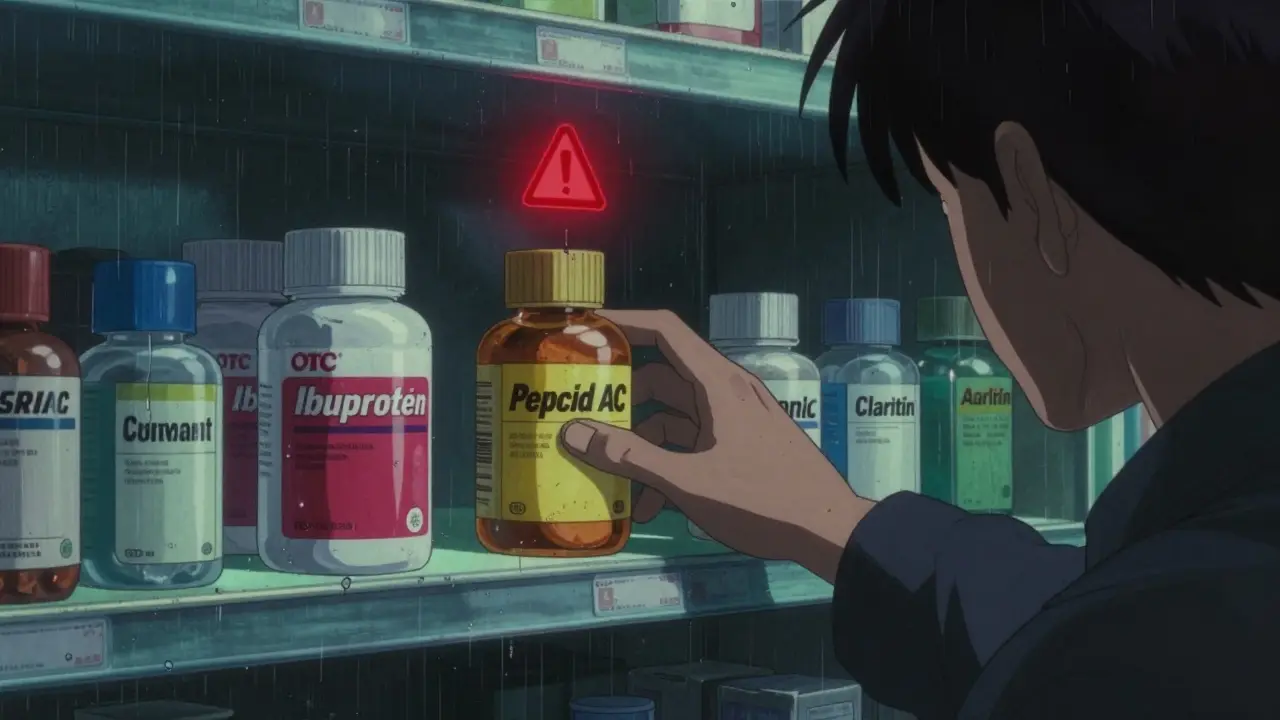
The FDA has approved dozens of these switches over the last 40 years. Drugs like famotidine (Pepcid AC), loratadine (Claritin), and omeprazole (Prilosec OTC) all started as prescriptions. Today, they’re in nearly every medicine cabinet. The goal? Save the healthcare system money and give people faster relief. The FDA estimates these switches save Americans over $100 billion a year in avoided doctor visits and tests. But savings don’t mean safety. When a drug goes OTC, usage goes up-and so do the chances of mistakes.
How a Drug Gets Approved for OTC Use
It’s not just a paperwork change. The FDA doesn’t let any drug jump from prescription to OTC without a long, strict review. Manufacturers must prove four things:
- The condition can be reliably self-diagnosed (like heartburn, allergies, or mild headaches).
- People can follow the label without confusion.
- The drug has a wide safety margin-meaning it’s unlikely to cause harm even if taken a little too much.
- The benefits clearly outweigh the risks when used without a doctor.
For example, ibuprofen was reviewed for nearly a decade before it became OTC in 1984. Researchers studied how often people misused it, what doses were safe for long-term use, and whether users could spot warning signs like stomach bleeding. The answer? Yes-most people could handle it safely, as long as they read the label.
But here’s the catch: the FDA’s approval doesn’t mean everyone will use it safely. It only means the drug is likely safe for most people under normal conditions. That’s why the real danger comes after the switch.
The Hidden Risks of Self-Medication
One of the biggest problems? People don’t treat OTC drugs like real medicine. A 2023 study found that 77% of users didn’t know the contraindications for common OTC painkillers. Another 85% thought pharmacist advice was enough-and many pharmacists didn’t even ask about existing conditions or other medications.
Let’s say you’re on blood pressure medication. You get a cold. You reach for a decongestant like pseudoephedrine. It’s OTC. It’s cheap. It’s right there on the shelf. But that little pill can spike your blood pressure dangerously high-especially if you’re also taking antidepressants or other heart meds. The FDA warns that these interactions can cause heart rhythm problems, strokes, or even death. And you might never connect the dots.
NSAIDs like ibuprofen and naproxen are another silent threat. Used short-term for a headache? Fine. Used daily for arthritis pain? That’s a different story. Long-term use can lead to kidney damage, stomach ulcers, or heart attacks-especially in older adults. The American Geriatrics Society lists 30 OTC drugs that are risky for people over 65. Diphenhydramine (Benadryl) can cause confusion and falls. NSAIDs double or triple the risk of internal bleeding. Yet, most people never check the list.
Who’s Most at Risk?
Not everyone faces the same level of danger. Certain groups are far more vulnerable:
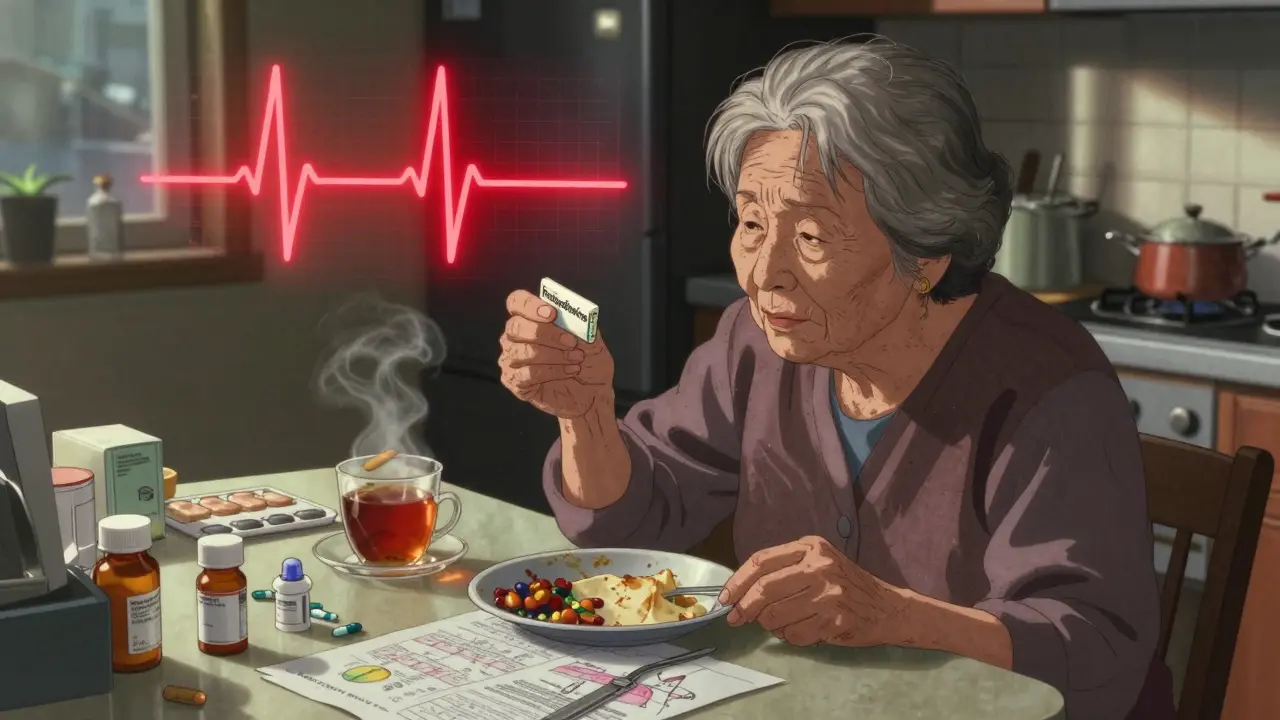
- Older adults: Their bodies process drugs slower. They’re often on five or more medications. A simple OTC sleep aid can mix dangerously with their heart or blood pressure pills.
- People with chronic conditions: Diabetes, liver disease, kidney problems, asthma-these change how your body handles drugs. A common OTC cold remedy might make your condition worse.
- Those taking multiple meds: If you’re on three or more prescriptions, the chance of a harmful interaction jumps dramatically. OTC drugs don’t come with a warning label that says, “Don’t mix with your other meds.” You have to figure that out yourself.
- Parents giving kids OTC meds: Many parents don’t realize that children’s Tylenol and adult Tylenol have the same active ingredient. Giving the wrong dose can cause liver failure.
A Reddit user named NurseJen88 shared a case from her ER: an elderly woman on blood pressure meds took an OTC decongestant for congestion. Within hours, she was in hypertensive crisis. She didn’t think it was a drug interaction. She thought it was just her blood pressure acting up.
How to Use OTC Drugs Safely
OTC switches aren’t inherently bad. They’ve helped millions get faster relief. But safety isn’t automatic. You have to be proactive. Here’s how:
- Read the Drug Facts label. It’s not just fine print. It’s your safety guide. Look for the active ingredient first. Then check the warnings.
- Check for duplicate ingredients. Many cold, flu, and pain products contain the same active ingredient-like acetaminophen or ibuprofen. Taking two products with the same ingredient is like doubling your dose. That’s how liver damage happens.
- Know your health conditions. If you have high blood pressure, kidney disease, or are pregnant, some OTC drugs are off-limits. Don’t guess. Look it up or ask.
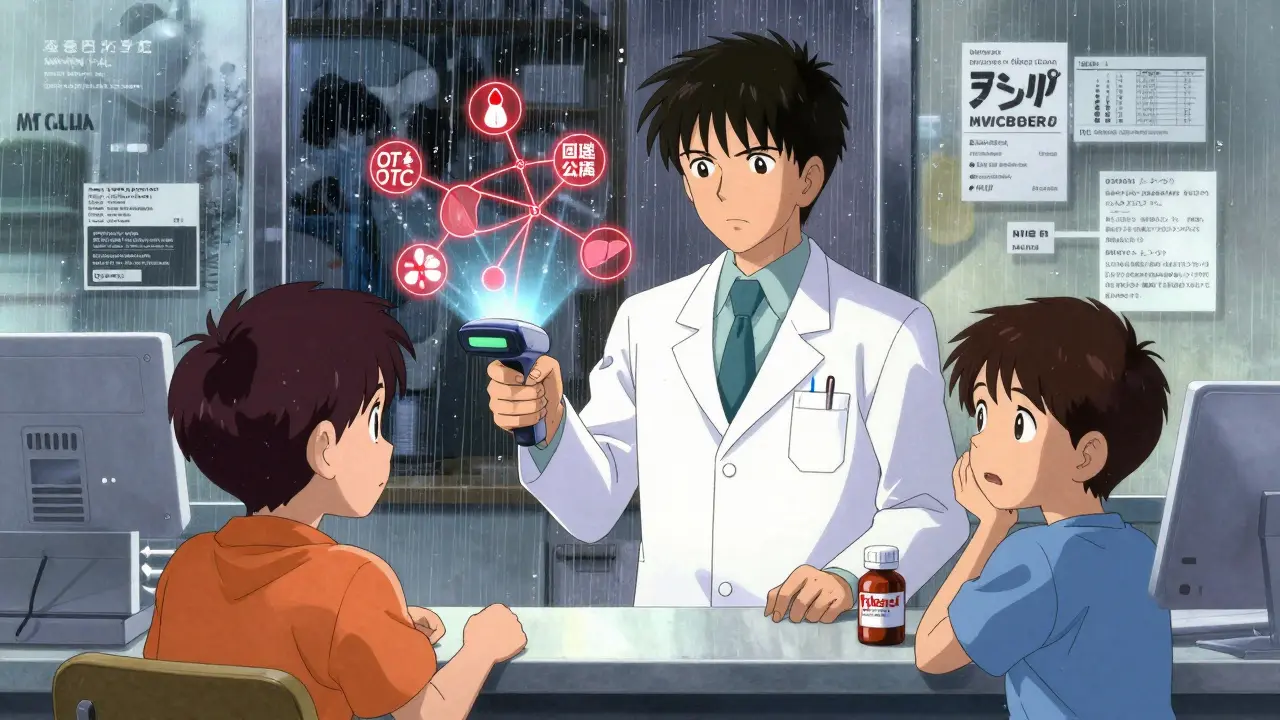
- Ask your pharmacist. Pharmacists are trained to spot interactions. Bring your list of all medications-even vitamins and supplements. Don’t assume they’ll ask you. Go to them.
- Don’t use OTC meds long-term without checking in. If your headache, heartburn, or allergy symptoms last more than a week, see a doctor. You might be masking a bigger problem.
And here’s a simple trick: if you’re unsure, don’t take it. Wait. Call your doctor. Or go to a pharmacy and ask. It’s better to wait a day than risk a trip to the ER.
What’s Changing Now?
The FDA is trying to make OTC labels easier to understand. Since 2022, they’ve required larger fonts, clearer warnings, and simpler language. That’s because 80 million American adults struggle with health literacy. They can’t read complex labels.
Some stores are testing QR codes on OTC packaging. Scan it, and you get a video explaining the risks, interactions, and what to watch for. Walmart rolled it out in 15% of their private-label OTC products in early 2023. It’s a small step-but a smart one.
Future tools might include AI apps that scan your medication list and flag OTC risks before you buy. But tech won’t fix the root problem: people don’t realize OTC drugs are still drugs. They’re powerful. They can hurt you. They can kill you.
The Bottom Line
OTC switches are a win for convenience and cost. But they’re not a win for safety unless you’re informed. The same drug that helps your headache can cause a heart attack if you’re on the wrong combination of pills. The same antihistamine that helps your allergies can make your elderly parent fall.
You don’t need a prescription to buy these drugs. But you do need to understand them. Always check the label. Always ask your pharmacist. Always tell your doctor what you’re taking-even if you think it’s just “a little OTC stuff.”
Medicine doesn’t become safe just because it’s on the shelf. It becomes safe when you treat it like the powerful tool it is.
Are OTC drugs safer than prescription drugs?
No. OTC drugs are not inherently safer-they’re just approved for use without a doctor’s supervision. Many OTC drugs, like NSAIDs and decongestants, carry serious risks if misused, especially in people with chronic conditions or those taking multiple medications. The difference isn’t safety-it’s oversight. Prescription drugs come with professional monitoring; OTC drugs rely on your ability to follow instructions correctly.
Can I take OTC painkillers every day?
Not without medical advice. Daily use of NSAIDs like ibuprofen or naproxen increases your risk of stomach bleeding, kidney damage, and heart problems. Acetaminophen, if taken in excess, can cause liver failure. The FDA recommends using these drugs only as needed and for the shortest time possible. If you need pain relief daily for more than 10 days, see a doctor. You might be treating a symptom, not the cause.
Why do OTC labels say "Do not use if you have high blood pressure"?
Many OTC cold and allergy medicines contain decongestants like pseudoephedrine or phenylephrine. These narrow blood vessels to reduce nasal swelling-but they also raise blood pressure. If you’re on blood pressure medication, this can cause dangerous spikes, leading to stroke or heart attack. Even if your blood pressure seems normal, the interaction can still happen. Always check the warning section before taking any OTC cold remedy.
Is it safe to mix OTC meds with alcohol?
No. Mixing alcohol with many OTC drugs can be deadly. Alcohol with acetaminophen increases liver damage risk. Alcohol with antihistamines or sleep aids can cause extreme drowsiness, slowed breathing, or unconsciousness. Even small amounts of alcohol with dextromethorphan (found in cough syrups) can lead to dangerous side effects. The FDA explicitly warns against combining alcohol with these medications. Always read the label-and if it says "avoid alcohol," don’t.
What should I do if I think I’ve overdosed on an OTC drug?
Call Poison Control immediately at 1-800-222-1222. Don’t wait for symptoms. Overdosing on acetaminophen can cause liver failure without immediate signs. Overdosing on NSAIDs can lead to kidney failure or internal bleeding. If the person is unconscious, having trouble breathing, or having seizures, call 911. Keep the medicine bottle handy-poison control will need to know the active ingredient and how much was taken.
What to Do Next
If you take any OTC medications regularly, make a list of them-active ingredients included. Bring it to your next doctor’s visit or pharmacy appointment. Ask: "Could any of these interact with my other meds or conditions?"
Keep a small notebook in your medicine cabinet. Write down when you start a new OTC drug and why. Note any side effects-even mild ones. That info could save your life.
And if you’re unsure? Don’t guess. Ask. A pharmacist can help in under five minutes. It’s the easiest way to avoid a preventable mistake.

Aditya Kumar
I just grab whatever's on sale. If it's on the shelf, it's fine, right?
Why do people make this so complicated?
Colleen Bigelow
This whole OTC switch is a corporate scam designed by Big Pharma and the FDA to offload liability.
They know people can't read labels. They know seniors are dying. They don't care.
It's all about profit. You think they want you healthy? No. They want you addicted to their pills so you keep buying.
And now they're pushing QR codes like it's some kind of miracle fix? LOL.
They're not fixing the system-they're burying it under flashy tech while the body count rises.
Remember when aspirin was prescription? Now it's a candy.
They're turning medicine into a carnival game.
And you're all just clicking 'buy now' like good little consumers.
Wake up. This isn't freedom. It's negligence dressed up as convenience.
Billy Poling
It is imperative to recognize that the transition of pharmaceutical agents from prescription to over-the-counter status constitutes a profound epistemological shift in the public's relationship with medical science.
Whereas prior to such reclassification, the physician served as an epistemic gatekeeper, ensuring that pharmacological intervention was both clinically indicated and contextually appropriate, the current paradigm places the entire burden of risk assessment upon the individual consumer, who often possesses neither the requisite biomedical literacy nor the cognitive bandwidth to accurately interpret polypharmaceutical interactions.
Moreover, the FDA’s approval criteria, while ostensibly rigorous, are predicated on population-level statistical safety, which inherently neglects individual genetic, metabolic, and comorbid variability.
One might argue that the economic savings are substantial, yet one must also weigh these against the societal costs of increased emergency department visits, iatrogenic organ damage, and the erosion of professional medical authority.
The notion that 'reading the label' is sufficient is a dangerous fallacy-labels are written by lawyers, not clinicians, and are optimized for regulatory compliance, not comprehension.
Furthermore, the proliferation of duplicate active ingredients across multiple OTC products creates a latent, systemic risk that is virtually impossible for the average consumer to navigate without specialized training.
It is not merely a matter of personal responsibility; it is a failure of public health infrastructure.
Mike Smith
This is such an important conversation.
OTC doesn't mean 'harmless'-it means 'you're responsible now.'
And that’s okay-if we all take the time to learn.
Keep a med list. Ask your pharmacist. Don’t assume.
One phone call could save your life.
You’ve got this.
Kitty Price
I used to take ibuprofen like candy until my kidneys screamed at me 😅
Now I check labels like a hawk.
Pharmacist = my new best friend 💬
Randolph Rickman
I’m a nurse’s aide and I see this every day.
Grandma takes Benadryl to sleep, then takes her blood pressure med, and the next day she’s dizzy and falls.
It’s not her fault. Nobody told her.
But here’s the good news: you can fix this.
Just ask.
Walk into the pharmacy. Say, 'I take these-what can I safely take for a cold?'
They’ll help you.
Don’t be shy.
That five-minute chat? It’s worth more than a lifetime of 'I didn’t know.'
sue spark
I never realized that cold medicine and Tylenol had the same stuff in them until I got sick and took both and felt awful
now I always check the active ingredient first
SHAMSHEER SHAIKH
In India, we have a different reality: OTC drugs are sold without even a pharmacist present-often by shopkeepers who have no medical training.
People buy antibiotics for fever, painkillers for every ache, and sleep aids for stress-no questions asked.
And yet, we still have more respect for medicine than many here.
Here, people treat pills like candy.
There, people treat them like weapons-because they know what happens when you misuse them.
Let’s not romanticize convenience.
True safety is knowledge-not just a label.
James Rayner
It’s strange, isn’t it?
We’ve outsourced our trust-from doctors to labels to algorithms.
But medicine isn’t a product.
It’s a conversation between body and science.
When we remove the doctor, we remove the context.
And context is everything.
That pill? It’s not just chemistry.
It’s your history, your diet, your stress, your sleep, your other pills, your genes.
Can a label hold all that?
Maybe not.
But maybe we can.
Just… remember to ask.
Souhardya Paul
I’ve been doing this for years: I keep a little notebook in my bathroom with every OTC I take and why.
It’s saved me twice already-once when I almost mixed NSAIDs with my blood thinner, and again when my mom realized her 'sleep aid' was making her dizzy.
It’s not glamorous.
But it’s simple.
And it works.
Try it. You’ll be surprised how much it helps.
Kim Hines
I just read the label now.
It’s not hard.
Just don’t rush.
Joanna Ebizie
People are so dumb they think 'OTC' means 'safe for everyone.'
Newsflash: your grandma’s 'natural remedy' is probably killing her.
Stop being lazy and read the damn thing.
Ron Williams
I’m from the U.S., but I’ve lived in Japan and Germany too.
Here, OTC meds are just… there.
Over there? You need to ask.
Even for ibuprofen.
It’s not about control.
It’s about care.
Maybe we’ve lost something by making everything so easy.
Not everything should be grab-and-go.