
Have you ever switched from a brand-name pill to a generic version and felt... different? Maybe your blood pressure spiked, your anxiety returned, or your thyroid levels went haywire. You aren't imagining it, and you aren't alone. While the medical consensus is that generic medications are safe and effective for the vast majority of people, individual biology can react sharply to subtle changes in how those drugs are made.
We often hear that generics are "the same" as brand names. Technically, they share the same active ingredient. But pills are complex chemical mixtures, and when we look closer at the science of absorption, inactive ingredients, and genetic differences, the picture becomes much more nuanced. This article breaks down why some patients experience significant side effects or reduced efficacy with generics, which drugs carry the highest risk, and what steps you can take to protect your health.
The Myth of Identical Pills: Understanding Bioequivalence
To understand why reactions vary, we first need to look at how regulators approve these drugs. In the United States, the Food and Drug Administration (FDA) requires generic manufacturers to prove bioequivalence. This doesn't mean the drug must be identical molecule-for-molecule in every way. Instead, it means the generic must deliver the active ingredient into your bloodstream within a specific range compared to the brand name.
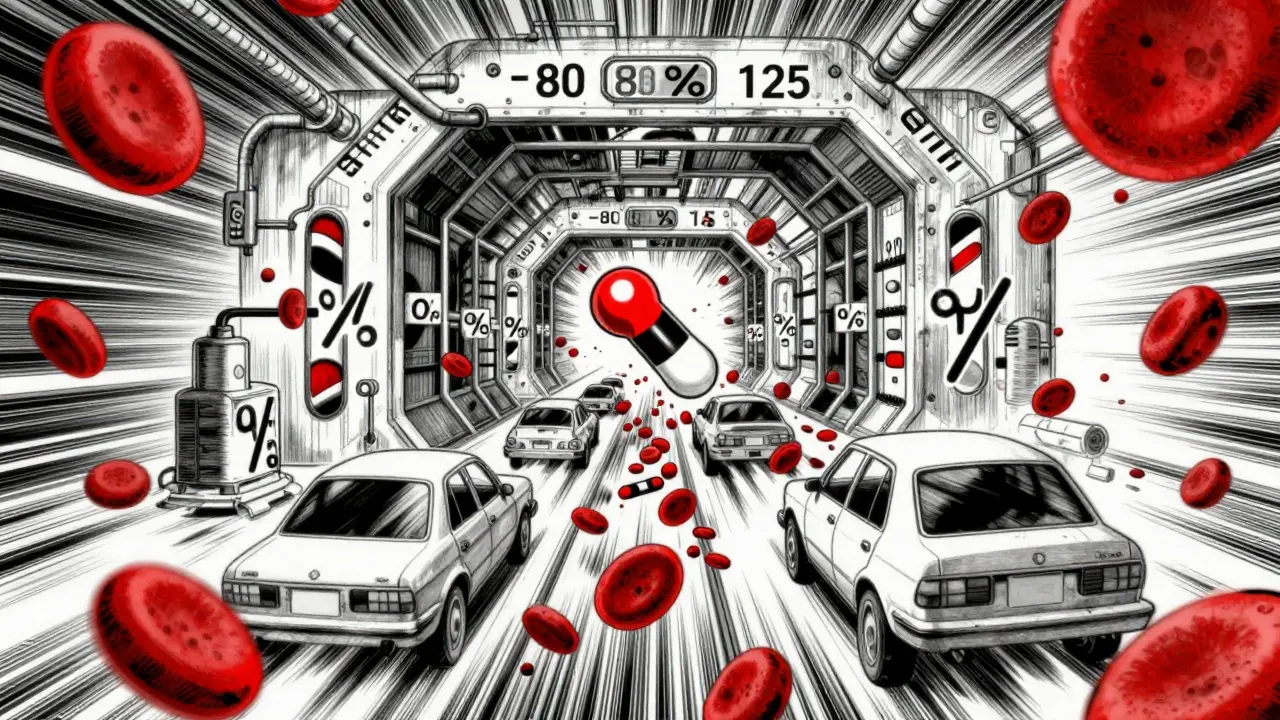
Currently, FDA regulations allow a generic drug to deliver between 80% and 125% of the active ingredient concentration found in the brand-name version. This might sound like a wide gap, but it's based on statistical averages from healthy volunteers. The problem arises because this 80-125% window applies to the *mean* difference. As noted by pharmacologists, two different generic formulations of the same drug can differ from each other by up to 45% in absorption characteristics while still legally meeting bioequivalence standards against the original brand.
For most medications, such as antibiotics or painkillers, this variance is negligible. Your body handles the slight fluctuation without issue. However, for certain critical medications, even a small shift in blood concentration can push you out of the "therapeutic window"-the sweet spot where the drug works effectively without causing toxicity.
| Regulatory Body | Standard Range | Application |
|---|---|---|
| FDA (USA) | 80% - 125% | Most generic approvals |
| EMA (Europe) | 90% - 111% | Narrow Therapeutic Index (NTI) drugs |
| Proposed NTI Guidance | Tighter controls | High-risk medication classes (2024 draft) |
The Hidden Culprit: Inactive Ingredients and Excipients
If the active ingredient is the engine of the car, the inactive ingredients are the chassis, paint, and fuel line. These components, known as excipients, make up 80-99% of a pill's total weight. They include fillers, binders, dyes, preservatives, and coating materials that determine how the pill dissolves and how your stomach absorbs it.
While the active pharmaceutical ingredient must be identical, manufacturers have significant freedom to choose their excipients. This is where individual allergies and sensitivities come into play. For example, some patients are sensitive to bisulfites, which are used as preservatives in many liquid and injectable medications. Dr. William B. Schultz, former FDA deputy commissioner, has noted that these chemicals cause asthmatic allergic reactions in approximately 5-10% of asthmatic patients.
Consider a patient with celiac disease or gluten sensitivity. If a generic manufacturer uses wheat-based starch as a binder while the brand name uses cornstarch, the patient could experience gastrointestinal distress that they mistakenly attribute to the drug itself. Similarly, artificial dyes like tartrazine (yellow #5) can trigger hyperactivity in children or hives in sensitive adults. When you switch brands, you aren't just changing the source of the medicine; you're changing the entire chemical matrix your body interacts with.
Narrow Therapeutic Index (NTI) Drugs: The High-Stakes Category
Not all medications are created equal when it comes to switching. The biggest risks lie with drugs classified as having a Narrow Therapeutic Index (NTI). These are medications where the difference between a helpful dose and a toxic dose is very small-often less than a two-fold variation.
For NTI drugs, maintaining consistent blood levels is critical. Fluctuations exceeding 10-15% can lead to serious adverse outcomes. Common NTI medications include:
- Levothyroxine (Synthroid): Used for hypothyroidism. Even slight variations can cause fatigue, weight gain, or heart palpitations.
- Warfarin (Coumadin): A blood thinner. Variations can lead to dangerous clotting or bleeding events.
- Phenytoin (Dilantin) & Carbamazepine (Tegretol): Antiepileptics. Inconsistent levels can trigger breakthrough seizures.
- Digoxin (Lanoxin): Used for heart failure. Toxicity can cause fatal arrhythmias.
A 2019 study published in JAMA Internal Medicine highlighted this risk vividly. Researchers analyzed 2,060 patients who switched from brand-name levothyroxine to generic versions. Within six months, 23.7% experienced thyroid-stimulating hormone (TSH) level fluctuations beyond the therapeutic range. Compare that to the 14.2% of patients who stayed on the brand name. That’s a statistically significant increase in instability for those who switched.
This isn't just about one company vs. another. It’s about consistency. If you find a generic formulation that works for you, staying with that specific manufacturer is often safer than allowing automatic substitutions at the pharmacy counter.
Real-World Evidence: What Patients Are Experiencing
Clinical trials are conducted under ideal conditions with healthy volunteers. Real life is messier. Patient-reported data provides a crucial layer of evidence regarding individual responses. An analysis of over 1,200 patient reviews on Drugs.com revealed that 38.2% of patients taking generic levothyroxine reported worse symptom control compared to the brand name. Specific complaints included increased fatigue (27.6%) and mood changes (19.3%).
Similar trends appear in mental health medications. Discussions on pharmacy forums indicate that nearly two-thirds of users reporting issues with generic switches cited problems with bupropion (Wellbutrin). Symptoms described included severe headaches and increased anxiety after switching to certain generic formulations. A survey by the National Community Pharmacists Association found that 68.3% of community pharmacists had observed patients experiencing adverse effects when switching between different generic manufacturers of the same medication.
It is important to distinguish between correlation and causation here. Some experts argue that the "nocebo effect"-where expecting a negative outcome causes physical symptoms-plays a role. However, the physiological data on NTI drugs suggests that for many patients, the reaction is biological, not psychological. The variability in manufacturing processes means that Batch A from Manufacturer X might absorb differently than Batch B from Manufacturer Y, even if both are "generics."">

How to Manage Switching Safely
If you rely on medication for chronic conditions, you don't have to accept adverse reactions passively. Here is a practical checklist to manage your medication safety:
- Know Your Drug Class: Ask your doctor if your medication is an NTI drug. If it is, request that your prescription specify "Dispense as Written" or "Brand Medically Necessary" if you have had stability issues with generics.
- Track Your Symptoms: Keep a simple diary when switching formulations. Note energy levels, mood, sleep quality, and any physical side effects. This data is invaluable for your doctor.
- Monitor Lab Work: For drugs like warfarin or levothyroxine, schedule blood tests sooner than usual after a switch. The American Thyroid Association recommends checking TSH levels 6-8 weeks after any formulation change. For warfarin, INR monitoring should occur within 3-5 days.
- Check Inactive Ingredients: If you have known allergies (gluten, dyes, sulfites), ask your pharmacist to check the FDA's Inactive Ingredient Database before accepting a new generic.
- Stick to One Manufacturer: Once you find a generic that works well, ask your pharmacist to try to keep you on that specific manufacturer. While pharmacies aim for cost savings, many will accommodate requests for consistency if communicated clearly.
The Future of Generic Regulation
The conversation around generics is evolving. Regulators are recognizing that the "one size fits all" approach to bioequivalence may not work for everyone. The FDA released draft guidance in 2024 proposing stricter manufacturing standards for 23 high-risk medication classes. Additionally, the European Medicines Agency already enforces tighter bioequivalence ranges (90-111%) for NTI drugs, resulting in fewer generic approvals for these high-risk categories in Europe compared to the US.
Research into pharmacogenomics-the study of how genes affect a person's response to drugs-is also opening new doors. A 2024 study in Clinical Pharmacology & Therapeutics demonstrated that genetic testing could predict individual response variations to generic medications with over 83% accuracy for certain drug classes. In the near future, your DNA profile might determine whether a generic is safe for you, moving us toward truly personalized substitution recommendations.
Until then, vigilance is key. Generics save the healthcare system billions annually and provide access to essential medicines for millions. They are generally safe and effective. But for a subset of patients, particularly those on narrow therapeutic index drugs, the margin for error is slim. By understanding the science behind bioequivalence and advocating for consistent care, you can ensure that your treatment remains stable and effective.
Are generic drugs always weaker than brand-name drugs?
No. Generic drugs contain the exact same active ingredient, strength, and dosage form as the brand-name drug. They are required to meet strict bioequivalence standards, meaning they deliver the same amount of active ingredient into your bloodstream over the same period. Any perceived weakness is usually due to individual sensitivity to inactive ingredients or minor variations in absorption rates, not a lack of potency in the active drug itself.
Which medications should I avoid switching to generics?
You should exercise caution with Narrow Therapeutic Index (NTI) drugs. These include levothyroxine (for thyroid), warfarin (blood thinner), phenytoin and carbamazepine (seizures), digoxin (heart failure), and cyclosporine (immunosuppressant). For these drugs, even small changes in blood concentration can be dangerous. Consult your doctor before switching these medications.
Can I ask my pharmacist to keep me on the same generic manufacturer?
Yes. While pharmacies often substitute generics automatically to save costs, you can request that your prescription be filled with a specific manufacturer. Tell your pharmacist, "Please do not substitute this generic," or ask your doctor to write "Dispense as Written" on the prescription. This helps maintain consistency in your treatment.
What are inactive ingredients, and do they matter?
Inactive ingredients, or excipients, are fillers, binders, dyes, and coatings that hold the pill together and control how it dissolves. They make up most of the pill's weight. While generally safe, they can cause allergic reactions or digestive issues in sensitive individuals. If you have allergies to gluten, dyes, or sulfites, you should check the inactive ingredient list of your generic medication.
Is it safe to switch between different generic brands of the same drug?
For most drugs, yes. However, for NTI drugs or if you have experienced side effects, switching between different generic manufacturers can cause fluctuations in effectiveness. Studies show that different generic versions of the same drug can vary in absorption. If you feel better on one specific generic, stick with it and monitor your labs closely if a switch is unavoidable.
