
Staring at a menu in an airport terminal or a busy restaurant while trying to stick to your weight goals feels like a trap. You’re tired, you’re hungry, and every option seems loaded with hidden calories, sugar, or sodium. It’s easy to think that travel means surrendering your health routine. But here is the truth: airports have changed. The days of only having greasy fast food are fading. In fact, over 71% of U.S. airports now offer high-fiber, plant-based meals. You just need to know where to look and how to order.
This isn't about starving yourself on a plane. It's about strategy. When you understand what makes a meal truly sustaining versus just filling, you can navigate any dining situation without blowing your budget or your diet. Let’s break down exactly how to eat smart when you are away from home.
The Science Behind Airport Hunger
Why does everything taste so good in an airport? It’s not just your imagination. Airports are designed to sell food, and they use sensory marketing to trigger cravings. But there is also a biological factor. Travel disrupts your circadian rhythm and often spikes cortisol levels. This combination makes your body crave quick energy-usually in the form of sugar and refined carbs.
If you give in to that craving, you get a spike in blood sugar followed by a crash. That crash leaves you feeling sluggish and even hungrier an hour later. Registered dietitian Hernandez emphasizes that pairing carbohydrates with protein keeps blood sugars balanced. This simple combination provides sustained satisfaction during long layovers or flights. Instead of reaching for a cookie, aim for a snack that hits three targets: 15-20 grams of protein, at least 3 grams of fiber, and controlled carbohydrates (under 25 grams per snack).
Think about it this way: a bagel might fill your stomach, but it won’t keep you full. A hard-boiled egg with a piece of fruit will. One egg gives you 6 grams of protein. Add an apple, and you’ve got fiber to slow digestion. This balance prevents the mid-afternoon slump that usually leads to impulse buying at the next gate.
Decoding the Airport Menu
Airport food has evolved, but it still requires a keen eye. Many options look healthy but hide nutritional traps. For example, salad bars seem like the safest bet. However, a standard ranch dressing contains 14 grams of fat and 140 calories per two-tablespoon serving. Switch to oil and vinegar, and you cut that to 70 calories and 7 grams of fat. That single swap saves you half the calories in your dressing alone.
Here is how to spot the winners and losers in common airport categories:
- Smoothies: They sound refreshing, but many are liquid candy. A "healthy" green smoothie can contain 48 grams of sugar, which exceeds the American Heart Association’s recommended daily limit for men (36 grams). Always check if the base is juice rather than water or ice.
- Yogurt Parfaits: These are notorious for hidden sugars. One traveler documented a parfait at JFK Terminal 4 with 48 grams of sugar. Look for plain Greek yogurt cups instead, which offer 10-20 grams of protein depending on the brand.
- Sandwiches: Chains like Au Bon Pain offer decent protein (15-25g), but watch the sodium. Many sandwiches contain 800-1,200mg of sodium, which is nearly half your daily limit. Opt for grilled chicken over processed meats like salami or ham.
- Burrito Bowls: Places like Mod Market at Denver International allow customization. The trick? Order double vegetables and half rice. A fully loaded bowl can exceed 900 calories, but adjusting the ratios keeps you in the 500-600 calorie range while keeping you full.
Pricing is another factor. Healthy entrees at airports average $12.50-$18.00, a premium over standard fast food. To mitigate this, consider splitting a larger portion or focusing on nutrient-dense items that provide more satiety per dollar, such as salads with added protein toppings.
The Power of Packing Your Own Snacks
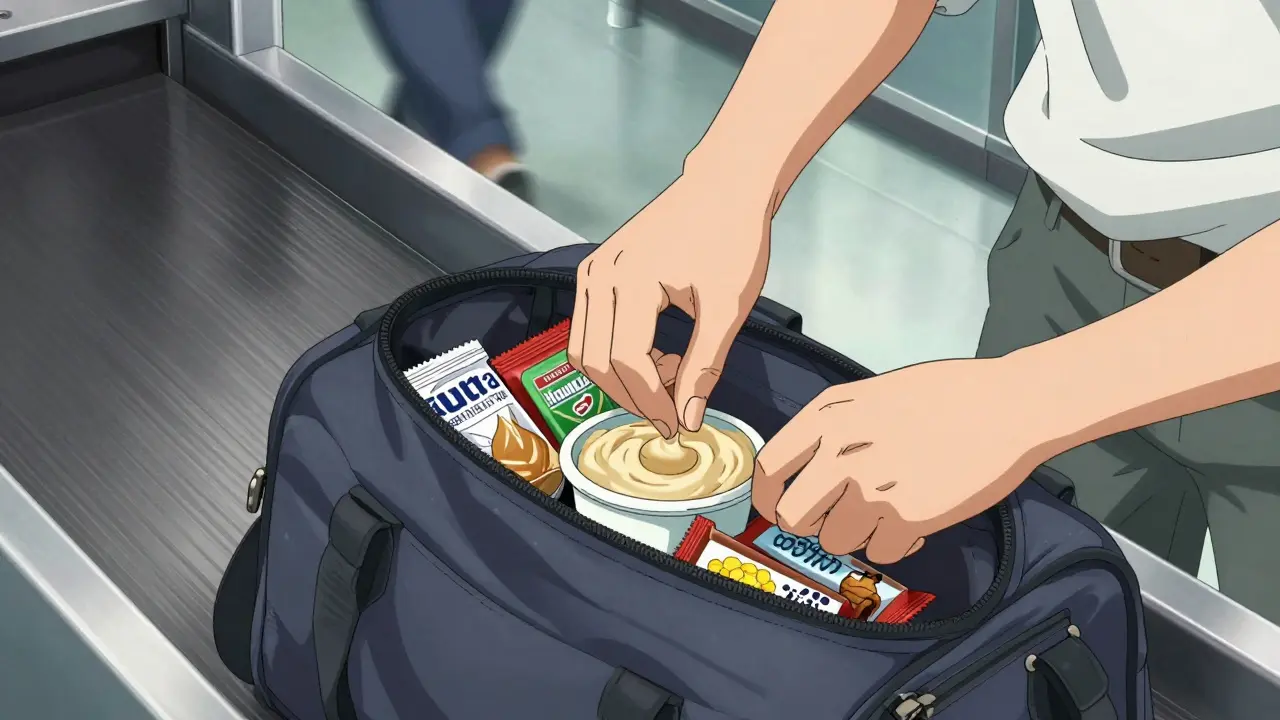
The most reliable way to control your intake is to bring your own food. You don’t need a cooler or complex prep. Non-perishable items are your best friends because they bypass TSA liquid restrictions if they are under 3.4 ounces.
Consider these portable powerhouses:
- Nut Butter Packets: Justin’s 1.15-ounce packets provide 190 calories, 16g of fat, and 2g of protein. They are dense and satisfying, perfect for curbing hunger between meals.
- Hummus Cups: Trader Joe’s 2-ounce cups offer 70 calories, 4g of fat, and 2g of protein. Pair them with carrot sticks or whole-grain crackers for fiber.
- Protein Bars: Look for bars that meet the 15g protein threshold with less than 25g of carbs. GoMacro bars, for instance, provide 10g of protein and 18g of carbohydrates in a 2.4oz package. Check labels for added sugars; some "health" bars have as much sugar as candy bars.
- Hard-Boiled Eggs: If you are checking luggage, peeled eggs stored in a container with a teaspoon of water stay fresh for 4-5 hours at room temperature. Each egg delivers 6g of protein.
Frequent travelers on Reddit’s r/HealthyFood community consistently rate individual almond packs (100-calorie portions) highly for portion control. Trail mix is convenient, but a single handful can hit 300 calories. Stick to pre-portioned 100-calorie packs to avoid mindless overeating.
Eating Out Without the Guilt
When you reach your destination, restaurant menus present new challenges. Portion sizes in the U.S. have doubled since the 1970s, making it easy to consume 1,000+ calories in one sitting. The key is to treat the restaurant as a provider of ingredients, not a fixed meal plan.
Start by identifying the protein source first. Dr. Lisa Young, a nutrition professor at NYU, advises building your meal around protein, then adding vegetables, and finally controlling carbohydrates. For example, if you order a steak, ask for the sauce on the side. Sauces are often loaded with sugar and fat. Grilled chicken adds 25g of protein for approximately 140 calories, transforming a side salad into a complete meal.
Be wary of deceptive marketing. A "Fiesta Taco Salad" at Buffalo Wild Wings was found to contain 1,190 calories, despite menu claims suggesting closer to 590. The discrepancy comes from cheese, sour cream, and fried tortilla strips. Ask for descriptions of how dishes are prepared. Is the fish breaded or grilled? Are the fries cooked in olive oil or butter? Small details matter.
Another pro tip: share an entrée. Most restaurants serve portions meant for two people. Splitting a dish with a travel companion allows you to enjoy the variety without the caloric overload. Alternatively, box half your meal immediately upon arrival. This psychological trick helps you resist second helpings later.

Planning Ahead Saves Calories
Success starts before you leave home. Research shows that travelers who plan their meals save an average of 227 calories per meal compared to those who choose spontaneously. Spend 10 minutes browsing the airport’s official website for food and beverage options. Sites like dfwairport.com/food-beverage list menus and nutritional info.
Identify your safe zones. If you know Potbelly’s at Chicago-Midway offers a grilled chicken salad with 350 calories and 30g of protein, you have a backup plan. This reduces decision fatigue when you are stressed and tired.
Use technology to your advantage. Apps like Lose It! and MyFitnessPal have features that allow you to log meals ahead of time. A study published in the Journal of Travel Medicine found that travelers using nutrition planning apps reduced their caloric intake by 18.7%. Some airports, like Dallas Fort Worth, even have digital kiosks that provide real-time nutritional data for every vendor.
| Food Item | Calories | Protein | Fiber | Sugar/Sodium Note |
|---|---|---|---|---|
| Grilled Chicken Salad (Oil/Vinegar) | 350 | 30g | 5g | Low sodium, balanced macros |
| Ranch Dressing Salad | 700+ | 30g | 5g | High fat from dressing |
| Green Smoothie (Juice Base) | 400 | 5g | 3g | 48g sugar (exceeds daily limit) |
| Plain Oatmeal with Fruit/Nuts | 300-350 | 8g | 5g | Good breakfast option |
| Sausage-Egg-Cheese Biscuit | 500+ | 15g | 2g | High saturated fat, low fiber |
Maintaining Balance Long-Term
Weight management while traveling isn't about perfection; it's about consistency. Missing one meal or indulging in a slice of pizza doesn't ruin your progress. What matters is getting back on track with the next choice. Focus on hydration, as thirst often masquerades as hunger. Drink water before every meal to help regulate appetite.
Also, prioritize sleep. Lack of sleep increases ghrelin (the hunger hormone) and decreases leptin (the fullness hormone). Even small improvements in rest can significantly reduce cravings for junk food. Use earplugs, eye masks, and noise-canceling headphones to improve sleep quality on planes and in unfamiliar hotels.
Finally, remember that movement counts too. Walk through the airport instead of waiting by the gate. Take stairs instead of escalators. These small activities add up and help offset sedentary travel time. By combining smart eating, strategic planning, and mindful movement, you can travel without compromising your health goals.
What is the healthiest thing to eat at an airport?
The healthiest options typically include grilled chicken salads with oil and vinegar dressing, plain oatmeal topped with fruit and nuts, or hard-boiled eggs. These choices provide a balance of protein, fiber, and healthy fats without excessive sugar or sodium. Avoid pre-made grab-and-go salads, which often contain high sodium levels.
How can I avoid gaining weight while traveling?
Focus on protein-rich meals to stay full longer, pack non-perishable snacks like nut butter packets or protein bars, and research restaurant menus beforehand. Stay hydrated, as thirst can mimic hunger. Additionally, incorporate light activity like walking through terminals to counteract sedentary travel time.
Are airport smoothies healthy?
Often, no. Many airport smoothies are made with juice bases rather than water, leading to high sugar content. A single serving can contain up to 48 grams of sugar, exceeding daily recommended limits. Opt for water, black coffee, or unsweetened tea instead, or choose smoothies explicitly labeled as low-sugar or protein-based.
What should I pack for airport snacks?
Pack non-perishable items that comply with TSA rules. Good options include nut butter packets (under 3.4 oz), single-serve hummus cups, protein bars with at least 15g of protein, and 100-calorie packs of almonds. These provide sustained energy without the sugar crash associated with candy or pastries.
How do I handle large restaurant portions when eating out?
Ask for half your meal to be boxed before it arrives. Share an entrée with a companion, or focus on filling up on vegetables and lean protein first. Be mindful of sauces and dressings, requesting them on the side to control the amount you consume. Prioritize grilled or baked items over fried ones.
