
When you have a sore knee, aching shoulder, or nerve pain from shingles, popping a pill isn’t always the best or safest choice. That’s where topical analgesics come in - creams, gels, and patches you apply directly to the skin to target pain where it hurts, without flooding your whole body with medication.
How Topical Analgesics Work (Without the Side Effects)
Unlike oral painkillers that travel through your bloodstream, topical analgesics work right at the source. They don’t need to be digested or processed by your liver or kidneys. This means fewer stomach issues, less risk to your heart or kidneys, and no drowsiness or brain fog. That’s why doctors often recommend them for older adults, people on multiple medications, or anyone who can’t tolerate pills. There are three main types: lidocaine patches, capsaicin products, and NSAID gels. Each works in a completely different way - and each has its own best use case.Lidocaine Patches: Numbing the Nerves
The 5% lidocaine patch (sold as Lidoderm®) is a prescription option used mostly for nerve pain like postherpetic neuralgia - that burning, stabbing pain that lingers after a shingles outbreak. It doesn’t reduce inflammation. Instead, it blocks the electrical signals in your nerves that send pain messages to your brain. You stick one patch on the painful area for up to 12 hours, then remove it. You can use up to three patches a day, but never longer than 12 hours at a time. Too much can lead to dizziness or irregular heartbeat, though this is rare because very little lidocaine gets into your blood - just about 63 mg total over 12 hours, which is 10% of the level that could cause heart problems. It’s not for cuts or open wounds. And it doesn’t help with muscle aches or arthritis. But for nerve pain that feels like electric shocks or sensitivity to light touch, it’s one of the few treatments that actually works without making you sleepy or dizzy.Capsaicin: Burn to Relieve
Capsaicin comes from chili peppers. Yes, the same thing that makes your tongue feel like it’s on fire. In high doses (8%), it’s sold as a patch called Qutenza® and must be applied by a doctor. The first few minutes after application feel awful - intense burning, stinging, maybe even redness and swelling. But here’s the trick: it’s supposed to do that. Capsaicin overloads the pain nerves by activating a receptor called TRPV1. After a few minutes, those nerves get exhausted and stop sending pain signals for weeks. Studies show that for postherpetic neuralgia, 8% capsaicin patches reduce pain by about 30% on average, with effects lasting up to 12 weeks after just one treatment. Over-the-counter capsaicin creams (0.025% to 0.1%) are milder. They don’t give you long-term relief like the patch, but they can help with osteoarthritis pain if you use them consistently - four times a day, every day, for at least two weeks. Most people quit too early because the initial burn is uncomfortable. But if you stick with it, about 60% of users report noticeable improvement. Never apply capsaicin near your eyes, mouth, or genitals. Wash your hands right after. And don’t use it if your skin is broken or irritated.
NSAID Gels: Anti-Inflammatory on the Spot
NSAID gels - like Voltaren (diclofenac 1%), Pennsaid (diclofenac 1.5%), or generic ibuprofen and ketoprofen creams - are the most popular topical pain relievers. They’re available over the counter in many countries and work just like ibuprofen or naproxen, but only where you apply them. They block enzymes called COX-1 and COX-2 that make prostaglandins - the chemicals that cause swelling and pain. Microdialysis studies show these gels reach concentrations in the skin and joints that are 10 to 100 times higher than what shows up in your blood. That’s why they’re so effective for arthritis in the knees, hands, and elbows - joints close to the surface. For knee osteoarthritis, clinical trials show about 60% of people get at least 50% pain reduction after four weeks of daily use. That’s better than most placebo creams and almost as good as oral NSAIDs - but with 95% fewer stomach problems. One study found only 0.03% of users had GI issues with topical NSAIDs, compared to 1.5% with pills. Apply a 2- to 4-inch ribbon of gel (about the size of a grape to a walnut) to the painful area four times a day. Rub it in gently until it disappears. Don’t cover it with a bandage unless your doctor says so. Wait at least 30 minutes before washing the area or getting it wet. It takes about 45 minutes to start working, but the relief can last 6 to 8 hours.What Works Best for What Kind of Pain?
Not all topical pain relievers are created equal. Here’s a quick guide:- For nerve pain (shingles, diabetic neuropathy): Lidocaine patches or 8% capsaicin patches. Lidocaine is gentler; capsaicin gives longer relief but hurts at first.
- For arthritis in knees, hands, or elbows: NSAID gels like Voltaren. They reduce swelling and pain at the joint.
- For muscle strains or sprains: NSAID gels or menthol-based creams. Menthol gives a cooling feeling that distracts from pain and may help reduce inflammation slightly.
- For chronic back pain or deep joint pain (like hips): Topical analgesics don’t work well. The pain is too deep - gels only penetrate about 5 to 10 mm into tissue.
Real People, Real Results
A 2019 survey of 250 chronic pain patients found 68% said topical NSAIDs gave them “moderate to significant” relief for knee pain. Most preferred them over pills because they didn’t get stomach upset or feel foggy. One Reddit user wrote: “Voltaren gel takes 45 minutes to kick in, but I get 6 hours of relief without my stomach screaming.” Another said: “The capsaicin patch was torture for 15 minutes - but my nerve pain dropped from 8/10 to 3/10 and stayed there for two months.” But it’s not perfect. About 28% of users report skin irritation - redness, itching, peeling. Some say the gel is messy. Others say it doesn’t work every time, especially if their skin is dry or calloused. The key? Consistency and technique. Most people use too little gel. Studies show 60% of first-time users apply less than half the recommended amount. And if you don’t massage it in, it won’t absorb well.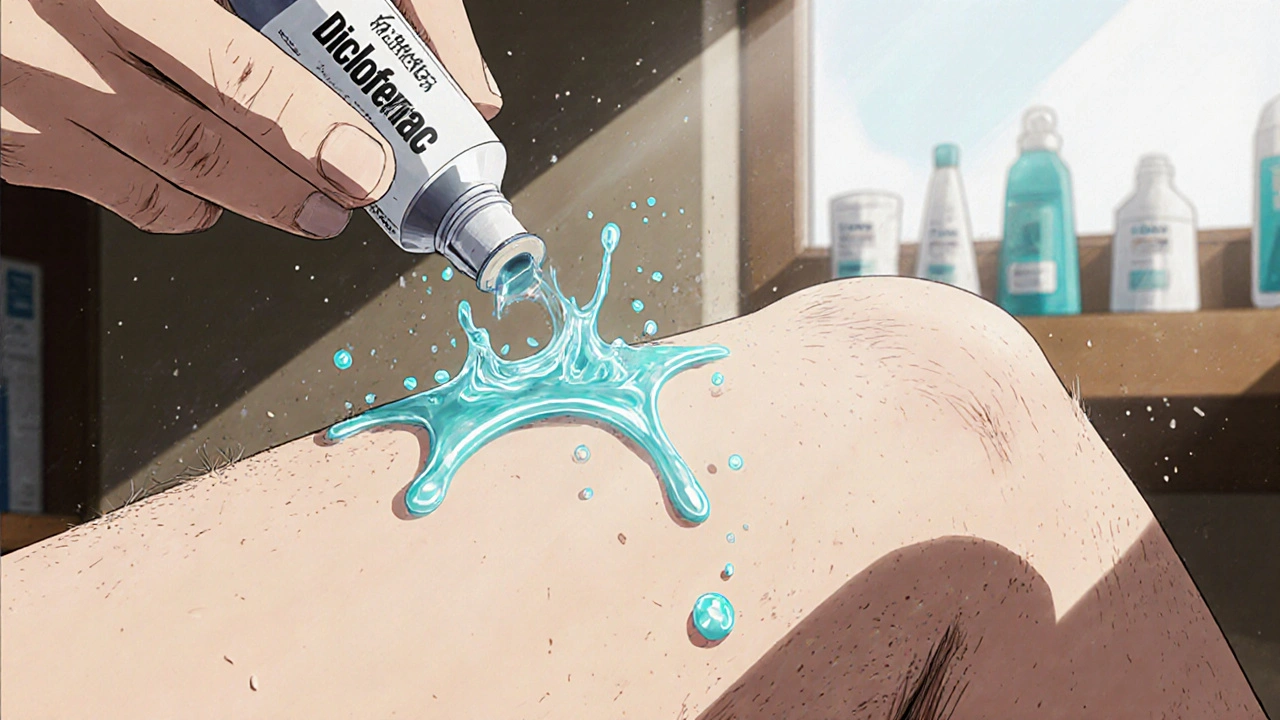
What You Need to Know Before You Use Them
- Don’t use on broken skin. Even a tiny cut or rash can let too much medicine into your blood.
- Wash your hands after applying. Especially with capsaicin or NSAIDs - you don’t want to accidentally rub your eyes.
- Wait before showering. Give it at least 30 minutes to absorb.
- Check for interactions. Topical NSAIDs are safer than pills, but if you’re on blood thinners or have heart disease, talk to your doctor. The FDA requires warning labels on all NSAID products, even creams.
- Be patient. Capsaicin and NSAID gels take days to weeks to show full effect. Lidocaine works fast, but only for nerve pain.
The Future of Topical Pain Relief
Scientists are working on better ways to get medicine deeper into the skin. New nanoemulsion gels are already showing up in trials - they deliver 2.3 times more diclofenac into the joint than regular gels, without increasing blood levels. That could mean better relief for people with deeper joint pain. There’s also research into resiniferatoxin (RTX), a super-potent cousin of capsaicin that could offer even longer pain relief. But right now, it doesn’t absorb well through the skin - so it’s still experimental. The market for these products is growing fast. In 2022, global sales hit $5.2 billion. By 2028, it’s expected to reach $8.7 billion. Why? Because more people are looking for alternatives to opioids and oral NSAIDs. Especially older adults - 42% of Medicare users now use topical pain relievers for arthritis, compared to just 18% of people under 44.Bottom Line: When to Try Them
If you have pain in your hands, knees, elbows, or nerves near the skin’s surface, topical analgesics are worth trying. They’re safe, targeted, and often effective - especially when used correctly. Start with an OTC NSAID gel like Voltaren for arthritis. If that doesn’t help after two weeks, ask your doctor about lidocaine patches for nerve pain or the high-dose capsaicin patch for long-term relief. They’re not magic. They won’t fix a torn ligament or cure advanced arthritis. But for daily discomfort, they can be the missing piece in your pain management plan - without the side effects of pills.Can I use topical analgesics with oral painkillers?
Yes, but with caution. Topical NSAIDs can be used alongside acetaminophen or certain nerve pain medications like gabapentin. Avoid combining them with oral NSAIDs (like ibuprofen or naproxen) unless your doctor says it’s safe - even though the topical version is low-risk, stacking them increases your total NSAID exposure. For lidocaine patches, there’s no known interaction with oral meds, but always check with your pharmacist if you’re on heart or blood pressure medications.
How long does it take for capsaicin cream to work?
Over-the-counter capsaicin cream (0.025%-0.1%) usually takes 2 to 4 weeks of daily use to show noticeable results. The burning sensation fades after a few minutes each time, but the pain relief builds slowly. Don’t stop after a few days - it’s like a muscle: you need to train the nerves to stop sending pain signals.
Are lidocaine patches safe for long-term use?
Yes, when used as directed. The 5% lidocaine patch is approved for daily use up to 12 hours per day for up to 3 patches per day. Long-term studies show no significant safety issues after months of use. The main risk is skin irritation at the application site, which affects about 5-15% of users. If you notice redness, swelling, or blistering, stop using it and talk to your doctor.
Why does my topical pain cream feel cold or hot?
That’s usually menthol or camphor - common ingredients in OTC pain creams. Menthol activates TRPM8 receptors in your skin, which tricks your brain into feeling cold. This distracts from pain signals and may slightly reduce inflammation. Capsaicin does the opposite - it makes you feel hot by activating TRPV1 receptors. Neither is actually changing your skin temperature; they’re just sending different signals to your brain.
Can I use topical analgesics if I have diabetes?
Yes, and they’re often recommended. People with diabetes often have nerve pain (diabetic neuropathy) and are at higher risk for stomach or kidney problems from oral NSAIDs. Lidocaine patches are a safe, effective option. For arthritis, topical NSAIDs are preferred over pills. Just avoid applying any cream to open sores or ulcers - common in diabetic feet - and always check your skin daily for irritation.
Do topical analgesics help with back pain?
Not usually. Most back pain comes from deep muscles, ligaments, or spinal structures - too deep for topical gels to reach. They work best on joints close to the skin, like knees, hands, and elbows. For lower back pain, oral meds, physical therapy, or heat wraps are more effective. Some people feel temporary relief from menthol creams because of the cooling sensation, but it’s not treating the root cause.

Monica Lindsey
If you're using topical analgesics without reading the FDA warning labels, you're just gambling with your liver. I've seen too many people ignore the contraindications.
It's not 'natural' just because it's on your skin. The chemistry doesn't care if it's cream or pill.
Subhash Singh
I find it fascinating that the mechanism of capsaicin involves the TRPV1 receptor, which is evolutionarily conserved across vertebrates. The fact that a plant-derived alkaloid can selectively desensitize nociceptive neurons suggests a profound interplay between phytochemistry and neurobiology. One must exercise caution, however, given the potential for transient hyperalgesia during initial application.
Geoff Heredia
They don't want you to know this, but the FDA approved lidocaine patches because Big Pharma couldn't patent the natural compounds. That's why the 8% capsaicin patch costs $1,200 per application. It's not about efficacy - it's about profit margins.
And why do you think they push 'OTC' versions? So you keep buying them every month instead of getting one real treatment. They're milking chronic pain patients.
Tina Dinh
I tried Voltaren after my knee surgery and OMG it was a GAME CHANGER 🙌 No more stomach issues like with ibuprofen! Just 4x a day and boom - I’m walking without wincing 😍 Seriously, everyone with arthritis should try this before reaching for pills! #PainFreeLife
gerardo beaudoin
I used to use the lidocaine patches for my sciatica. Worked okay, but I had to be careful not to use more than two at a time. One time I left one on too long and got a little dizzy. Not fun.
NSAID gel is my go-to now. I rub it in good and wait 30 minutes before I move around. It’s not magic, but it helps enough that I don’t need to pop pills every day.
Joy Aniekwe
Oh wow, another article telling people to 'just rub some cream on it' like we're all toddlers who can't handle real pain.
Let me guess - the next paragraph will tell us to 'be patient' and 'apply consistently' while ignoring that most of us have jobs, kids, and no time to babysit our own nerve endings.
And yes, I know the gel costs $40 a tube. Thanks for the luxury option, billionaire doctor.
Richard Thomas
The pharmacokinetic profile of topical diclofenac, as elucidated through microdialysis studies, demonstrates a tissue-to-plasma concentration gradient of up to two orders of magnitude, thereby minimizing systemic exposure while achieving therapeutic efficacy at the site of application. This phenomenon is attributable to the lipophilic nature of the molecule and its partitioning into the stratum corneum, followed by diffusion through the dermal matrix.
It is imperative to note, however, that the efficacy of this modality is contingent upon precise dosing, consistent application, and the absence of skin barrier compromise. The prevalence of suboptimal application techniques among lay users remains a significant confounder in clinical outcomes.
Peter Axelberg
I'm Nigerian-American, and in my family, we used to rub ginger and coconut oil on sore joints. Now I see people paying $50 for a tube of Voltaren like it's gold.
Don't get me wrong - the science checks out. But there's something about the way Western medicine turns folk remedies into branded products and sells them back to us at 10x the price.
My grandma’s hands were always sore. She never saw a doctor. She just rubbed, prayed, and kept moving. Maybe we lost something when we stopped listening to our bodies and started buying solutions.
jamie sigler
I tried the capsaicin cream. Burned like hell. Didn’t help. Now I have a red patch on my knee that itches worse than the pain did.
Wasted $30. Waste of time. I’ll just take the pill.
Bernie Terrien
Topical NSAIDs are the opioid of the middle class. They're the 'I'm not addicted' lie you tell yourself while shoving 200mg of diclofenac into your elbow every day.
It's not safer - it's just quieter. Your liver doesn't scream. Your stomach doesn't revolt. But your kidneys? They're still getting the slow drip.
And don't even get me started on the 'natural' capsaicin cult. You're not healing. You're just burning your nerves until they shut up. That's not medicine. That's torture with a label.
Jennifer Wang
It is essential to emphasize that topical analgesics are not indicated for all types of musculoskeletal pain. Clinical guidelines from the American College of Rheumatology recommend NSAID gels as first-line therapy for knee osteoarthritis, but only when the joint is superficial and inflammation is present.
Furthermore, the use of lidocaine patches should be restricted to confirmed neuropathic pain syndromes, as their mechanism is not anti-inflammatory. Misapplication may lead to delayed diagnosis of underlying pathology, such as spinal stenosis or referred pain from visceral sources.
stephen idiado
Topical analgesics are a placebo engineered by Big Pharma to exploit the placebo effect in aging populations.
Studies show 40% of relief comes from the ritual of application - not the drug.
Also, 'penetration depth' is a myth. Dermal absorption is <10% in most cases. The rest evaporates or gets wiped off. You're paying for vapor.