
There is a common misconception that healthcare providers occasionally swap a patient's medication for one in a completely different drug class to save money or manage side effects. If that happens, it is a clinical change in therapy, not a therapeutic interchange. In reality, Therapeutic Interchange is the practice of substituting a prescribed medication with a chemically different drug from the same therapeutic class that is expected to produce substantially equivalent clinical outcomes . It is a precise, regulated process designed to balance patient safety with the skyrocketing costs of pharmaceuticals.
For a provider, this isn't about guessing which drug might work. It is about using a pre-approved system to ensure the patient gets the same result using a more cost-effective or accessible alternative. If you've ever wondered why a hospital pharmacy dispensed a different brand or a different molecule than what the doctor wrote on the chart, you're seeing this system in action.
The Core Difference: Substitution vs. Interchange
It is easy to confuse therapeutic interchange with generic substitution, but they are fundamentally different tools in a pharmacist's kit. Generic substitution happens when a pharmacist swaps a brand-name drug for a generic version that is chemically identical (bioequivalent). In that case, the molecule is the same; only the manufacturer changes.
Therapeutic interchange is different because the drugs are chemically distinct. For example, if a doctor prescribes one type of statin and the hospital's formulary prefers another statin in the same class, the pharmacy may switch them. They aren't the same molecule, but they belong to the same therapeutic class and are expected to treat the condition with the same level of efficacy.
| Feature | Generic Substitution | Therapeutic Interchange |
|---|---|---|
| Chemical Structure | Identical | Different |
| Drug Class | Same | Same |
| Clinical Outcome | Equivalent | Substantially Equivalent |
| Typical Driver | Law/Cost | Formulary/Clinical Guidelines |
How Providers Decide on Interchanges
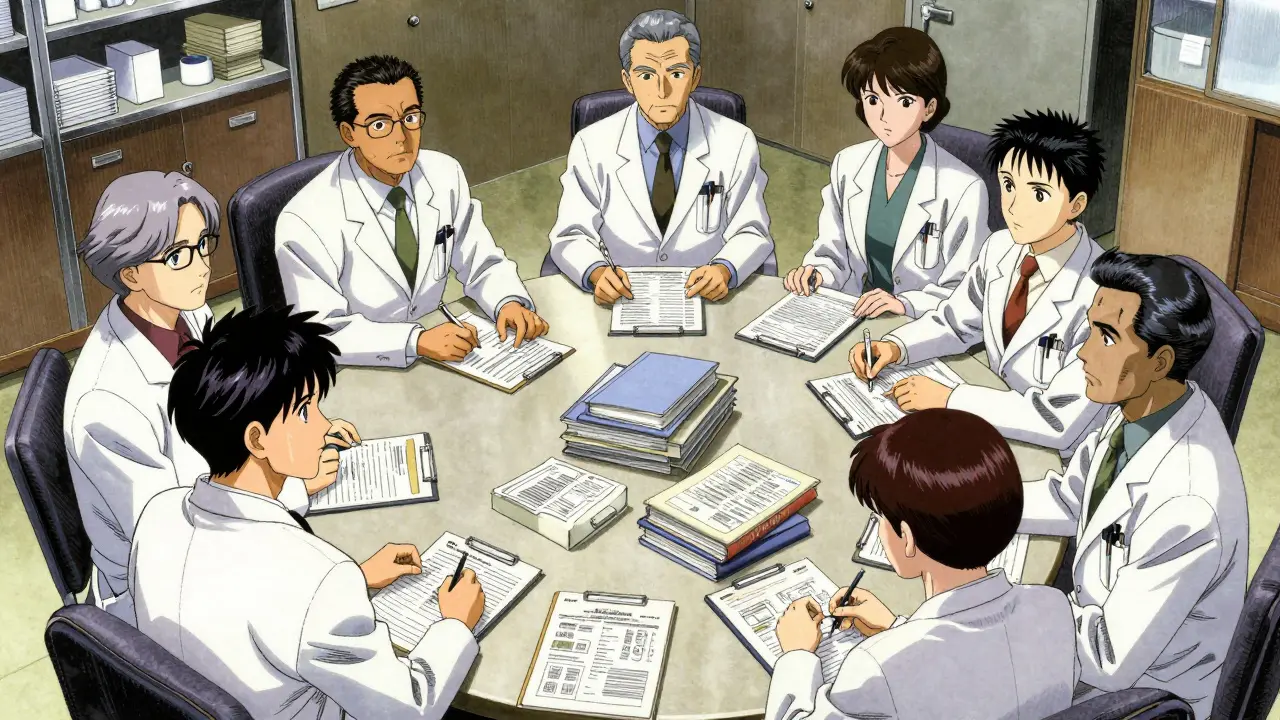
Interchanges don't happen on a whim. They are governed by a Pharmacy and Therapeutics Committee (or P&T Committee), which is a multidisciplinary team of doctors and pharmacists responsible for establishing and monitoring a facility's medication policies. The P&T Committee develops an evidence-based pharmaceutical formulary, which is essentially a curated list of medications that the facility agrees are the most effective and safest for the majority of patients.
When a provider recommends a drug not on the formulary, the system triggers a therapeutic interchange. This is common in hospitals, where over 80% of U.S. facilities have used these programs to standardize care. By limiting the number of different drug versions they stock, hospitals reduce the risk of dispensing errors and leverage bulk pricing to lower costs.
But how do they ensure the swap is safe? The committee looks at clinical data. If a study shows that Drug A and Drug B in the same class have nearly identical success rates for a specific condition, they are marked as interchangeable. If one drug has a significantly higher risk of a specific side effect for certain patients, it is excluded from the interchange list.
The Role of the Prescriber and Pharmacist
In a high-functioning hospital setting, the process is streamlined. The pharmacist identifies the non-formulary drug and applies the pre-approved interchange. However, the legal and ethical requirements for these swaps vary wildly depending on where the patient is being treated.
In skilled nursing facilities or long-term care centers, providers often use "TI letters." This is a document where the prescribing physician signs off on a blanket agreement, allowing the pharmacy to substitute specific medications within a class whenever necessary. This removes the need for the pharmacist to call the doctor every single time a prescription is filled, which would otherwise create a massive administrative bottleneck.
In community pharmacy settings, the rules are much stricter. You'll rarely see a pharmacist perform a therapeutic interchange without contacting the original prescriber first. Because community pharmacists don't have the same institutional formulary authority that a hospital pharmacist does, they must request a new prescription or explicit authorization to change a drug's chemical identity.
Risks and Clinical Guardrails
While the goal is equivalent outcomes, therapeutic interchange isn't without risks. The biggest danger is the "therapeutic discrepancy"-when a drug is chemically different enough that a patient reacts poorly, even if the drug is in the same class. This is why experts, including those from the American College of Clinical Pharmacy, insist that these programs must allow for exceptions.
For example, if a patient has a documented allergy to a specific filler in the interchangeable drug, or if they have a specific renal impairment that makes the alternative drug dangerous, the interchange must be bypassed. A rigid system that doesn't allow for individual patient needs is a dangerous system.
To keep patients safe, a strong program follows these three rules of thumb:
- Evidence-First: No swap is made unless clinical data proves the drugs are therapeutically comparable.
- Interdisciplinary Input: The list isn't just made by pharmacists; it involves the doctors who actually treat the patients.
- Communication: The patient and their family should be informed, especially if the medication's appearance or administration method changes.
Financial Impact on Healthcare Systems
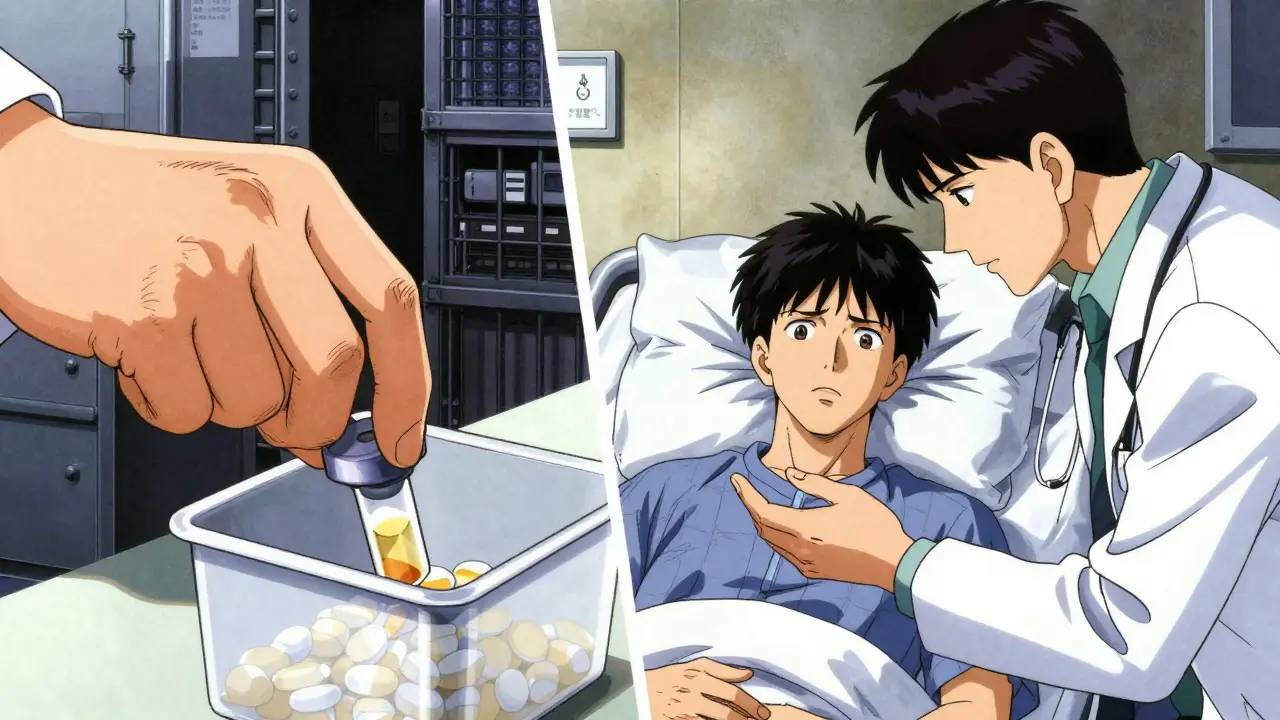
The drive behind therapeutic interchange isn't just clinical-it's financial. With drug prices rising steadily, healthcare facilities are under immense pressure to cut costs. For a skilled nursing facility, implementing a global therapeutic interchange program can result in savings of tens of thousands of dollars per month. These savings aren't just about picking the "cheapest" drug; they are about reducing waste and streamlining the supply chain.
When a facility only stocks one or two versions of a drug class, they can buy in larger quantities and avoid the cost of maintaining a massive, fragmented inventory of every single brand available on the market. This efficiency allows them to keep the facility running while still providing high-quality care.
Can a pharmacist change my medication to a different class?
No. Therapeutic interchange only occurs within the same therapeutic class. If a medication is changed to a different class, it is a clinical change in therapy and requires a new medical decision and prescription from the provider.
Is therapeutic interchange the same as a generic swap?
Not exactly. Generic substitution uses a chemically identical drug. Therapeutic interchange uses a chemically different drug that is expected to have the same clinical effect because it belongs to the same class.
Who decides which drugs are interchangeable?
The Pharmacy and Therapeutics (P&T) Committee, a multidisciplinary group of doctors and pharmacists, decides based on evidence and the facility's formulary.
Why do hospitals use therapeutic interchange?
Hospitals use it to standardize care, reduce medication errors, and control pharmaceutical costs by limiting the number of different drug versions they need to stock.
Do I need to be notified if my drug is interchanged?
While protocols vary, best practices in patient-centered care suggest that patients and families should be informed of the change, and the prescribing physician must be notified or have previously agreed to the interchange.
Next Steps for Providers and Patients
If you are a provider implementing these programs, your first step should be auditing your current formulary against the latest clinical guidelines to ensure the interchanges are still evidence-based. Ensure your TI letters are updated and signed by all active prescribers to avoid dispensing delays.
For patients, if you notice your medication looks different or has a different name despite being for the same condition, don't hesitate to ask your pharmacist. Ask them if it was a generic substitution or a therapeutic interchange. Understanding which one occurred helps you monitor for any new side effects and ensures your care team is on the same page.

Doug DeMarco
this is such a helpful breakdown! :) it's really important for people to know why their meds might look different when they leave the pharmacy so they don't panic
Will Gray
Just another way for these massive healthcare conglomerates to squeeze every penny out of the American patient while pretending it's for "safety." It is a blatant corporate play to standardize inventory for the benefit of the bottom line, not the individual, and frankly, the idea that a committee decides what's "equivalent" for my body is a complete joke. This is exactly how they maintain control over the pharmaceutical supply chain in this country.
Chad Miller
wrong as usual... just a way to cheat us on meds and save money for big pharma lol
Sarina Montano
The nuance regarding the TI letters in long-term care is a total game-changer for administrative flow. It's a kaleidoscopic view of how bureaucracy meets bedside care, effectively stripping away the red tape that usually chokes the life out of clinical efficiency, though the risk of a therapeutic discrepancy still lingers like a ghost in the machine.
Peter Meyerssen
The ontological shift from identity to equivalence here is quite fascinating 🙄. We are essentially discussing the semiotics of pharmacology where the signifier (the brand) changes but the signified (the therapeutic effect) remains static. It's just basic utility maximization, really. 💅
Trey Kauffman
Oh sure, because nothing says "patient safety" like a committee of bureaucrats deciding which chemical cocktail is "close enough" for your specific biology. Truly a triumph of modern medicine.
Emily Wheeler
I find it so heartening that there are guidelines in place to ensure that the human element isn't completely lost in the pursuit of financial sustainability, because while the economics of a facility are certainly a pressing concern that requires a pragmatic approach, the ethical imperative to treat each patient as a unique biological entity with specific needs must always outweigh the convenience of a standardized formulary, and I truly believe that as long as the communication channels between the pharmacist, the doctor, and the patient remain open and honest, we can find a harmonious balance between cost-effectiveness and high-quality personalized care.
danny Gaming
totally just a scam to use cheaper drugs n call it a safety thing... typical US healthcare garbage lol no one cares bout the patient
Suchita Jain
It is most regrettable that some of you possess such a limited understanding of medical governance. One must realize that the P&T Committee operates with a level of intellectual rigor that far exceeds the anecdotal complaints of the masses; therefore, doubting these protocols is not only unwise but reveals a profound lack of discipline in your thinking.
Simon Stockdale
Srsly though why do we even have these committees when the big drug companies basically tell them what to put on the list anyway and it's all just one big circle of money and greed while the actual patients are just numbers in a spreadsheet and we just keep paying more for less and less’e quality care every single year in this godforsaken system!
Robin Walton
It sounds really stressful for patients who aren't expecting a change in their medication, but it's good to know there are safeguards to protect people with allergies.
Thabo Leshoro
The pharmacokinetics... of these interchangeable agents... are usually quite similar!!! It is a very standard... clinical pathway... for cost-containment!!!