
When European governments buy generic medicines, they don’t just pick the cheapest option. They use a system built over 40 years to get the best value-without cutting corners. This isn’t about saving a few euros per pill. It’s about ensuring millions of patients get safe, effective drugs at fair prices, while keeping the system open to companies across the EU. The process? It’s called tendering systems, and it’s one of the most sophisticated public buying tools in the world.
How Europe Buys Generics: The Rules That Keep It Fair
Every public hospital, pharmacy, and health authority in the EU follows the same core rules when buying medicines. These come from EU directives, not national whim. The goal? Make sure any company-whether it’s based in Germany, Poland, or Portugal-has an equal shot at winning a contract. No favoritism. No hidden deals. No local bias.
The system started with Directive 77/62/EEC in 1977, which forced countries to advertise contracts publicly and ban technical specs that only one company could meet. Today, it’s mostly governed by Directive 2014/24/EU and Directive 2014/25/EU. These apply to contracts over €139,000 for goods like generics. Above €5.5 million, the rules get even stricter.
One key rule: proportionality. A hospital can’t require a supplier to have €10 million in annual sales just to bid on a €500,000 medicine order. That’s illegal under EU law. The criteria must match the contract’s size and complexity. This keeps small and medium-sized generic manufacturers in the game-companies that make up over 60% of the EU’s generic drug supply.
The Five Main Tendering Procedures (And When Each Is Used)
Not all tenders are the same. Europe uses five main procedures, each suited to different needs.
- Open Procedure: Any company can submit a bid. No pre-qualification. Used for simple, well-defined purchases-like standard paracetamol or metformin. It’s the most transparent, but also the most paperwork-heavy. About 45% of EU health tenders use this.
- Restricted Procedure: Suppliers first apply to be shortlisted. Only those approved can submit a full bid. This cuts down on low-quality submissions. Used when the buyer needs to filter out inexperienced or unreliable vendors. Accounts for 35% of tenders.
- Competitive Negotiated Procedure: Used when the medicine’s requirements are complex or unusual-say, a modified-release version with special packaging. Buyers can talk to suppliers before finalizing the bid. Must be justified in writing to avoid accusations of bias.
- Competitive Dialogue: For really tricky purchases where even the buyer isn’t sure what they need yet. Think: a new delivery system for insulin that’s not on the market. Suppliers and buyers work together to design the solution. Common in high-tech or innovative generics. Used in 20% of tenders, especially in countries like France and Finland.
- Framework Agreements: A long-term deal with one or more suppliers. Once set, the hospital just places mini-orders without re-tendering. Great for stable, high-volume drugs like antibiotics or blood pressure meds. Multi-supplier frameworks are preferred-they keep prices competitive even after the deal is signed.
All of these must be published in the Tenders Electronic Daily (TED), the EU’s central online portal. That’s where suppliers find opportunities. No hidden lists. No backdoor deals.
MEAT: Why Europe Doesn’t Just Pick the Lowest Price
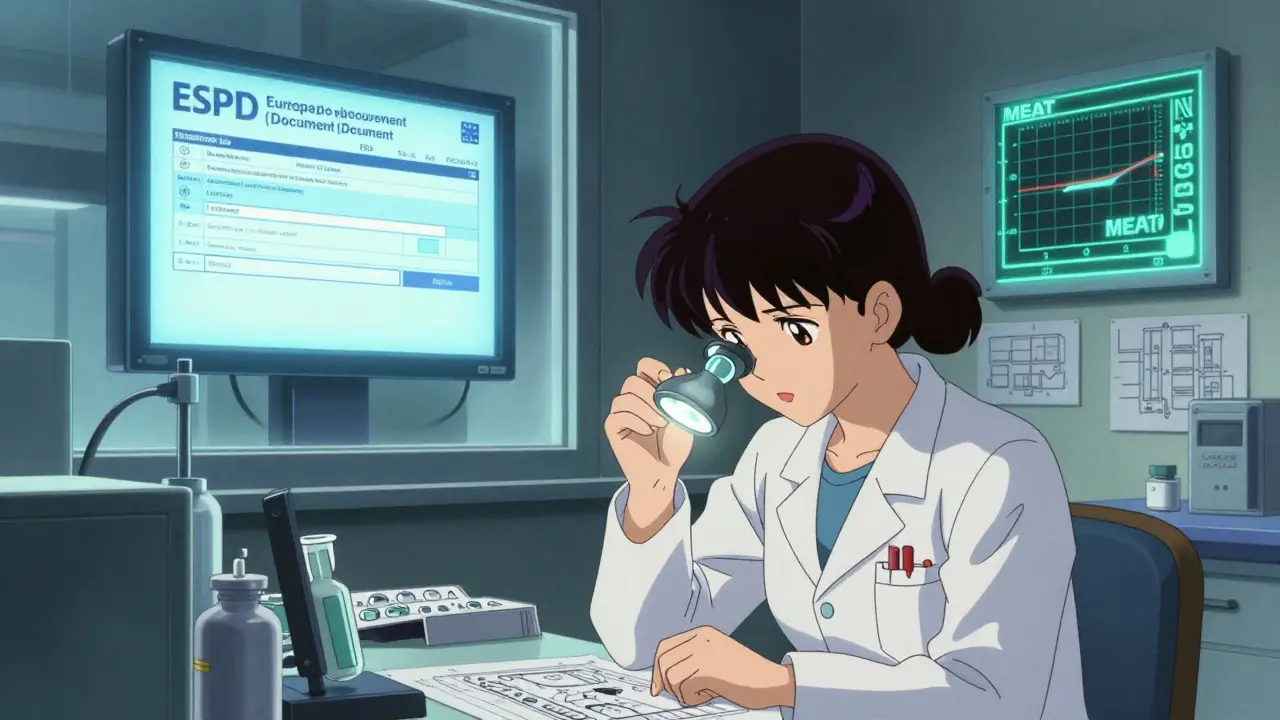
Here’s where Europe’s system stands out from the rest of the world. Instead of picking the cheapest bid, most health tenders use MEAT: Most Economically Advantageous Tender.
MEAT means evaluating price AND quality together. Quality could mean:
- Drug bioequivalence data (proving it works like the brand-name version)
- Packaging safety (child-resistant caps, tamper-proof seals)
- Supply reliability (on-time delivery history)
- Environmental impact (sustainable manufacturing, minimal plastic)
- After-sales support (training for pharmacists, patient leaflets in local languages)
Since 2022, EU rules require at least 50% of the score in high-value tenders to be based on quality-not price. A 2023 study by the European Public Procurement Observatory found this boosted innovation in generic drugs by 15.7%. Hospitals got better packaging, better documentation, and more reliable supply chains.
Dr. Anna De Lillo from Bocconi University found MEAT delivered 12-18% better value than lowest-price-only awards for complex drug contracts. That’s not just savings-it’s better patient outcomes.
What Goes Wrong? The Hidden Pitfalls
It’s not perfect. Even with strong rules, mistakes happen.
One big issue: unclear technical specs. A 2022 analysis found 68% of supplier complaints came from vague requirements. One French hospital asked for “high-quality packaging” without defining what that meant. Five companies bid, three were rejected for not meeting an undefined standard. The contract was delayed for six months. Total cost: €127,000 in legal and admin fees.
Another problem: inconsistent application. Nordic countries like Denmark and Finland have digital platforms where everything is clear-tender documents, evaluation criteria, deadlines. In some Eastern European countries, portals are outdated, poorly translated, or hard to navigate. Eurochambres’ 2023 survey gave Dutch and Danish portals a 4.6/5 rating. Some Eastern platforms scored 2.8/5.
And then there’s the time burden. Small businesses spend 117 hours on average to submit one bid. For a €200,000 framework agreement, that’s a lot of time. French SME owner Sophie Laurent said she qualified for a framework, but got only two mini-orders in 18 months. “It didn’t pay off,” she told LinkedIn. That’s why 41% of small EU companies quit bidding altogether.
Success Stories: When It Works
But when done right, the system delivers.
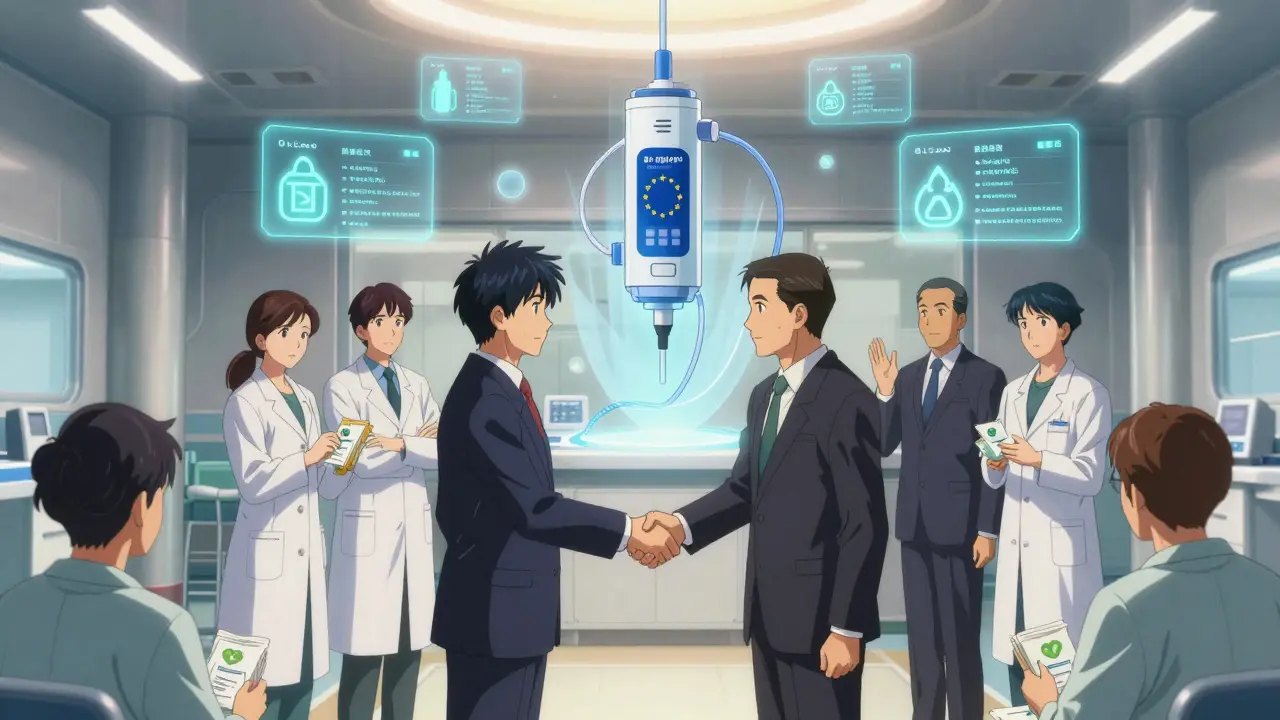
In Finland, the Innovation Fund used Competitive Dialogue to buy smart insulin delivery systems. Instead of writing a rigid spec, they worked with three suppliers over six months. They tested prototypes, adjusted requirements, and ended up with a system that cut costs by 32% and rolled out 14 months faster than planned.
Deutsche Bahn (Germany’s rail operator) created a multi-supplier framework for generic medicines used in their health clinics. Suppliers who qualified got automatic access to future orders. One German generics company said it cut their bidding costs by 60%. Predictable revenue meant they could invest in better packaging and compliance.
The European Commission’s 2023 report showed that health authorities who held pre-tender market consultations-talking to suppliers before publishing the tender-reduced legal challenges by 34% and sped up procurement by 22%.
The Future: Digital, Green, and Smarter
The system is evolving fast.
By 2027, the EU aims for 95% of tenders to be fully electronic. The new European Single Procurement Document (ESPD) cuts paperwork by 40%. Instead of sending 87 documents to qualify for a framework, suppliers now fill out one digital form.
Sustainability is now mandatory. By 2025, 85% of high-value health tenders will include environmental criteria-like carbon footprint of manufacturing, recyclable packaging, or water use in production. Circular economy rules are coming too. By 2028, 75% of major drug contracts will require suppliers to show how they’ll reuse or recycle materials.
AI is being tested in France and Finland to score bids. Early results show 30% faster evaluation with 99.2% accuracy. That means less delay for hospitals and faster access to medicines.
Still, challenges remain. The European Court of Auditors warned in 2023 that inconsistent rules across countries threaten the single market. A supplier in Spain might face different rules than one in Lithuania. Training for procurement officers is uneven. That’s why the EU is pushing for standardized training and clearer guidelines.
What This Means for Patients and Providers
At the end of the day, this isn’t about bureaucracy. It’s about medicine.
Because of tendering systems, generic drugs in Europe cost 60-80% less than branded versions. That’s how countries afford to cover hepatitis C cures, cancer treatments, and insulin for millions. Without this system, prices would be higher, access would be slower, and innovation would stall.
For hospitals, it means reliable supply, better packaging, and fewer recalls. For patients, it means affordable, safe drugs. For suppliers, it means a fair shot-even if you’re a small company in Latvia or Croatia.
The system isn’t flawless. It’s complex. It’s slow sometimes. But it’s built on transparency, fairness, and value-not just price. And that’s why, despite its flaws, Europe’s tendering system remains the gold standard for public drug purchasing.
What is the difference between open and restricted tendering in Europe?
Open tendering lets any supplier submit a bid without prior approval. It’s transparent but time-consuming. Restricted tendering requires suppliers to apply first and be pre-qualified before submitting a full bid. It reduces administrative load for buyers and filters out unqualified bidders, but can limit new entrants.
Why doesn’t Europe just pick the lowest-priced generic drug?
Because the lowest price doesn’t always mean the best value. A cheap drug might have poor packaging, unreliable supply, or lack proper documentation. Europe uses MEAT-Most Economically Advantageous Tender-to weigh price against quality factors like safety, reliability, sustainability, and patient support. This ensures better outcomes for patients and fewer costly delays or recalls.
How do small generic manufacturers compete in EU tenders?
They can compete through open and restricted procedures, especially for simpler drugs. The EU enforces proportionality-buyers can’t demand unrealistic financial thresholds. Many small firms succeed by joining multi-supplier framework agreements, which give them access to recurring orders without bidding each time. Digital tools like ESPD also reduce paperwork, making it easier for SMEs to participate.
What is the TED portal and why is it important?
TED (Tenders Electronic Daily) is the EU’s official online platform where all public procurement notices above certain thresholds must be published. It’s the central hub for suppliers to find tender opportunities across all 27 member states. Without being listed on TED, a company can’t legally bid on EU public contracts.
Are sustainability requirements really mandatory in EU drug tenders?
Yes. Since 2023, environmental criteria like carbon emissions, recyclable packaging, and sustainable manufacturing are required in most high-value tenders. By 2025, 85% of major drug contracts will include them. This is part of the EU’s Green Public Procurement policy, which aims to reduce the environmental footprint of public spending.
How long does it take to win a tender in Europe?
It varies. Open procedures can take 3-6 months from notice to award. Competitive Dialogue or complex procurements may take 8-12 months. Framework agreements can take 6-9 months to set up, but then allow quick mini-orders for years. Electronic systems are cutting this time-some digital tenders now close in under 90 days.
For suppliers, the key is preparation: understand MEAT, use ESPD, study TED notices early, and never guess the specs. For health systems, it’s about clarity, consistency, and trusting the process. The result? Millions of patients get the medicines they need, at prices that don’t break the budget.

Wren Hamley
Okay, so MEAT isn’t just a breakfast food? Wild. I always thought EU drug buying was just ‘cheapest bid wins’-turns out they’re running a 4D chess game with pill bottles. Bioequivalence data + sustainable packaging + patient leaflets in 24 languages? That’s not procurement, that’s public health opera. And the fact they let SMEs play? Respect.
Sarah Little
Actually, the proportionality rule is a total joke-how can a €500k tender not require €5M in turnover? That’s how you get fly-by-night suppliers with no QC. The system’s broken if it’s not about financial stability first.
innocent massawe
Wow. This is beautiful. 🌍❤️ In Nigeria, we just buy whatever is cheapest and hope it works. Your system is like a symphony-every note matters. Thank you for sharing this.
Angela Goree
Let me get this straight-Europe spends 117 hours on paperwork just to sell aspirin?! And you call this ‘fair’? We don’t need ‘sustainability’ in medicine-we need AMERICA’S SPEED. No bureaucracy. No TED portals. Just buy cheap, deliver fast. This is why we lead the world.
Shruti Badhwar
The MEAT framework is a masterstroke of economic rationality. By weighting quality parameters at 50%+, the EU has effectively externalized the cost of poor outcomes-recalls, delays, non-compliance-back onto the supplier. This isn’t just procurement; it’s systemic risk mitigation disguised as policy. The 15.7% innovation boost is not incidental-it’s engineered.
Brittany Wallace
It’s funny-we think ‘fair’ means equal access, but maybe it’s deeper. Maybe fairness is letting the small lab in Latvia build better packaging because their child-resistant caps actually work. It’s not about who has the biggest balance sheet-it’s who cares enough to make the pill safe for a kid. 🌱
Michael Burgess
Biggest win I didn’t see coming: framework agreements. It’s like Netflix for medicine-once you’re in, you just click ‘order’ for years. One company told me it cut their bidding costs by 60%. That’s not efficiency-that’s freedom. Small firms can finally plan, invest, innovate. No more gambling on a single tender. 🙌
Hank Pannell
Think about it: we treat medicine like a commodity, but it’s not. It’s a covenant between society and science. The lowest bid might save €0.02 per tablet… but if the patient gets the wrong dosage because the label’s in broken English? That’s not savings. That’s negligence. Europe’s system doesn’t just buy drugs-it buys dignity.
Lori Jackson
Of course it’s ‘the gold standard’-because only wealthy, bureaucratic, over-regulated nations can afford to be this inefficient. Meanwhile, real countries are curing patients, not debating ‘environmental impact’ of blister packs. This isn’t healthcare-it’s performative virtue signaling with a spreadsheet.
Ian Ring
Re: SMEs quitting after 117 hours of work-this is the elephant in the room. The system’s fair in theory, but the cost of entry is crushing. ESPD helps, but not enough. What if the EU funded a ‘tender helper’ service for SMEs? A free, AI-assisted portal that translates specs, flags vague criteria, auto-fills ESPD? That’d be real progress.
Hank Pannell
That’s exactly what Finland’s doing with their AI-assisted tender coach. It’s not just about saving time-it’s about leveling the playing field. A single mom in Lithuania shouldn’t need a law degree to bid on antibiotics. If the EU wants true single-market fairness, they need to fund this. Not just mandate it.