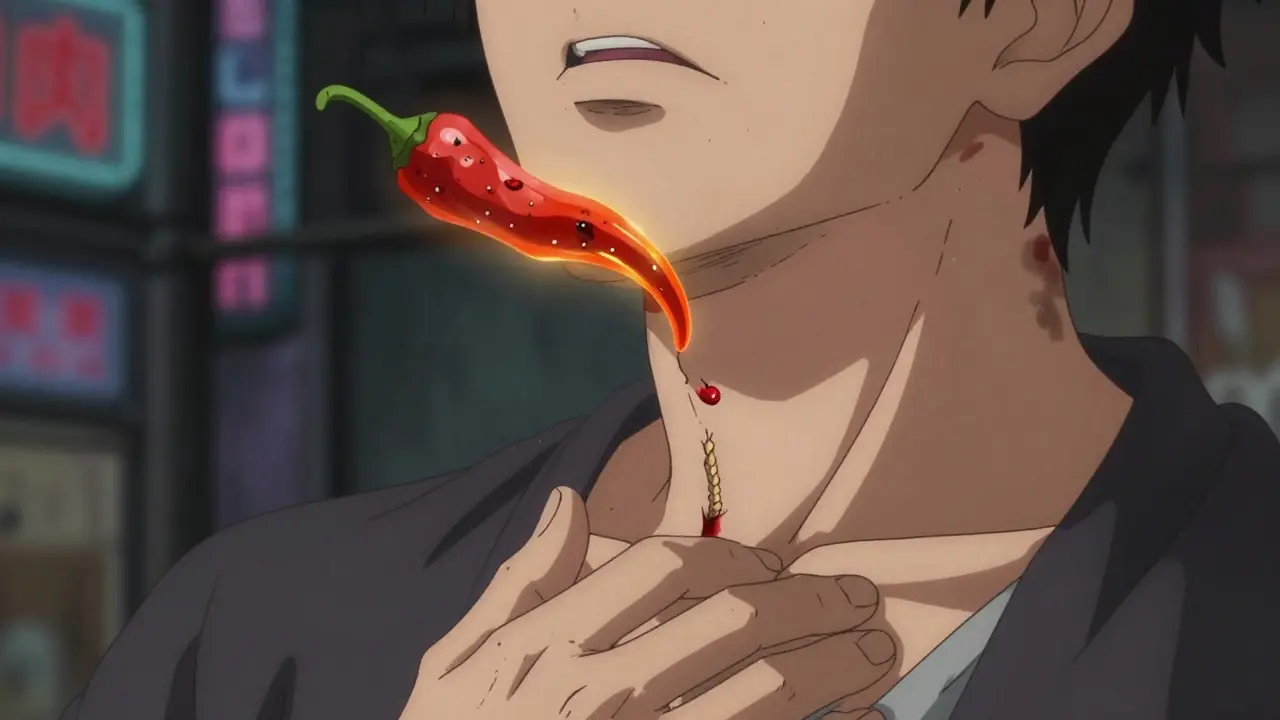
Heartburn isn’t just a bad meal afterthought-it’s a signal your digestive system is under stress. If you’ve ever felt that burning sensation climbing up your chest after eating chili or taking ibuprofen, you’re not alone. About 1 in 5 Americans deal with heartburn at least once a week, and for many, it’s not just about what they eat-it’s what they’re taking too.
Why Spicy Food Triggers Heartburn (It’s Not Just Myths)
Spicy foods get blamed a lot, but the real culprit isn’t the heat itself. It’s capsaicin, the chemical that makes chili peppers sting. Capsaicin doesn’t burn your stomach-it relaxes the lower esophageal sphincter (LES), the muscle that normally keeps stomach acid where it belongs. When that muscle loosens, acid slips upward, and that’s when the burn starts.
Studies show that in sensitive people, capsaicin can drop LES pressure by 30-40% within 30 minutes of eating. That’s not a small change. It’s enough to let acid leak out, especially if you lie down soon after or eat a large meal. But here’s the twist: not everyone reacts the same. Some people can eat hot wings without a problem. Others get heartburn from a single jalapeño. That’s why blanket rules like “never eat spicy food” don’t work.
Medications That Make Heartburn Worse (And What to Do About It)
It’s easy to think heartburn is all about food. But medications play a huge role-sometimes an even bigger one. You might not realize that common drugs you take for other issues are quietly making your acid reflux worse.
- Aspirin and ibuprofen (NSAIDs): These reduce inflammation, but they also damage the lining of your esophagus and stomach. Regular use increases GERD risk by 40-60%.
- Beta blockers: Used for high blood pressure, they relax the LES and raise GERD risk by 22% according to the Framingham Heart Study.
- Anticholinergics: Found in motion sickness pills and some bladder meds, they reduce LES pressure by 25% in nearly 7 out of 10 users.
- Nitrates and theophylline: Used for heart and lung conditions, they can drop LES pressure by 35-45%.
- Bisphosphonates: For osteoporosis, these can cause direct irritation and even esophagitis if not taken with enough water and while standing upright.
These aren’t rare side effects. They’re well-documented. If you’re on any of these and getting heartburn, talk to your doctor. Don’t stop taking them-but ask if there’s an alternative or if timing adjustments could help.
How Medications Like Pantoprazole Lose Their Power
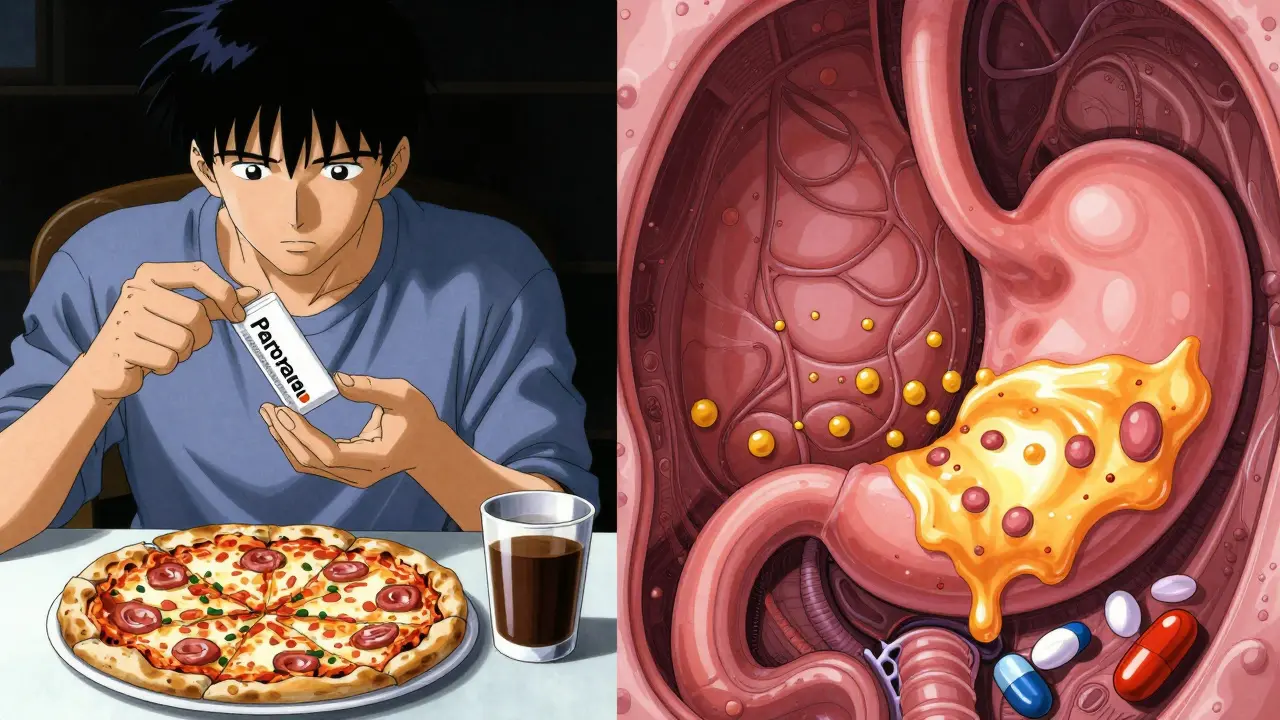
Pantoprazole (and other PPIs) are the go-to for long-term acid control. But they don’t work like magic pills. They need time-2 to 3 days-to build up in your system. And they need the right conditions to be absorbed properly.
Research shows that if you take pantoprazole within 2 hours of spicy food, fatty food, coffee, chocolate, or alcohol, its absorption drops by 18-23%. That means less acid suppression, more reflux. The same goes for taking it with food that delays stomach emptying. The fix? Take your PPI 30-60 minutes before your first meal of the day-on an empty stomach. That’s when it works best.
Also, don’t rely on antacids like Tums or Rolaids as your daily solution. They give quick relief-within 2-5 minutes-but only last 30-60 minutes. Worse, using them more than 2-3 times a week can cause electrolyte problems and interfere with other meds. Aluminum-based antacids, for example, can cut the absorption of antibiotics like tetracycline by half.
What Actually Works: A Real-World Strategy
There’s no one-size-fits-all fix. But there is a proven, step-by-step approach that works for most people:
- Track your triggers: Keep a food and symptom diary for 10-14 days. Note everything you eat, every medication you take, and when heartburn hits. Look for patterns. Maybe it’s not the salsa-it’s the salsa with your evening blood pressure pill.
- Try elimination: Cut out spicy foods, caffeine, alcohol, and acidic items for 3-7 days. See if symptoms improve. If they do, reintroduce one thing at a time every 2-3 days. This tells you exactly what bothers you.
- Time your meds: Take PPIs before breakfast. Take antacids at least 1 hour after meals or at bedtime. Never take antacids within 4 hours of other medications.
- Change your habits: Don’t lie down for 3 hours after eating. Elevate the head of your bed 6-8 inches. Eat smaller meals. Space meals 3 hours apart. These simple moves cut reflux by up to 60%.
A 2023 study in the Journal of Clinical Gastroenterology found that people who kept a consistent food-symptom diary were 90% accurate in predicting their triggers after just two weeks. That’s better than any lab test.
What’s New in Heartburn Treatment
The field is changing fast. In August 2023, the FDA approved a new drug called Vonoprazan (Voquezna). Unlike PPIs, it works consistently across all patients, regardless of genetics. It’s already showing better control in trials, even for people who didn’t respond to traditional meds.
There’s also emerging research on capsaicin desensitization. At Johns Hopkins, a 12-week trial had participants slowly increase spicy food intake. Sixty-five percent ended up tolerating higher spice levels without symptoms. It’s not about avoiding spice forever-it’s about retraining your body.
Meanwhile, hospitals are shifting toward dietitian-led programs. One study found that patients working with a dietitian had 33% better outcomes and 27% lower medication costs than those on standard care.
When to Worry (And When Not To)
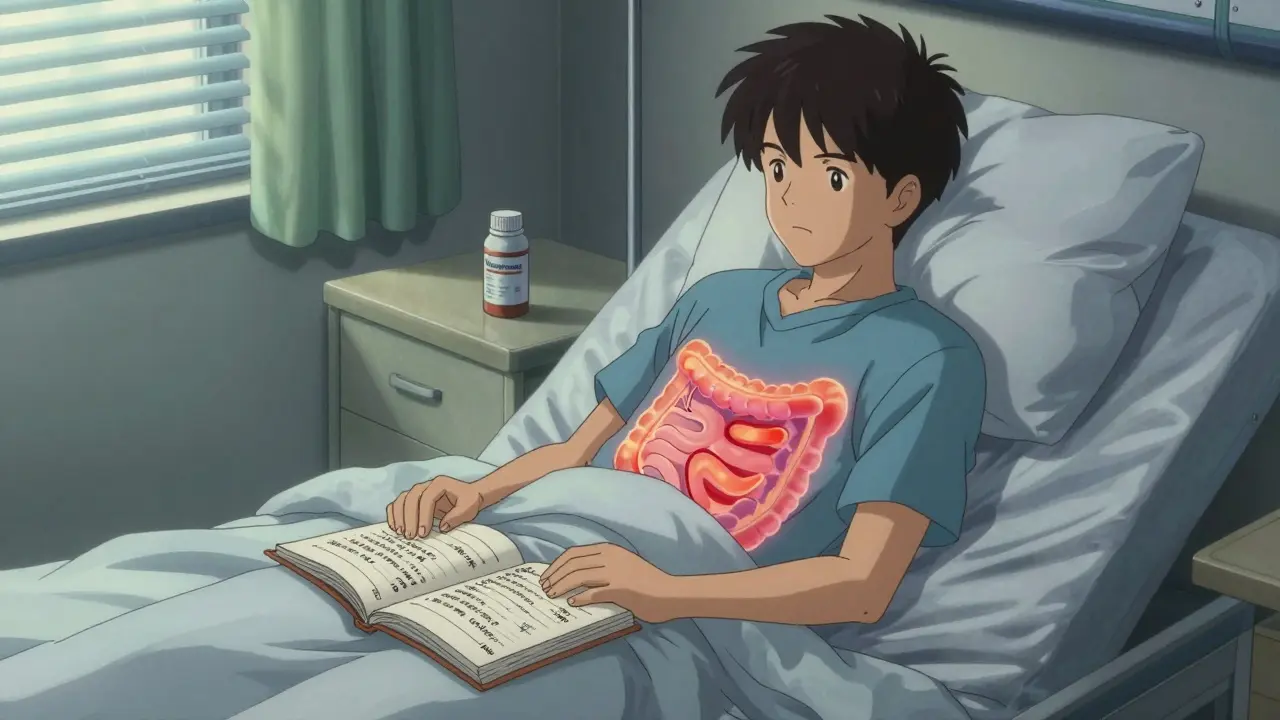
Heartburn is common. But if you’re relying on antacids daily, or if your symptoms change-like trouble swallowing, unexplained weight loss, or vomiting blood-you need to see a doctor. These aren’t just “bad digestion.” They could signal something more serious: a hiatal hernia, Barrett’s esophagus, or even esophageal cancer.
Also, long-term PPI use (over 3 months) has been linked to risks like kidney problems, bone fractures, and low magnesium. That’s why experts now recommend using the lowest dose for the shortest time possible, and only if lifestyle changes aren’t enough.
The Bottom Line
You don’t have to give up spicy food forever. You don’t have to stop your meds. But you do need to understand how they interact. Heartburn is rarely about one thing. It’s a mix of what you eat, what you take, and how you live.
Start simple: track your symptoms. Time your meds. Avoid lying down after eating. Talk to your doctor about alternatives if you’re on high-risk drugs. And remember-what works for your friend might not work for you. Your body’s response is unique. The goal isn’t to follow a rigid list. It’s to find your own balance.

Freddy King
Let’s be real - capsaicin doesn’t ‘relax’ the LES, it hijacks the vagal nerve signaling like a rogue node in a distributed system. The 30-40% pressure drop? That’s not physiology, that’s a pharmacokinetic vulnerability. And don’t get me started on PPIs - they’re not ‘absorbed poorly’ with food, they’re actively sabotaged by gastric pH shifts and CYP2C19 polymorphisms. You’re not ‘timing your meds,’ you’re playing Russian roulette with your CYP450 profile.
Meanwhile, Vonoprazan? Finally. A potassium-competitive acid blocker that doesn’t give a damn about your genetic lottery. PPIs are 2005 tech. We’re in 2024. If you’re still on omeprazole and wondering why your reflux persists, you’re not ‘sensitive’ - you’re just underdosed and misinformed.
Also, ‘elimination diet’? That’s a band-aid. You need high-resolution manometry and 24-hour pH-impedance monitoring. Otherwise you’re just guessing. And yes, I’ve done the studies. No, I won’t send you the links. Figure it out.
Hariom Sharma
Bro, I grew up eating ghost peppers with roti and never had heartburn once - until I started taking my BP meds after dinner. Changed to morning dose, boom - no more burn. India’s got this figured out: eat spicy, but don’t mix it with pills. Simple as that. Your body knows what it can handle - you just gotta listen. 🙏
Nina Catherine
ok so i tried tracking my food and meds for 10 days and i think it might be the ibuprofen + my 8pm coffee? i always thought it was the tacos but now i think it’s the combo?? also i took a pantoprazole at lunch once and it did nothing lol so i’ll try it before breakfast. also i have no idea how to elevate my bed… do i just stack books under the legs? 😅
Tommy Chapman
Spicy food? That’s what you’re blaming? No. It’s the liberal diet. You people eat like animals. No discipline. No respect for your body. I don’t eat junk, I don’t take NSAIDs unless I’m dying, and I don’t lie down after eating. I eat at 6, walk for 30, sleep at 10. Simple. You want to fix heartburn? Stop being lazy and stop blaming chemicals. It’s character, not capsaicin.
aine power
PPIs. Overprescribed. Underunderstood. Vonoprazan > PPI. End.
Irish Council
They don’t want you to know this but NSAIDs are part of the Big Pharma-LES suppression agenda. The FDA approved Vonoprazan because the PPI patents are expiring. Also, capsaicin desensitization? That’s just a placebo with chili peppers. They’re conditioning you to tolerate more damage. Wake up. The system wants you dependent. Read the studies. They’re funded by pharma. Always.
Laura B
This is actually super helpful. I’ve been on beta blockers for years and never connected them to my reflux. I’m going to ask my doc about alternatives - and maybe try the food diary. I’ve been too overwhelmed to start, but this breaks it down so clearly. Thank you for writing this.
Robin bremer
bro i took ibuprofen after wings last night and cried in the shower 😭 i thought i was having a heart attack. then i remembered the article and went full zen - took pantoprazole, sat upright, watched cat videos for 2 hours. i’m alive. 🐱❤️
Jayanta Boruah
While your anecdotal observations are not without merit, they lack the statistical rigor required for clinical generalization. The Framingham Heart Study, while foundational, employed a cohort with significant confounding variables, including dietary sodium intake and BMI distribution, which were not fully controlled. Moreover, the 65% desensitization rate cited from Johns Hopkins was derived from a non-randomized, single-center trial with n=47, rendering external validity questionable. A meta-analysis of RCTs, such as the 2022 Cochrane review on capsaicin and GERD, indicates a pooled effect size of Hedges’ g = 0.32 (95% CI: 0.11–0.53), which is clinically insignificant. Therefore, while lifestyle modifications may provide symptomatic relief, they do not constitute pathophysiological correction.
Taylor Mead
I’ve been on PPIs for 3 years. I just found out they can mess with magnesium and kidneys? 😳 I’m going to talk to my doctor about cutting back. Also, the bed-elevation thing? I put cinderblocks under my headboard. Looks like a DIY fortress but it works. No more midnight burning. Small changes, big results.
Maddi Barnes
Oh sweet summer child, you think you’re ‘retraining’ your body by eating more spice? 😏 You’re not ‘desensitized’ - you’re just numbed. Like drinking bleach to ‘get used to’ the burn. Meanwhile, the FDA approved Vonoprazan because PPIs are causing silent kidney atrophy in 12% of long-term users. You’re not a rebel. You’re a data point. And yes, I’m still judging you for eating salsa with your BP med. 🙃