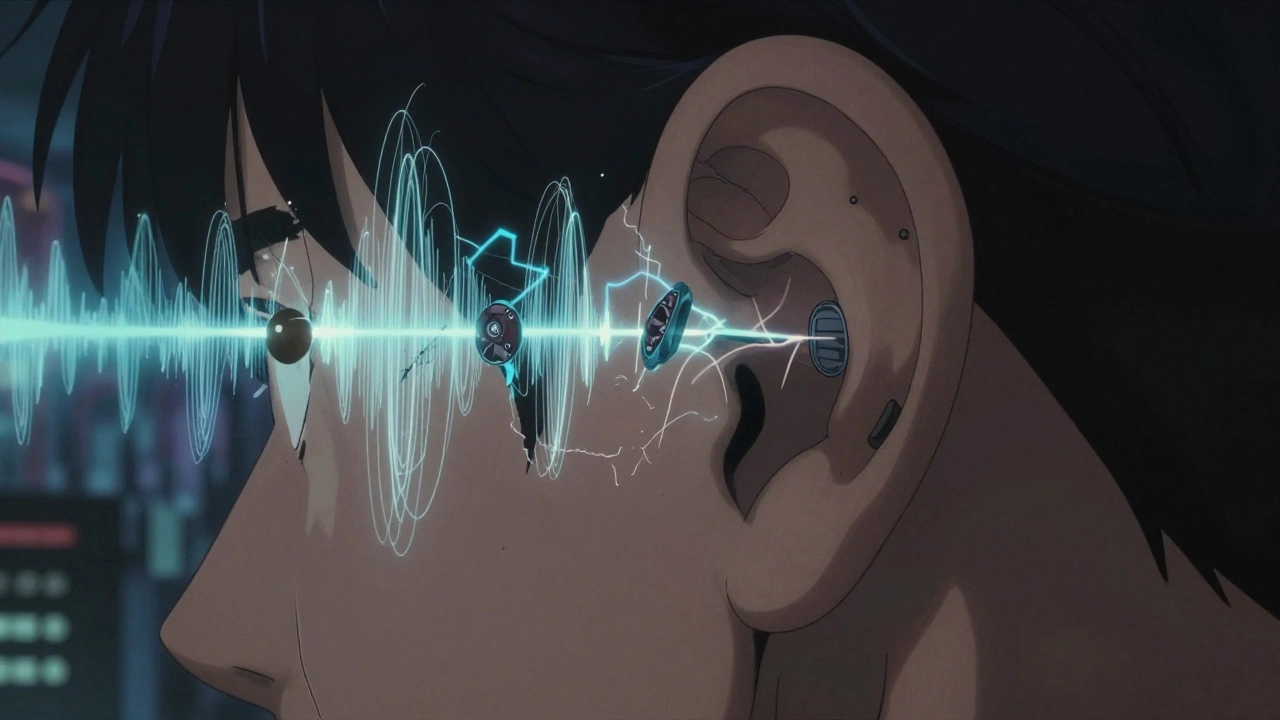
When you can’t hear your grandkid laughing or struggle to follow conversations in a crowded room, it’s not just annoying-it’s isolating. For millions, this isn’t temporary. It’s sensorineural hearing loss, a type of hearing damage that starts deep inside the ear and rarely goes away. Unlike earwax blockage or an ear infection, this isn’t something you can simply clean out or treat with antibiotics. It’s damage to the inner ear’s delicate hair cells or the nerve that sends sound signals to your brain. And once they’re gone, they don’t grow back.
What Exactly Is Sensorineural Hearing Loss?
Sensorineural hearing loss (SNHL) happens when the tiny hair cells in your cochlea-so small you’d need a microscope to see them-get damaged. These hair cells are the first step in turning sound waves into electrical signals your brain understands. When they’re healthy, they bend with vibrations and fire off messages like a keyboard playing notes. But when they’re worn down by noise, age, or disease, they stop working. No bend. No signal. No sound.
This isn’t a problem with your eardrum or middle ear bones. That’s conductive hearing loss, which can often be fixed. SNHL is deeper. It’s in the inner ear. And that’s why it’s permanent in most cases. About 90% of all hearing loss cases that need hearing aids are sensorineural. It’s not rare. It’s common.
Why Do These Hair Cells Die?
There are a few main reasons these hair cells get damaged:
- Noise exposure: Constant exposure to sounds above 85 decibels-like traffic, power tools, or loud music-can wear them down over time. A concert at 110 dB can cause damage in under 15 minutes.
- Aging (presbycusis): This is the #1 cause. By age 65, about 25% of Americans have noticeable SNHL. By 75, it’s half of them. The hair cells just get tired after decades of work.
- Genetics: Some people are born with genes that make their hair cells more fragile.
- Medications: Certain antibiotics, chemotherapy drugs, and high-dose aspirin can be toxic to the inner ear.
- Illnesses: Meniere’s disease, autoimmune disorders, and even severe infections like meningitis can attack the inner ear.
- Trauma: A blow to the head or sudden pressure changes (like scuba diving too fast) can rupture the cochlea.
What’s scary is that damage often starts quietly. You might not notice until you’re missing consonants like ‘s,’ ‘t,’ or ‘th.’ That’s because high-frequency sounds-birds chirping, children’s voices, alarms-are the first to go.
How Do You Know If It’s Sensorineural?
There are clear signs:
- Speech sounds muffled, especially in noisy places like restaurants or family gatherings.
- You hear people talking but can’t make out the words.
- You hear ringing in your ears (tinnitus)-and about 80% of SNHL patients have it.
- Sounds seem too loud or sharp (this is called recruitment).
- You feel off-balance or dizzy sometimes.
The only way to confirm it? An audiogram. This test plays tones at different pitches and volumes through headphones. If your hearing is worse through your ear canal (air conduction) than through your skull (bone conduction), and there’s no gap between the two, it’s SNHL. No air-bone gap? That rules out earwax or fluid buildup. This is inner ear damage.

Can It Be Cured?
Here’s the hard truth: for most people, no. Once the hair cells are dead, they don’t regenerate. That’s why doctors say SNHL is permanent.
There’s one exception: sudden sensorineural hearing loss (SSHL). If you lose hearing overnight or over a few days, it’s a medical emergency. About 5 to 20 people per 100,000 get this each year. If you start steroid treatment within 48 to 72 hours, you have a 32% to 65% chance of recovering some hearing. Delay it past two weeks, and that chance drops fast.
But for the 95% of cases that develop slowly? Medications won’t bring back the hair cells. No pill, no drop, no supplement has been proven to reverse it. That’s why research at places like Stanford is focused on stem cells and gene therapy-trying to grow new hair cells. But they warn: clinical use is still 5 to 10 years away.
What Can You Actually Do?
You can’t fix the damage-but you can manage it. And modern tools do a lot better than you might think.
Hearing Aids
They’re not magic, but they’re the best tool most people have. Modern digital hearing aids don’t just make everything louder. They’re programmed to boost only the frequencies you’ve lost-usually the high-pitched ones. Brands like Phonak, Widex, and Oticon use AI to separate speech from background noise, which helps a lot in restaurants or group chats.
But they have limits. In noisy rooms, they only improve speech understanding by 30% to 50%. That’s why many users still say: “I hear people, but I can’t follow the conversation.”
Cost varies. A good pair runs $2,500 to $7,000. Costco’s Kirkland Signature models are popular for being $1,500 cheaper and still reliable. But insurance rarely covers them. Only 16% to 20% of adults who need them actually wear them-mostly because of cost and stigma.
Cochlear Implants
If your hearing loss is severe to profound-meaning you can’t hear even loud speech without aids-a cochlear implant may be an option. It doesn’t fix your ear. It bypasses it.
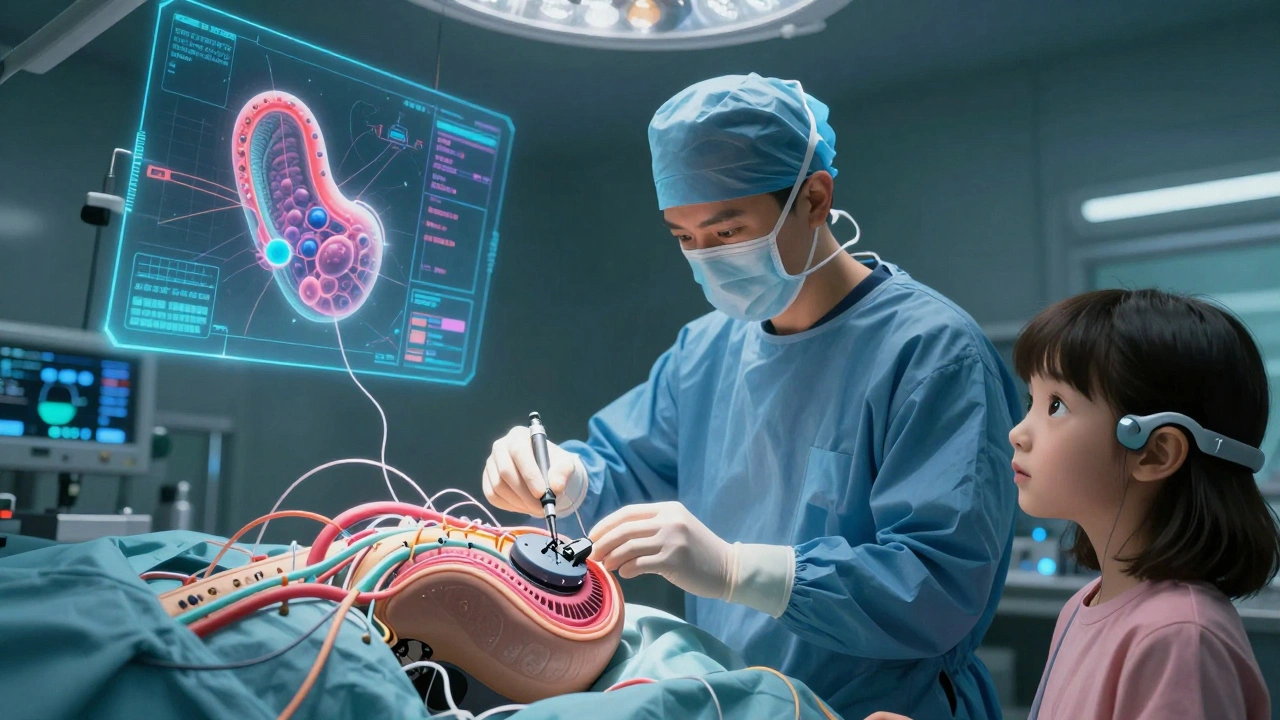
A surgeon places a small device under your skin behind the ear. A wire runs into the cochlea and sends electrical pulses directly to the auditory nerve. It takes months of therapy to learn how to interpret these signals as sound.
82% of recipients can understand speech without lip reading. But it’s not like normal hearing. Sounds can feel robotic or strange at first. One user on a hearing forum said: “Everyday sounds-doors closing, water running-felt painfully loud for six weeks.”
It’s a big step. But for people with near-total deafness, it’s life-changing.
What About New Tech?
The hearing aid market is changing fast. In 2023, the FDA approved the first prescription hearing aid app-Bose Hearing Aid-that lets you adjust settings on your phone. OTC (over-the-counter) hearing aids are now legal in the U.S., making entry-level devices cheaper and easier to buy.
Companies like Eargo and Lively are targeting mild to moderate SNHL with sleek, discreet designs. Cochlear Limited released the Nucleus 8 processor in 2023-30% smaller, with better noise filtering. Oticon’s Real-X uses AI to recognize if you’re in a car, café, or quiet room and adjusts automatically.
But here’s the catch: these tools don’t restore hearing. They compensate. They help you hear better, but not normally. And they don’t fix tinnitus-though some hearing aids now include “notch therapy” to mask the ringing. One user reported his tinnitus dropped from an 8/10 to a 4/10 after three months.
Living With It
Adapting takes time. Most people need 4 to 8 weeks just to get used to hearing aids. You might feel your voice echoes in your head (occlusion effect). Or the device whistles (feedback). Both are fixable with a simple tweak.
Consistency matters. Wear them every day. Don’t save them for parties. Your brain needs the input to relearn how to process sound.
Support helps too. Groups like the Hearing Loss Association of America offer free workshops, local chapters, and online forums. You’re not alone. Over 250,000 people visit their site each year looking for answers.
And don’t wait. If you’re struggling to hear, get tested. Early intervention means better outcomes with hearing aids. The longer you wait, the more your brain forgets how to process sound-and that’s harder to reverse.
It’s Not Just About Sound
Untreated SNHL doesn’t just make conversations hard. It’s linked to depression, social isolation, and even faster cognitive decline. The World Health Organization says unaddressed hearing loss costs the global economy $513 billion a year-in lost productivity, healthcare, and care support.
By 2050, nearly 1 in 4 people will have disabling hearing loss. The tools to manage it are improving. But the biggest barrier isn’t technology. It’s awareness. And stigma.
You don’t need to be ‘old’ to have SNHL. You don’t need to be ‘loud’ to damage your ears. It can happen quietly. And it can change your life.
The good news? You can still live well. You just need the right tools-and the courage to use them.
Is sensorineural hearing loss always permanent?
In most cases, yes. Once the hair cells in the inner ear are damaged, they don’t regenerate. The exception is sudden sensorineural hearing loss (SSHL), which can sometimes be reversed if treated with steroids within 48 to 72 hours. For slow, progressive hearing loss-like from aging or noise exposure-it’s permanent.
Can hearing aids restore normal hearing?
No. Hearing aids amplify sound and can improve speech clarity, especially in quiet settings, but they can’t restore hearing to normal levels. In noisy environments, they typically improve understanding by only 30% to 50%. They help you hear better, but not like you did before the damage.
What’s the difference between sensorineural and conductive hearing loss?
Conductive hearing loss is caused by blockages or damage in the outer or middle ear-like earwax, fluid, or a perforated eardrum. It’s often treatable with medicine or surgery. Sensorineural hearing loss is damage to the inner ear or auditory nerve. It’s usually permanent and can’t be fixed with surgery or drugs.
How do I know if I have sensorineural hearing loss?
Signs include difficulty understanding speech in noise, ringing in the ears (tinnitus), sounds seeming too loud or distorted, and trouble hearing high-pitched voices. The only way to confirm it is through a hearing test (audiogram) done by an audiologist. If bone conduction and air conduction thresholds are similar with no gap, it’s sensorineural.
Are over-the-counter hearing aids good for sensorineural hearing loss?
Yes-for mild to moderate sensorineural hearing loss. OTC hearing aids are now legally available in the U.S. and can be a cost-effective first step. They’re not as customizable as prescription devices, but many users report improved speech clarity. They’re not recommended for severe or profound hearing loss, where a cochlear implant or prescription hearing aid is needed.
Can I prevent sensorineural hearing loss?
You can reduce your risk. Protect your ears from loud noise using earplugs or noise-canceling headphones. Keep volume below 60% of max on personal devices. Avoid prolonged exposure to sounds above 85 decibels. Get regular hearing checks, especially if you’re over 50 or work in a noisy environment. While aging can’t be stopped, noise damage can often be avoided.
What Comes Next?
If you’re reading this and think you might have SNHL, don’t wait. Book a hearing test. It’s quick, painless, and often free at audiology clinics or big-box retailers like Costco. If you already have hearing aids, make sure they’re programmed correctly. Many people stop using them because they weren’t adjusted properly.
And if you’re helping someone with hearing loss-be patient. Don’t shout. Get their attention. Face them. Speak clearly, not slowly. Ask if they understood. Small things make a big difference.
The science may not have a cure yet. But the tools we have now can still give you back your conversations, your laughter, your connection. You just have to take the first step.

David Palmer
So basically we’re all gonna go deaf by 60 anyway? Cool. Guess I’ll just start yelling at my cat now.
Doris Lee
I know this feels scary, but you’re not alone. I got hearing aids at 52 and now I hear my granddaughter say ‘I love you’ without having to ask her to repeat it. It’s not perfect, but it’s enough.
Start with a free test. No pressure. Just info.
Michaux Hyatt
Just a quick note for anyone reading: OTC hearing aids aren’t a cure, but for mild loss, they’re a game-changer. I bought a pair off Amazon last year for $300-no audiologist visit needed. My wife finally stopped saying ‘you’re not listening’ all the time.
They won’t fix severe loss, but if you’re struggling in meetings or with TV volume, try one before you panic. Most have a 30-day return policy.
Regan Mears
I used to think hearing loss was just an old person thing-until I started missing my kid’s questions at the playground. I didn’t realize I was turning up the TV so loud my neighbors knocked.
I got tested last year. Turns out, I’ve had SNHL since my 30s from years of concerts and headphones on max. No one warned me. No one talks about this.
My hearing aids cost $5k out of pocket. Insurance said ‘it’s not a medical emergency.’ But losing connection with your family? That’s emotional trauma.
Don’t wait until you’re yelling at your dog to do something. Get checked. Even if you think it’s ‘just age.’
And if you’re a friend or family member of someone with this? Don’t say ‘just speak louder.’ Say ‘let’s sit where the light’s better’ or ‘I’ll face you when I talk.’ Small things. Huge difference.
Frank Nouwens
It is a matter of considerable scientific interest that the human cochlea lacks regenerative capacity in adulthood, a trait shared among all mammals except for certain avian species.
Current research into Atoh1 gene transduction and stem cell differentiation in murine models demonstrates promising hair cell regeneration, though translation to clinical application remains fraught with challenges related to synaptic reintegration and neural plasticity.
One must also consider the socioeconomic implications: the global burden of untreated hearing loss exceeds that of many chronic conditions, yet funding for auditory research remains disproportionately low relative to its prevalence.
Kaitlynn nail
It’s not about hearing. It’s about listening. And we’ve all forgotten how.
Maybe the real problem isn’t dead hair cells-it’s that we stopped caring enough to hear each other in the first place.
Stephanie Maillet
I’ve been thinking… if our bodies can’t regenerate hair cells, maybe that’s nature’s way of telling us to protect what we have.
We don’t need more tech to fix us-we need to stop destroying ourselves.
Turn down the music. Wear the earplugs. Listen to silence. Maybe that’s the real cure.
Jack Appleby
Let’s be clear: OTC hearing aids are a corporate scam dressed up as progress. They’re glorified amplifiers with no real frequency compensation, no noise isolation algorithms, and zero customization.
Real hearing aids use directional microphones, AI-driven speech enhancement, and adaptive feedback cancellation-features you won’t find in a $200 gadget bought off a pop-up ad.
And don’t get me started on ‘notch therapy’ for tinnitus. That’s just placebo noise wrapped in marketing jargon. If your ringing doesn’t improve with cognitive behavioral therapy, no frequency masker will fix it.
Also, cochlear implants don’t ‘bypass’ the ear-they replace its function. The brain doesn’t ‘learn’ to interpret electrical pulses. It rewires itself, like a blind person learning to see with sound. That’s neuroplasticity, folks. Not magic.
And yes, the WHO’s $513B figure? It’s legit. But it ignores the hidden cost: the loneliness epidemic tied to untreated SNHL. That’s not a line item. It’s a cultural collapse.
Rebecca Dong
Wait… so you’re telling me the government and big pharma are hiding the REAL cure? I’ve been reading forums-there are videos of people healing their hearing with frequency sound baths and copper ear inserts. One guy even said he reversed it with breathwork and a crystal necklace.
They don’t want you to know because hearing aids cost $7k and insurance won’t cover them. But if you just stop eating processed sugar and meditate for 20 minutes a day, your hair cells come back. I swear it’s true.
My cousin’s neighbor’s dog had hearing loss and got better after listening to Tibetan bowls. Coincidence? I think not.
Sarah Clifford
I got my first hearing aid last year and now my husband says I’m ‘too loud’ when I talk. Like, what?! I’m not yelling-I’m just finally hearing myself again.
Also, the whistling thing? Total nightmare. I thought I was going crazy. Turned out my audiologist just needed to tweak the fit.
And tinnitus? Still there. But now I have this app that plays ocean waves when it gets bad. It’s not gone. But it’s quieter. And I’ll take that.
Ben Greening
There is a compelling body of evidence suggesting that early intervention with amplification preserves central auditory processing. Delayed use correlates with cortical reorganization and diminished speech discrimination capacity, independent of peripheral pathology.
Thus, the imperative for routine audiometric screening in populations over 50 is not merely clinical-it is neurophysiological.