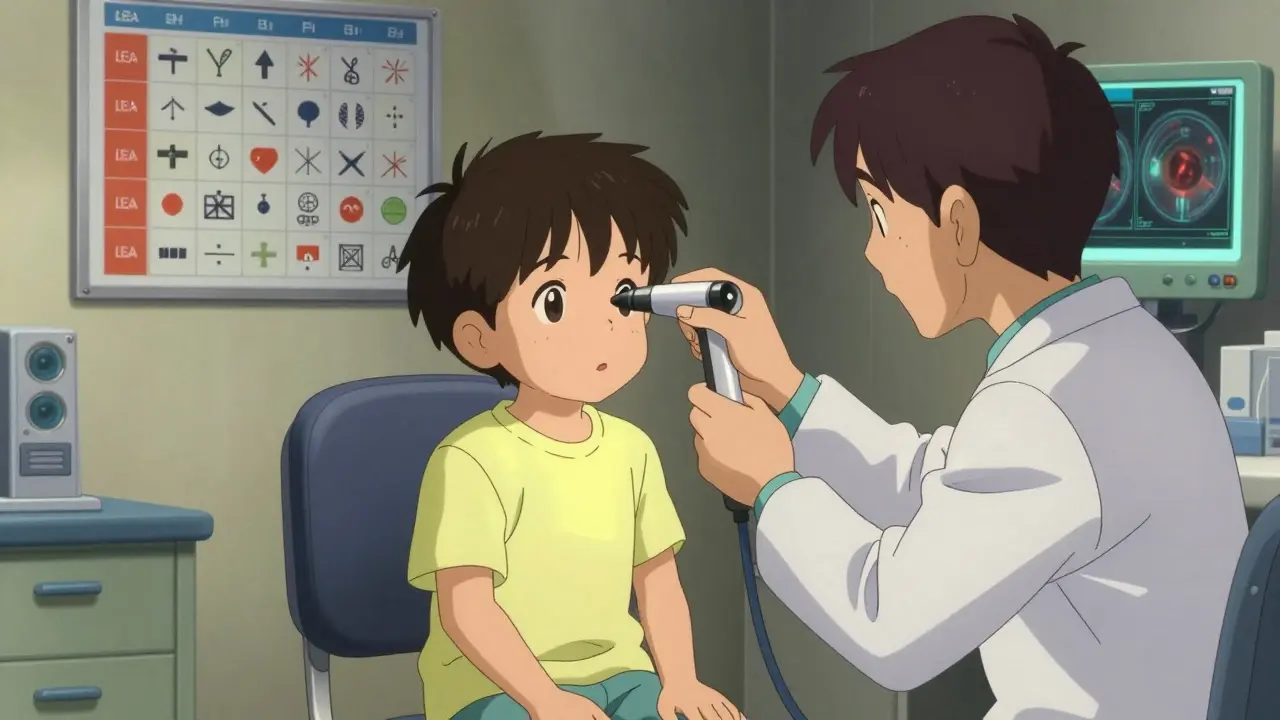
Children don’t always tell you when they can’t see well. A kid might squint at the TV, sit too close to the screen, or bump into furniture - and parents often assume it’s just being clumsy or distracted. But these signs could mean something serious: a vision problem that, if left untreated, could lead to permanent vision loss. That’s why pediatric vision screening isn’t optional - it’s essential. Early detection can fix issues before they stick, and the window for effective treatment closes fast. By age 7, the brain’s ability to rewire itself for vision drops dramatically. After that, even the best glasses or eye patches might not help.
Why Screen Before Age 5?
The most common vision problems in young kids are amblyopia (lazy eye), strabismus (crossed or turned eyes), and large refractive errors like nearsightedness or farsightedness. These aren’t just blurry vision - they can permanently damage how the brain processes sight. Amblyopia affects 1.2% to 3.6% of children. Strabismus? Around 1.9% to 3.4%. That means in a classroom of 30 kids, at least one likely has a vision issue that needs attention.Here’s the key: if you catch amblyopia before age 5, treatment works in 80% to 95% of cases. That number drops to just 10% to 50% if you wait until after age 8. The reason? Kids’ brains are still learning how to see. The visual system is flexible - until it’s not. After age 7, that flexibility fades. Treatment becomes harder, slower, and less effective. That’s why screening between ages 3 and 5 is so critical. The U.S. Preventive Services Task Force gives it a Grade B recommendation: strong enough to say every child in this age group should be screened at least once.
How Screening Works: Tools and Methods
Screening isn’t one-size-fits-all. It changes with the child’s age and ability to cooperate.Infants (0-6 months): The red reflex test is the gold standard. A doctor shines a light into each eye and looks for a healthy red glow. If the reflection looks white, gray, or uneven, it could mean cataracts, retinoblastoma (a rare eye tumor), or other serious problems. This test takes seconds and can be done during a regular checkup.
Toddlers (6 months-3 years): At this stage, kids can’t read letters. So screens focus on movement and alignment. Doctors check for eye coordination, pupil response, and whether the eyes move together. Red reflex is still used. If a child won’t sit still, instrument-based tools like autorefractors or photoscreeners step in.
Children 3-5 years: This is the sweet spot for screening. Two main methods are used:
- Optotype-based: Kids identify shapes or letters on a chart. LEA Symbols (circles, squares, apples, houses) or HOTV letters are common because they’re easier for young kids than Snellen letters. The child stands 10 feet away. At age 3, they need to get most of the 20/50 line right. At age 4, it’s 20/40. By age 5+, it’s 20/32.
- Instrument-based: Devices like the SureSight, Retinomax, or the newer blinq™ scanner measure how light reflects off the retina. These devices can screen in under a minute, even if the child won’t cooperate. The blinq™ scanner, FDA-cleared in 2018, has 100% sensitivity for detecting referral-worthy issues in kids aged 2-8. That means it almost never misses a problem.
Studies show instrument-based screening has a higher positive predictive value (68%) than traditional chart tests (52%) for kids aged 3-4. That means fewer false alarms - and fewer unnecessary trips to the eye doctor.
What Happens When a Child Fails Screening?
Failing a screening doesn’t mean the child is blind. It means they need a full eye exam by an ophthalmologist or optometrist who specializes in kids. Screening tools aren’t diagnostic - they’re filters. They catch kids who might have a problem so specialists can confirm it.Common follow-up diagnoses include:
- Amblyopia - treated with patching the stronger eye or atropine drops to blur it temporarily
- Strabismus - treated with glasses, vision therapy, or sometimes surgery
- Refractive errors - corrected with glasses
Early treatment can restore normal vision. A child who gets glasses at age 4 might never need them again after age 8. But if treatment is delayed past age 7, vision loss can be permanent. That’s why referrals are urgent - not optional.
Challenges in Real-World Screening
Even with solid guidelines, screening doesn’t always go smoothly. In real clinics, providers face hurdles:- Uncooperative kids: About 15-30% of 3-year-olds won’t sit still or point to the right symbol. This leads to false failures.
- Wrong lighting: A 2018 study found 25% of screenings were done under poor lighting - making charts too dim or too bright.
- Incorrect distance: The chart must be exactly 10 feet away. Too close? The child passes even if they can’t see well. Too far? They fail even if they’re fine. This mistake causes 20% of false positives.
Training helps. Healthcare workers need just 2-4 hours to learn proper technique. But without regular quality checks, errors creep back in. That’s why programs like the California CHDP and NCCVEH offer free online training. Over 15,000 providers have completed them since 2016.
Technology Is Changing the Game
The blinq™ scanner is the first FDA-cleared AI-powered pediatric screener. It doesn’t need a child to respond. Just hold it 12 inches from the face, press a button, and it analyzes both eyes in seconds. It’s especially useful for toddlers, kids with developmental delays, or in busy clinics.But it’s not perfect. It can flag kids with small refractive errors that don’t need correction - leading to unnecessary referrals. That’s why experts still recommend combining methods: use instruments for younger or uncooperative kids, and optotype charts for those who can cooperate.
Research is pushing screening even earlier. A 2022 study in JAMA Pediatrics showed instrument-based screening works reliably at 9 months. Guidelines may soon recommend screening at 12 months, not just at age 3.
Who Gets Screened - And Who Doesn’t
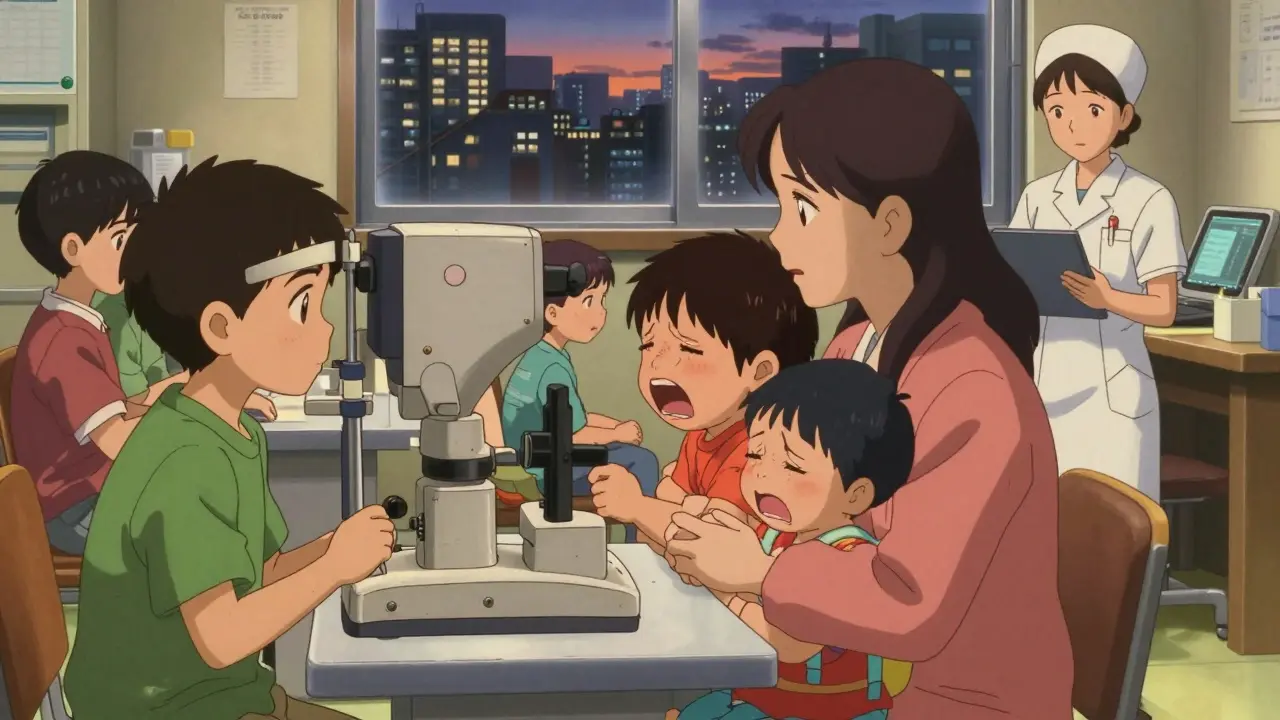
Here’s the uncomfortable truth: not all kids get screened equally. Hispanic and Black children are 20-30% less likely to receive recommended vision screening than white children, according to the National Survey of Children’s Health. Reasons include lack of access, language barriers, or parents not knowing it’s part of routine care.That’s why screening must be built into well-child visits - not left to chance. The Bright Futures schedule, used by 47 U.S. state Medicaid programs, recommends screening at ages 8, 10, 12, and 15. But the most critical window is 3-5. That’s when the brain is still learning to see.
Cost shouldn’t be a barrier. Under the Affordable Care Act, pediatric vision screening is covered as an essential health benefit. Most insurance plans pay for it. And for clinics, the long-term savings are huge. The USPSTF found every dollar spent on screening saves $3.70 in lifetime costs - from lost productivity, special education needs, and long-term vision care.
What Parents Should Do
You don’t need to be an expert. Just ask:- Has my child had a vision screening at age 3 or 4?
- Was it done with a chart, or with a device like SureSight or blinq™?
- Was each eye tested separately?
- Was the chart at the right distance?
If you’re unsure, ask your pediatrician. If they say they didn’t screen, ask for it. If they say they did but you’re still worried - get a full eye exam. Don’t wait for school. Don’t wait for complaints. Vision problems don’t always cause symptoms. By the time a child says, “I can’t see,” it might be too late.
Final Thought: It’s Not About Seeing Better - It’s About Seeing at All
Pediatric vision screening isn’t about giving kids glasses. It’s about giving them a future. A child who gets treated for amblyopia at age 4 can grow up to drive, play sports, read, and work without limits. A child who doesn’t - might never see clearly. That’s why this screening matters. Not because it’s trendy. Not because it’s new. But because it works - if done early.Is pediatric vision screening covered by insurance?
Yes. Under the Affordable Care Act, pediatric vision screening is considered an essential health benefit. Most private insurance plans and Medicaid programs cover it at no cost during well-child visits. No copay or deductible applies. Check with your provider if you’re unsure, but don’t let cost stop you - it’s included in standard care.
Can a child pass a vision screening and still have a problem?
Yes. Screening tools are designed to catch most problems, but they’re not perfect. Some kids with mild amblyopia or subtle refractive errors may pass. That’s why ongoing observation matters. If your child squints often, rubs their eyes, or has trouble reading, get a full eye exam - even if they passed screening. Screening is a filter, not a diagnosis.
What’s the difference between a vision screening and a full eye exam?
A vision screening checks for signs of problems using quick tests - like charts or devices. It doesn’t diagnose. A full eye exam, done by an optometrist or pediatric ophthalmologist, uses dilation, detailed measurements, and clinical judgment to confirm conditions like amblyopia, strabismus, or cataracts. Screening tells you if you need a full exam. It doesn’t replace it.
Is it too late to screen my 6-year-old if they haven’t been screened yet?
No. While the best results happen before age 5, treatment can still help after age 6. The brain’s plasticity decreases after 7, but improvement is still possible. A 6-year-old with amblyopia can still gain significant vision with patching or atropine. Don’t wait for a “perfect” time - act now. Every day counts.
Do schools do vision screenings? Should I still get one?
Many schools do screenings, but they often use outdated methods or miss key issues. School screenings typically happen at grade entry and focus on distance vision. They may not check for amblyopia, near vision problems, or eye alignment. Pediatricians screen earlier and more thoroughly. Always get a screening from your child’s doctor - even if they passed school screening.

Anil bhardwaj
Been a pediatric nurse in Bangalore for 12 years. Saw a kid at 4 who couldn't see his own hand in front of his face. Parents thought he was just daydreaming. Turned out he had severe amblyopia. Got him glasses by 5, now he's in 4th grade and plays cricket like a pro. Screen early, folks. It's not hype, it's life-changing.
And yeah, instrument-based tools? Game-changer. We use the blinq™ now. No more screaming toddlers or false negatives. Just point, click, done.
lela izzani
As a pediatric optometrist in rural Ohio, I can tell you the biggest barrier isn’t technology-it’s awareness. Parents think ‘vision screening’ means ‘eye chart at school.’ They don’t realize we’re talking about wiring the brain before age 5. I’ve had moms cry when I explain that their 3-year-old’s ‘clumsiness’ was actually a lazy eye. That’s why I hand out laminated one-pagers at checkups. Simple. Clear. No jargon.
Joanna Reyes
Let’s be real-the system is broken. We have a tool like the blinq™ that can screen a toddler in 15 seconds with 100% sensitivity, yet most clinics still rely on 1980s-style chart tests because ‘that’s how we’ve always done it.’ Training takes 2 hours. The device costs less than a printer cartridge. Why aren’t we scaling this? Because bureaucracy moves slower than molasses in January. And don’t get me started on how insurance reimbursement for instrument-based screening still lags behind the evidence. It’s not a clinical gap. It’s a policy failure.
Meanwhile, kids in underserved communities are falling through the cracks. Hispanic and Black children are 30% less likely to be screened? That’s not a statistic-it’s a moral crisis. We need mandatory screening protocols embedded in EHRs, not optional checklists. If we can mandate vaccines, we can mandate vision screening. It’s the same logic: early intervention saves lives, not just vision.
Nerina Devi
I’m from a small village in South India. Our pediatrician didn’t even know what amblyopia meant until last year. But when I pushed for a screening for my daughter after she kept bumping into walls, we found she had a refractive error so severe she was seeing everything as a blur. She got glasses at 3. Now she reads books before bedtime. I’m not a doctor. I just read. And I realized-this isn’t about optics. It’s about giving kids the chance to see the world clearly. No child should grow up thinking the sky is gray because no one checked their eyes.
Dinesh Dawn
My nephew failed screening at 3. We thought it was just lazy eyes. Turned out he had a cataract in one eye. Got it fixed before 4. Now he’s 7 and plays soccer like he’s got super vision. Just wanted to say-don’t wait for symptoms. If your kid squints, sits too close, or walks into furniture? Get it checked. Seriously. It’s easier than you think.
Vanessa Drummond
Ugh. I work in a pediatric clinic. We get parents who say, ‘My kid passed school screening, so we’re good.’ NO. YOU’RE NOT. School screenings are a joke. They use a chart from 1992, hold it 5 feet away, and call it a day. My kid passed school screening. Then we got him properly screened at the doctor-turned out he had a 300-degree astigmatism. He was seeing double. He cried every time he tried to read. And we almost missed it because we trusted a school nurse with a 20-year-old chart. Don’t be that parent. Demand a real screening. Use the blinq™. Make them use the device. It’s not optional. It’s survival.
Nick Hamby
There is a profound philosophical dimension to this issue that transcends clinical metrics. Vision screening is not merely a diagnostic intervention; it is an ontological affirmation of the child’s potential. The brain, in its early developmental phase, is not a static organ but a dynamic, self-organizing system that requires precise sensory input to forge functional neural pathways. When we delay screening, we do not merely postpone correction-we risk the irreversible atrophy of perceptual capacity. The window of neuroplasticity is not arbitrary; it is biologically ordained. To neglect this window is to deny the child’s future self the right to full sensory participation in the world.
Furthermore, the equity gap is not incidental-it is systemic. The fact that socioeconomic and racial disparities persist in screening access reveals a deeper societal failure: the devaluation of early childhood as a domain of intrinsic worth. We must not only implement tools but reimagine care as a universal right, not a privilege contingent on zip code or insurance plan. The cost-benefit analysis is compelling, yes-but the moral imperative is absolute.
Gwen Vincent
I love how this post breaks down the science without jargon. I’m a mom of two, and I didn’t know any of this. We skipped screening for my oldest because ‘he’s fine.’ Then my youngest got screened at 3 and needed glasses. Now I’m the one pushing every parent I know to ask for it. If it takes one mom to ask, ‘Was it done with a device?’ to save a kid’s vision-that’s the ripple effect we need.
tia novialiswati
Just had my 2-year-old screened with the blinq™ at her pediatrician. Took 10 seconds. No crying. No drama. And it caught a mild refractive error we never would’ve noticed. I’m so glad we did it. Seriously, if you’re on the fence-just do it. Your kid won’t remember it. But their future self will thank you. 😊