
That nagging knee ache or stiff shoulder doesn't always need a pill. Over-the-counter (OTC) topical pain relievers are non-prescription medications formulated as creams, gels, and patches that are applied directly to the skin to relieve localized muscle and joint pain have become a go-to solution for millions. They seem harmless because they sit on your skin rather than passing through your stomach. But "harmless" is a dangerous assumption when it comes to chemistry. While these products offer significant benefits over oral medications, they carry specific, sometimes severe, risks if you ignore how they work.
You might think applying a cooling gel is as simple as rubbing it in and forgetting about it. The reality is more complex. Regulatory bodies like Health Canada and the U.S. Food and Drug Administration (FDA) have issued serious warnings in recent years regarding skin burns from menthol and life-threatening reactions from illegal high-concentration lidocaine products. Understanding the difference between safe, regulated use and risky behavior is the only way to get pain relief without creating new health problems.
How Topical Pain Relievers Work
To understand the safety profile, you first need to know what’s happening under your skin. Unlike oral NSAIDs like ibuprofen or naproxen, which travel through your bloodstream to reach the site of pain, topical agents act locally. This means significantly less medication enters your systemic circulation. According to Dr. Christopher Gilligan, a pain medicine physician at Harvard-affiliated Brigham and Women's Hospital, this reduced absorption makes them a safer choice for soft tissue injuries or osteoarthritis, especially for older adults who may be sensitive to the side effects of oral drugs.
However, "local" action still involves active ingredients penetrating the epidermis. The mechanism depends entirely on the ingredient:
- Cooling Agents (Menthol): These stimulate cold-sensitive receptors in the skin, creating a sensation that distracts the brain from pain signals. It’s a sensory trick, not necessarily an anti-inflammatory effect.
- Warming Agents (Capsaicin): Derived from chili peppers, capsaicin depletes substance P, a neurotransmitter involved in sending pain signals. It often causes a burning sensation initially before providing relief.
- Anti-inflammatories (Diclofenac, Methyl Salicylate): These reduce inflammation at the site of application. Diclofenac is an NSAID, while methyl salicylate is related to aspirin.
- Numbing Agents (Lidocaine): These block nerve signals temporarily, effectively numbing the area.
The key takeaway here is potency. Because these ingredients penetrate the skin, they can cause local tissue damage if concentrations are too high or if the skin barrier is compromised.
The Hidden Danger of Menthol and Heat
Menthol is one of the most common ingredients in OTC pain gels, found in brands like Aspercreme Heat. It typically contains around 10% menthol. On its own, menthol is generally safe. The danger arises from user error-specifically, combining the product with external heat sources.
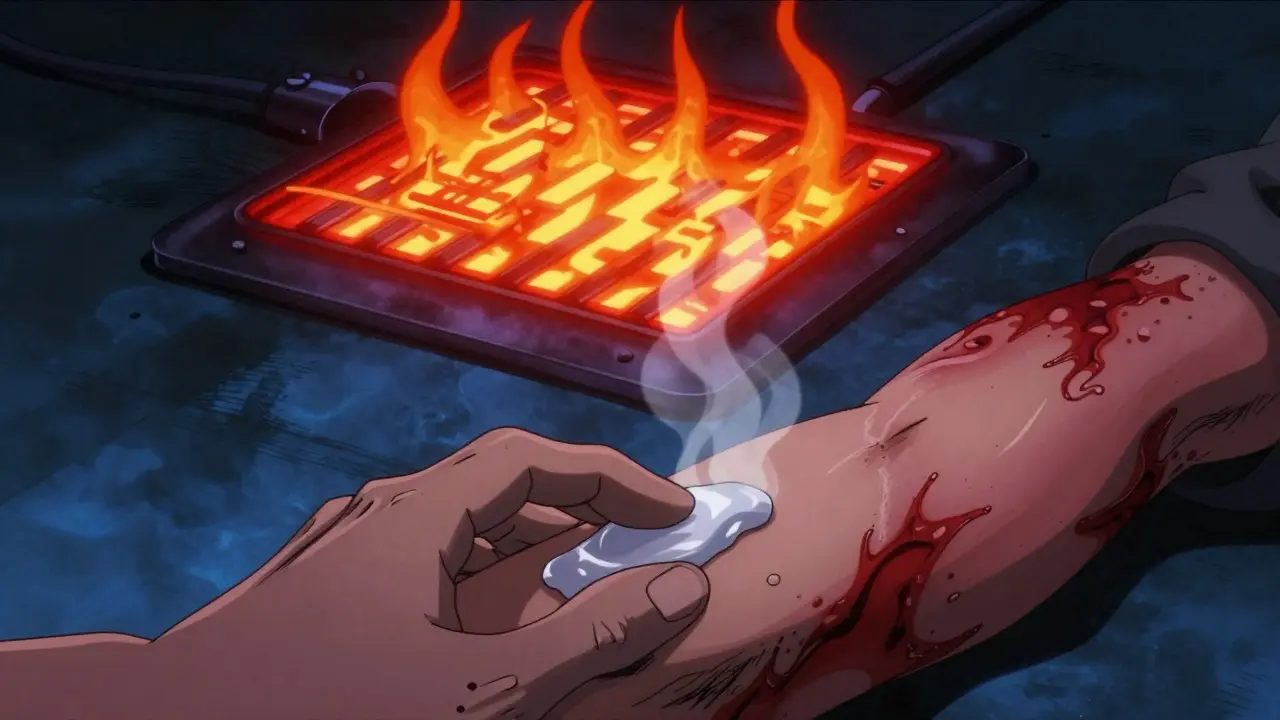
In February 2017, Health Canada released a critical safety review linking menthol-containing products to rare but serious skin burns. The agency noted that many consumers apply the gel and then immediately cover the area with a heating pad, hot water bottle, or tight bandage. This combination traps heat and increases blood flow to the area, accelerating the absorption of menthol to toxic levels for the skin cells. The result can be second-degree burns.
This isn't just theoretical. The link was strong enough that Health Canada mandated updated labeling standards requiring explicit warnings about the burn risk. If you use a menthol-based cream, never apply heat to the area afterward. Let the product absorb naturally, and keep the skin exposed or covered only with loose clothing.
FDA Warning: The Lidocaine Risk
While menthol risks are largely due to misuse, there is a more sinister threat involving lidocaine. In July 2023, the FDA issued a stark warning against certain topical analgesic products marketed for use before, during, or after cosmetic procedures like microdermabrasion, laser hair removal, tattooing, and piercing.
The problem? Illegal concentration. Federal law limits OTC topical lidocaine to a maximum of 4%. However, the FDA found products on the market containing up to 20% lidocaine. When absorbed through skin that has been compromised by lasers or needles, these high doses can enter the bloodstream rapidly. This can lead to systemic toxicity, causing irregular heartbeat, seizures, and breathing difficulties.
The FDA named several companies, including Bella's Beauty Supply and DermaSelect, for marketing these dangerous products. Jill Furman, J.D., director of the Office of Compliance in the FDA's Center for Drug Evaluation and Research, stated these products "pose unacceptable risks to consumers and should not be on the market." Always check the label. If a product claims to be a "numbing cream" for tattoos or microneedling and isn't prescribed by a doctor, assume it is illegal and unsafe.
Safety by Ingredient: A Practical Breakdown
Not all topical pain relievers carry the same risks. Here is how to handle the major categories safely.
| Ingredient | Typical Concentration | Key Risks & Precautions | Time to Relief |
|---|---|---|---|
| Menthol | ~10% | Risk of skin burns if combined with heat pads or tight bandages. Keep away from eyes. | Immediate (sensory) |
| Capsaicin | 0.025% - 0.1% | Burning sensation upon application. Must wash hands thoroughly after use. Do not touch eyes. | Up to 7 days for full effect |
| Diclofenac | 1% (Gel) | NSAID risks. Caution for those on blood thinners or with salicylate sensitivity. Avoid sun exposure on treated area. | Several days |
| Methyl Salicylate | Varies | Salicylate toxicity if overused. Dangerous for children. Avoid in patients allergic to aspirin. | Variable |
| Lidocaine | Max 4% (OTC) | Systemic toxicity if >4% or used on broken skin. Never use unregulated "tattoo numbing" creams. | 20-30 minutes |
Who Should Be Extra Cautious?
Even with proper usage, certain groups face higher risks. Dr. Laurie Danielson, Pharm.D., R.Ph. at Mayo Clinic, emphasizes that most people assume OTC medications are safe and overlook discussing their use with their care team. This is a critical gap.
If you fall into any of these categories, consult a healthcare provider before starting regular topical treatment:
- Patient on Blood Thinners: Diclofenac and methyl salicylate can interact with anticoagulants, increasing bleeding risk, even topically.
- Aspirin Allergy: Methyl salicylate is chemically similar to aspirin. If you have an aspirin allergy, avoid wintergreen-based rubs.
- Broken or Irritated Skin: Never apply any topical analgesic to open wounds, cuts, or rashes. The skin barrier is designed to regulate absorption; breaking it allows dangerous amounts of drug to enter the system.
- Pregnant or Nursing Individuals: While systemic absorption is low, it is not zero. Consult your OB-GYN before using NSAID-based topicals like diclofenac.

Best Practices for Application
Getting the most out of your pain reliever while minimizing risk comes down to technique. The American Pharmacists Association (APhA) provides clear guidelines that, if followed, make these products very safe.
- Clean and Dry Skin: Apply only to intact, clean, dry skin. Moisture can alter absorption rates.
- Don't Wrap It Up: Unless specifically instructed by a doctor, do not cover the area with airtight bandages or plastic wrap. This creates a greenhouse effect that boosts absorption to unsafe levels.
- Hand Hygiene is Non-Negotiable: Especially with capsaicin, wash your hands immediately after application. Better yet, wear disposable gloves or use a roll-on applicator. Accidentally touching your eye or nose with capsaicin residue causes excruciating pain that lasts for hours.
- Respect the Dosage: More is not better. Using more gel than recommended does not increase pain relief but does increase the risk of side effects. Follow the frequency instructions on the label strictly.
- Avoid Sun Exposure: Some ingredients, particularly diclofenac, can make your skin more sensitive to sunlight. Cover the treated area or apply sunscreen if going outside.
When Topical Isn't Enough
Topical analgesics are excellent for localized issues like a sprained ankle, tennis elbow, or knee osteoarthritis. They are less effective for widespread pain, deep internal pain, or nerve pain that radiates extensively. If you find yourself needing to apply the product constantly throughout the day for more than two weeks without improvement, stop and see a doctor. You may be developing tolerance, where the medication becomes less effective over time, or you may have an underlying condition that requires a different treatment approach.
Remember, the goal of OTC pain management is to improve function and quality of life, not just to mask symptoms indefinitely. If the pain persists, the issue isn't solved by more cream-it needs medical investigation.
Can topical pain relievers cause heart problems?
Generally, no. Topical formulations deliver much smaller doses to the body compared to oral NSAIDs like ibuprofen, which are linked to increased cardiovascular risk with long-term use. However, illegal high-concentration lidocaine products (those exceeding 4%) can cause irregular heartbeat and other cardiac issues if absorbed in large amounts, particularly through broken skin.
Is it safe to use menthol cream with a heating pad?
No. Health Canada and other safety agencies warn against combining menthol-containing products with external heat sources like heating pads, hot water bottles, or tight bandages. This combination can trap heat and accelerate absorption, leading to serious skin burns. Allow the cream to absorb fully and keep the area uncovered or loosely clothed.
How long does it take for capsaicin cream to work?
Unlike cooling gels that provide immediate sensory distraction, capsaicin takes time to deplete substance P in the nerves. It may take up to 7 days of consistent use (3-4 times daily) to notice significant pain relief. Initial burning sensations are normal but should subside with continued use.
Are OTC topical pain relievers safe for children?
Use extreme caution. Many topical products, especially those containing methyl salicylate (wintergreen), are not suitable for children due to the risk of salicylate toxicity. Always check the label for age restrictions and consult a pediatrician before using any topical analgesic on a child.
What should I do if I accidentally get capsaicin in my eyes?
Rinse your eyes immediately with cool water for several minutes. Do not rub them, as this can spread the oil. If pain or irritation persists, seek medical attention. To prevent this, always wash hands thoroughly after application or use gloves/applicators.
