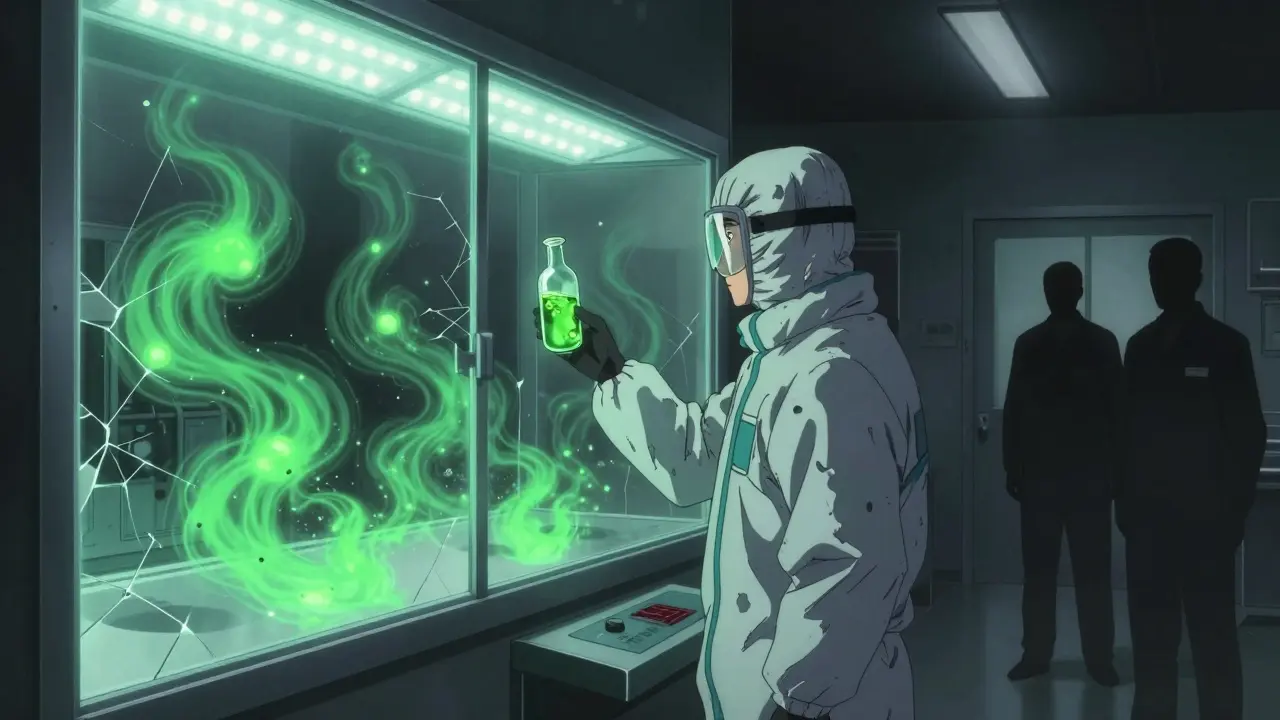
When you take a pill, use an inhaler, or get an IV drip, you expect it to be safe. You don’t think about how it was made. But the FDA does. Every day. And in 2025, they’re finding the same mistakes over and over again-mistakes that could kill someone.
What the FDA Actually Looks For
The FDA doesn’t just check if a drug works. They dig into how it was made. Their job is to catch problems before they reach you. The rules are written in 21 CFR Parts 210, 211, and 820. These aren’t suggestions. They’re legal requirements for drug and medical device makers. If you break them, your products get blocked from the U.S. market. In 2025, 147 facilities are on Import Alert 66-40. That means their goods can’t enter the U.S. without being physically inspected. That’s a big deal.Aseptic Processing: The Silent Killer
One in every two warning letters from the FDA in 2025 points to aseptic processing failures. That’s 47%. It sounds technical, but it’s simple: if you’re making sterile products-injections, eye drops, IV fluids-and you let germs in, people can die. The FDA found labs that didn’t run proper media fill tests. These tests simulate production to see if contamination slips through. One company, Health and Natural Beauty USA Corp., got a warning letter in July 2025 because their staff didn’t even know how to interpret the results. Another, Creative Essences, Inc., was caught working in dirty rooms during critical steps. No gloves. No air filters. No control. That’s not negligence. That’s negligence with a body count.Data Integrity: Lies in the Logs
Thirty-nine percent of warning letters in 2025 are about data integrity. That means someone faked, deleted, or ignored records. The FDA expects every step to be documented. Not just written down. But stored securely, with timestamps, user IDs, and audit trails. One Chinese manufacturer, Guangxi Yulin Pharmaceutical, was caught using instruments without audit trails. Their UV-Vis and IR machines didn’t record who ran the test, when, or if results were changed. Another company used laminated paper records with erasable markers. That’s like writing your bank statement in pencil. You can’t trust it. The FDA calls this violating ALCOA+: data must be Attributable, Legible, Contemporaneous, Original, and Accurate-plus Complete, Consistent, Enduring, and Available. If your records can’t meet that, you’re not just non-compliant. You’re dangerous.Material Control: Dirty Ingredients, Deadly Results
Thirty-five percent of violations involve raw materials. The FDA doesn’t just take your word that your glycerin is pure. They test it. In 2007, contaminated heparin killed 84 people in the U.S. because it was laced with industrial-grade chemicals. That’s why today, if you use glycerin or sorbitol in a product, you must test it for diethylene glycol (DEG) at 0.1% sensitivity. Health and Natural Beauty USA Corp. was cited again in 2025 for failing to do this. Another company, Foshan Yiying, didn’t verify their supplier’s test results. They just accepted the paperwork. That’s not quality control. That’s gambling with lives. The FDA now requires suppliers to be audited, not just trusted.
Process Validation: Making It Up as You Go
Twenty-eight percent of companies don’t prove their processes work. They assume they do. One company made toothpaste without ever validating their mixing process. Another didn’t establish a proper analytical method to test their drug’s strength. The FDA requires three consecutive batches to prove the process is consistent and reliable. You can’t just say, “We’ve been doing it this way for years.” That’s not science. That’s habit. The FDA’s 2022 Process Validation Guidance is clear: you need scientific evidence. Not anecdotes. Not luck.The Real Problem: Culture, Not Just Compliance
The FDA isn’t just catching technical errors anymore. They’re catching culture. Dr. David Lim from Compliance Architects says 78% of companies in 2025 warning letters had leaders who prioritized speed over safety. Production managers pressured staff to skip tests. Quality teams were overruled. Employees were afraid to speak up. One company’s warning letter said: “This site does not prepare batch production records for every batch.” That’s not a mistake. That’s a mindset. The FDA’s Quality Management Maturity (QMM) program, launched in 2024, now looks at how decisions are made-not just what was documented. Facilities with strong quality cultures have 63% fewer repeat violations. That’s not magic. That’s leadership.Who’s Getting Hit the Hardest?
The numbers don’t lie. In 2025, 73% of warning letters went to manufacturers in China, India, and Malaysia. Chinese facilities were cited most for failed analytical method validation. Indian facilities led in data integrity failures. Malaysian firms struggled with quality unit authority. Why? Because in some regions, local regulators inspect less than 2% of factories annually. The FDA is stepping in where others won’t. Unannounced inspections jumped 40% in 2025, and 68% of those targeted Asian sites. The FDA is no longer waiting for complaints. They’re showing up unannounced-and they’re staying until they find the truth.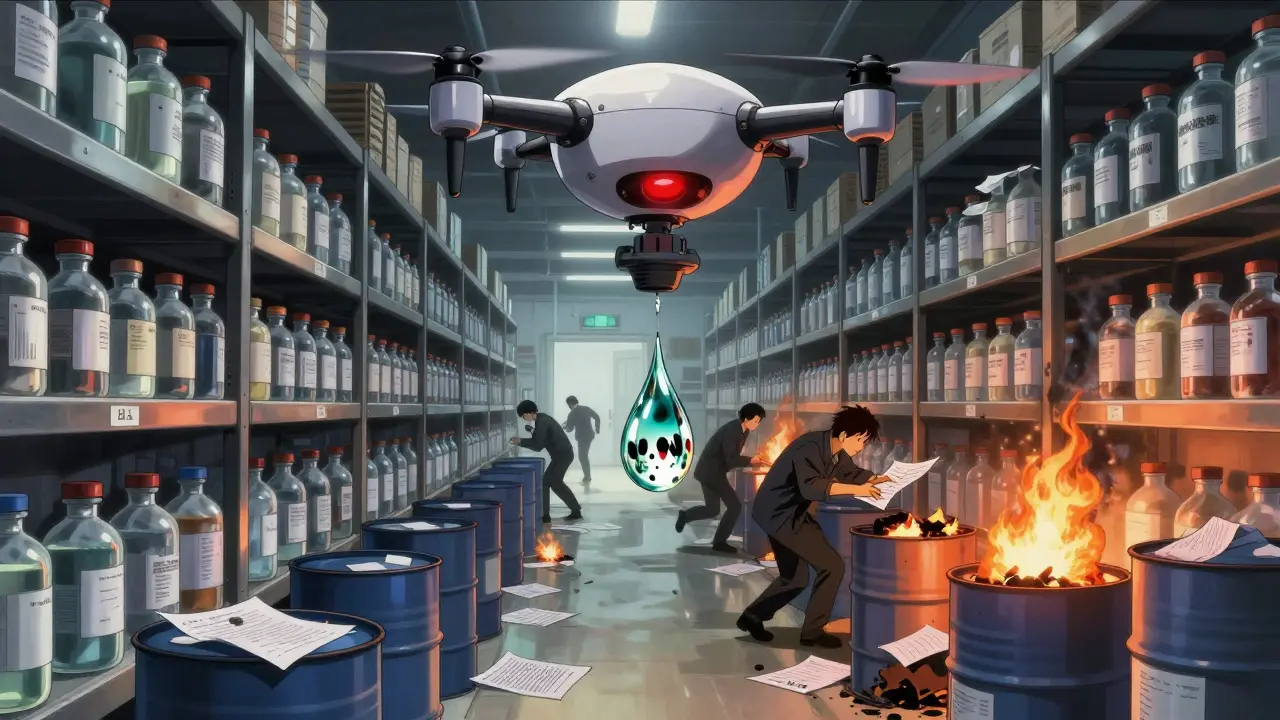
What Happens After a Warning Letter?
Getting a warning letter isn’t the end. But fixing it isn’t easy. The FDA requires 92% of companies to hire an independent CGMP consultant. Not a friend. Not a cousin who works in quality. A real expert. Remediation takes 6 to 18 months. For data integrity, you need validated audit trails with 180-day retention, user-specific logins, and timestamps. For materials, you need testing protocols that meet USP <1085>. For processes, you need three successful validation batches. And you have to prove it all to the FDA. Not once. Not twice. But repeatedly, until they believe you’ve changed.What’s Coming in 2026?
The FDA is getting even tougher. In 2026, they’ll start doing 1,200 unannounced inspections-up from 850 in 2025. And for the first time, they’ll include U.S.-based facilities. That means no more hiding behind “foreign supplier” excuses. They’re also starting to use QMM assessment results to decide how often to inspect you. If you’re doing well, you might get less scrutiny. If you’re still cutting corners, you’ll get more. And new focus areas are emerging: cloud-based quality systems, oversight of contract labs, and continuous manufacturing. If you’re using new tech, you better have validation data. The FDA won’t accept “it’s new, so we’re learning.”Why This Matters to You
You might think this is all about factories and regulators. But it’s not. It’s about the pill you take for your blood pressure. The inhaler your child uses for asthma. The IV that keeps your mother alive in the hospital. If a company cuts corners on aseptic controls, your IV could be contaminated. If they fake data, your drug might be too weak-or too strong. If they skip material testing, your toothpaste could contain poison. The FDA doesn’t do this to punish companies. They do it to protect you. And they’re not slowing down.What are the most common FDA manufacturing violations in 2025?
The top three violations in 2025 are aseptic processing failures (47% of warning letters), data integrity issues (39%), and material control problems (35%). These include inadequate sterile environment controls, missing audit trails, and untested raw materials like glycerin contaminated with diethylene glycol.
Can a company recover after an FDA warning letter?
Yes, but it’s hard. Companies must hire an independent CGMP consultant, fix the root cause, validate all processes, and prove compliance over 6 to 18 months. The FDA requires multiple follow-up inspections. Only about 40% of companies fully recover without facing import bans or product recalls.
Why does the FDA focus so much on data integrity?
Because falsified data hides real problems. If a lab says a batch passed purity tests but didn’t actually run the test-or deleted the failed result-it means unsafe products could be shipped. Data integrity isn’t about paperwork. It’s about trust. Without it, you can’t verify safety.
Are U.S. manufacturers being inspected too?
Yes. Starting in 2026, the FDA plans to conduct 1,200 unannounced inspections, including domestic facilities. No one is exempt. The idea that "it’s just foreign factories" is outdated. Quality failures happen everywhere.
What’s the difference between a 483 observation and a warning letter?
A Form 483 is a list of observations made during an inspection. It’s not a penalty. A warning letter is a formal notice of violation that can lead to import bans, seizures, or legal action. If you get a 483 and don’t fix it, you’ll get a warning letter.

Johanna Baxter
I just took my blood pressure pill this morning and now I’m terrified. What if it was made in some dirty lab with no gloves? I’m not even gonna lie-I’m gonna start asking my pharmacist where everything comes from now.
Jerian Lewis
The FDA’s job is impossible if companies don’t take responsibility. It’s not about the inspectors-it’s about the people who think skipping a test is ‘efficient.’
Kiruthiga Udayakumar
Look, I get it-Western countries point fingers at India and China. But let’s be real: if your factory doesn’t get inspected once a year, of course things slip. We’re not villains. We’re just trying to survive in a broken system.
Patty Walters
i used to work in pharma quality and let me tell u-most ppl dont even know what alcoa+ means. it’s not rocket science, but no one trains them. they just throw paper at the problem and hope it sticks.
tali murah
Let me get this straight: companies are being fined for not documenting their lies? That’s not a violation-it’s a farce. The FDA is playing whack-a-mole with human greed. And guess what? The greed isn’t going anywhere.
Jenci Spradlin
one thing no one talks about: contract labs. if your main lab outsources testing to some guy in a garage with a UV machine and no audit trail, you’re just passing the buck. the FDA needs to crack down on those too.
Alicia Hasö
This isn’t just about regulations. It’s about dignity. Every person who works in a facility deserves to feel proud of what they make. When leadership treats compliance like a chore, they’re not just risking lives-they’re destroying morale. And that’s the real cost.
Ashley Kronenwetter
The FDA’s approach is methodical, necessary, and long overdue. The notion that quality is optional is a dangerous myth perpetuated by short-term profit motives. Accountability must be institutionalized, not incentivized.
Heather Wilson
You know what’s worse than a contaminated IV? The fact that 80% of these violations are repeat offenses. Companies get warnings, pay fines, do the bare minimum, and then go right back to cutting corners. It’s like punishing a smoker for lung cancer after they’ve already died.
Micheal Murdoch
Think about it-when you buy a car, you expect it to pass safety inspections. Why should medicine be any different? We don’t accept sloppy engineering in other industries. Why do we accept it in healthcare? It’s not about blame. It’s about building systems that protect people, not just paperwork.
Meghan Hammack
I work in a clinic. I see people who rely on these meds every day. If a pill’s weak because someone didn’t test it, that’s not a mistake. That’s betrayal. We need to stop treating this like a corporate issue and start treating it like a human one.
Matthew Maxwell
The FDA is right to focus on culture. But here’s the truth: if your CEO’s bonus is tied to production speed, you’re going to get corner-cutting. No amount of training fixes a broken incentive structure. Fix the pay system, not the manual.
Ian Long
I’m not saying we should trust everyone. But we also shouldn’t assume every foreign facility is a death trap. Some are amazing. Some are terrible. The FDA should audit based on risk, not geography. And we all need to stop acting like this is just ‘their problem’.