
Imagine trying to fix a leaking roof while standing in a flood. You patch the hole, but the water keeps rising because you haven't turned off the main valve. This is exactly what happens when we treat mental illness and substance use separately. For decades, the healthcare system operated on a "parallel" model: go here for your depression, go there for your alcohol problem. It sounds organized, but it’s exhausting, confusing, and often ineffective.
The reality is that these two conditions are deeply intertwined. About half of people who experience a substance use disorder will also face a mental health disorder. When they occur together-known as dual diagnosis or co-occurring disorders-they feed each other. Untreated anxiety might lead someone to drink to cope, which then worsens the anxiety, creating a vicious cycle that neither standalone therapy nor isolated rehab can easily break.
This is where Integrated Dual Disorder Treatment (IDDT) comes in. Also known as Integrated Dual Diagnosis Treatment, this approach treats both conditions simultaneously within the same team and setting. It’s not just a nice idea; it’s recognized by major authorities like SAMHSA as the gold standard for care. But how does it actually work, and why is it so hard to implement?
Why Parallel Treatment Fails
To understand why integrated care matters, you have to look at why the old way fails. In a parallel system, a patient might see a psychiatrist for bipolar disorder on Tuesdays and an addiction counselor on Thursdays. These providers rarely talk to each other. The psychiatrist might prescribe medication that interacts poorly with substances, while the addiction counselor focuses solely on abstinence without addressing the underlying mood swings driving the use.
SAMHSA has noted that this separation is costly, inefficient, and ineffective. Patients feel torn between two systems, often getting conflicting messages. One provider says, "You need to stabilize your mood first," while the other says, "You must be sober before we can help your mental health." This sequential approach leaves patients stuck in limbo. According to data from the Cleveland Clinic, about 20.4 million U.S. adults had a dual diagnosis in 2023, yet only a tiny fraction receive coordinated care. The gap isn’t due to a lack of solutions; it’s due to structural fragmentation.
The IDDT Model: A Unified Approach
IDDT, developed originally as the New Hampshire-Dartmouth model, flips the script. Instead of separate tracks, it uses one team to address the whole person. The core philosophy is simple: you cannot heal the mind if the body is under the influence of addictive substances, and you cannot sustain sobriety if the mind is in crisis.
This model relies on nine specific evidence-based components:
- Motivational interviewing to boost readiness for change
- Substance abuse counseling focused on triggers and cravings
- Group treatment for peer support
- Family psychoeducation to involve loved ones
- Participation in self-help groups like AA or NA
- Pharmacological treatment tailored to both conditions
- Health promotion interventions
- Secondary interventions for those who don’t respond initially
- Relapse prevention strategies
What makes IDDT unique is its harm reduction stance. Traditional programs often demand immediate, total abstinence as a prerequisite for care. IDDT recognizes that for many with severe mental illness, immediate abstinence isn’t realistic. Instead, it focuses on reducing the negative consequences of use while working toward recovery. This pragmatic approach keeps people engaged in treatment rather than kicking them out for a slip-up.
| Feature | Parallel Treatment | Integrated Care (IDDT) |
|---|---|---|
| Team Structure | Separate providers for mental health and addiction | Single multidisciplinary team |
| Treatment Plan | Two separate plans, often conflicting | One unified plan addressing both conditions |
| Abstinence Requirement | Often required immediately | Harm reduction; abstinence as a goal, not a gatekeeper |
| Patient Experience | Fragmented, confusing, high dropout | Consistent message, higher engagement |
| Cost Efficiency | High due to duplication and poor outcomes | Lower long-term costs via reduced hospitalizations |
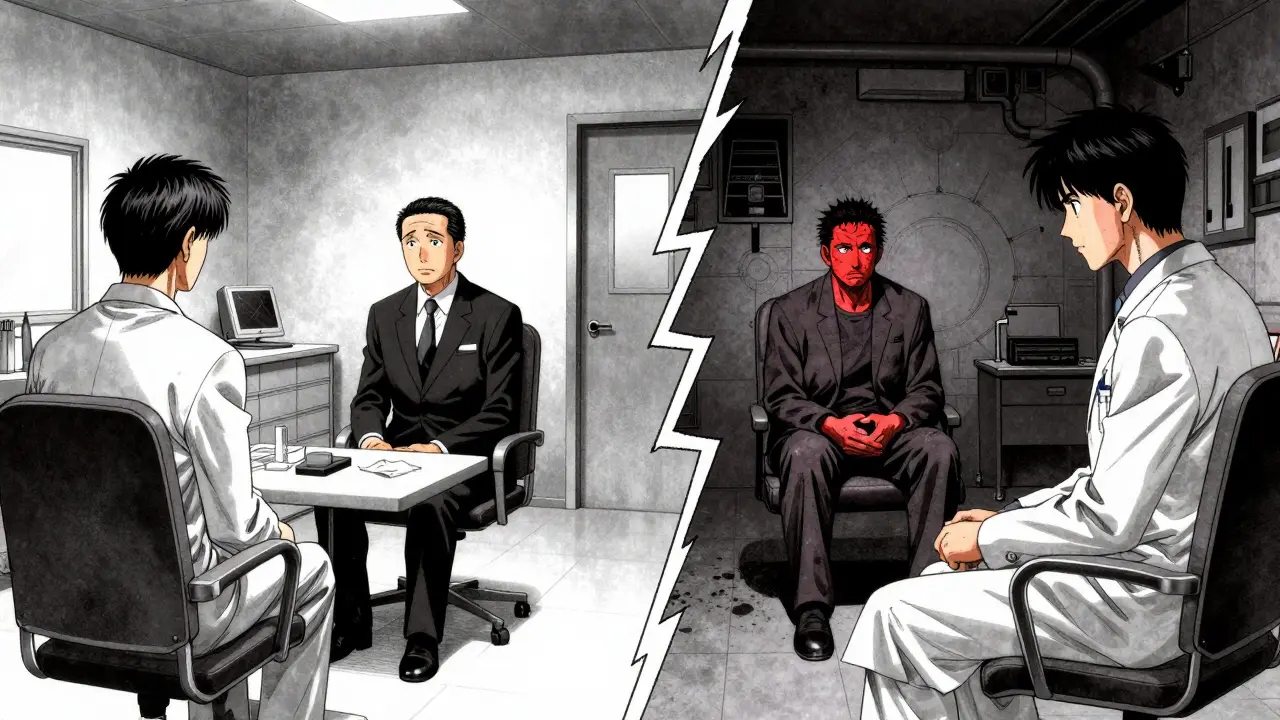
Does It Actually Work? The Evidence
You might wonder if this theoretical shift translates to real-world results. The data suggests yes, but with caveats. A randomized controlled trial published in PubMed (2018) studied IDDT implementation across community treatment teams. The results showed a statistically significant reduction in the number of days patients used alcohol or drugs. That’s a concrete win.
However, the study didn’t show improvements in secondary outcomes like overall psychopathology or therapeutic alliance. Why? Because implementing IDDT is harder than it looks. The same study noted that initial three-day training sessions didn’t significantly improve clinicians’ skills in motivational interviewing. This highlights a critical bottleneck: knowledge isn’t enough. Clinicians need ongoing coaching and support to master the nuanced balance of treating dual diagnoses.
Economic analyses paint a mixed picture too. The Washington State Institute for Public Policy found that IDDT reduces symptoms of alcohol and drug use disorders, but the benefit-cost ratios were below 1.0 (0.503 for alcohol, 0.495 for illicit drugs). This means that currently, the upfront costs of training and restructuring services may exceed the immediate measurable benefits. But this doesn’t mean it’s a bad investment-it means we’re measuring the wrong things. If you factor in reduced emergency room visits, fewer jail stays, and improved quality of life, the long-term value becomes clearer.
Barriers to Implementation
If IDDT is the gold standard, why isn’t everyone doing it? The barriers are systemic and stubborn.
Funding Silos: Mental health and substance abuse are often funded by different government agencies or insurance streams. A clinic might get money to treat depression but not addiction, forcing them to refer patients away. Breaking down these financial walls requires policy changes and creative billing strategies.
Workforce Training: Most therapists specialize in one area. Asking a psychologist to become an expert in addiction counseling-or vice versa-is a massive ask. It requires cross-training that addresses the complex interactions between disorders. As the Center for Evidence-Based Practices notes, practitioners must learn to explore the purpose behind behaviors and demonstrate patience and optimism, which are soft skills that take time to develop.
Organizational Culture: Shifting from parallel to integrated care requires a complete overhaul of how a clinic operates. Staff must collaborate, share records, and align their philosophies. Resistance to change is natural, especially when teams are already overwhelmed.

What This Means for Patients and Families
For someone living with dual diagnosis, the difference between parallel and integrated care is night and day. With IDDT, you don’t have to explain your story twice. You don’t have to navigate conflicting advice. You get one consistent message from a team that understands how your anxiety drives your drinking, and how your drinking fuels your anxiety.
Patients report feeling less lost and excluded. They appreciate the realism of harm reduction. If they relapse, they aren’t punished; they’re supported back into the process. This continuity builds trust, which is the foundation of any successful treatment.
For families, it means fewer crises and more stability. Family psychoeducation helps loved ones understand that addiction isn’t a moral failing, and mental illness isn’t just weakness. It empowers them to support recovery effectively.
The Future of Integrated Care
We’re moving in the right direction. Organizations like SAMHSA are pushing for integration through grants and technical assistance. Healthcare systems are shifting toward value-based payment models that reward outcomes over volume, making integrated care financially attractive. Yet, the treatment gap remains huge. Only about 6% of people with co-occurring disorders receive both types of treatment.
Closing this gap requires sustained effort. We need better funding mechanisms that allow clinics to hire integrated specialists. We need ongoing training for clinicians, not just one-off workshops. And we need to continue refining our metrics to capture the true value of holistic care.
Dual diagnosis is complex, but the solution doesn’t have to be fragmented. By treating the whole person, we offer a genuine path to recovery. It’s not easy, and it’s not perfect, but it’s the best tool we have. And for millions of people caught in the crossfire of mental illness and addiction, it’s the lifeline they deserve.
What is the difference between dual diagnosis and comorbidity?
While often used interchangeably, "comorbidity" generally refers to the presence of multiple medical conditions in a patient, whereas "dual diagnosis" specifically refers to the co-occurrence of a mental health disorder and a substance use disorder. Dual diagnosis implies a deeper interaction between the two conditions, where each exacerbates the other, requiring specialized integrated treatment rather than separate care.
Is IDDT covered by insurance?
Coverage varies widely depending on your location and insurer. Many public health systems and Medicaid programs in the U.S. are increasingly supporting integrated care models due to cost-effectiveness. However, private insurance may still treat mental health and substance use as separate benefit categories. It’s crucial to check with your provider and insurer about specific coverage for integrated dual diagnosis services.
How long does IDDT treatment last?
There is no fixed timeline for IDDT. Because it addresses chronic, complex conditions, it is often long-term. Some patients may engage in intensive phase treatment for several months, followed by ongoing maintenance support. The goal is sustainable recovery, which may require years of periodic check-ins and support, similar to managing diabetes or hypertension.
Can I get integrated care if I live in a rural area?
Rural areas often face greater challenges in accessing specialized IDDT teams due to workforce shortages. However, telehealth has expanded access significantly. Many integrated care programs now offer remote consultations, group therapy, and monitoring. Check with regional health networks or state-funded behavioral health initiatives for available tele-integrated services.
What if I am not ready to stop using substances?
IDDT is designed for you. Unlike traditional rehab that demands immediate abstinence, IDDT uses a harm reduction approach. You can enter treatment while still using substances. The focus is on reducing the harm associated with use, improving mental health stability, and building motivation for change at your own pace. This lowers the barrier to entry and keeps you engaged in care.
