
Hypoglycemia Risk Assessor for Older Adults
Select all factors that apply to the individual:
Assessment
Check boxes on the left to calculate risk.
Imagine your parent or grandparent suddenly stumbling in the kitchen. They look confused, maybe even a bit aggressive, and their skin is pale and clammy. You might think they are having a stroke or just feeling tired from age. But what if it’s something much more immediate and dangerous? What if their blood sugar has crashed to unsafe levels?
This is the silent threat of hypoglycemia in older adults. It is not just a minor inconvenience; it is a leading cause of hospitalization, falls, and even death for seniors with diabetes. While younger people often feel the warning signs of low blood sugar-like shaking hands or a racing heart-older adults frequently miss these cues entirely. By the time symptoms appear, the situation can be critical.
The goal here isn't just to lower blood sugar numbers on a chart. The goal is to keep your loved one safe, independent, and alive. We need to shift our focus from strict control to smart prevention. This article breaks down why older bodies react differently to low glucose, which medications are the biggest culprits, and how you can build a practical safety net at home.
Why Age Changes the Game: Physiology and Symptoms
To understand the risk, we first have to look at how aging changes the body's response to stress. When blood sugar drops below 70 mg/dL, a healthy young body immediately releases hormones like epinephrine and glucagon. These act as alarms, triggering that familiar "fight or flight" sensation: sweating, trembling, and hunger. This is your body saying, "Hey, eat something now!"
In older adults, this alarm system gets quieter. Research shows that counter-regulatory hormone responses can be reduced by 30-50% compared to younger adults. This means the warning lights don't turn on until the blood sugar is dangerously low, often below 50 mg/dL. Instead of shaking, an older adult might simply become confused, dizzy, or behave strangely.
This phenomenon is called hypoglycemia unawareness. It affects about 15-20% of older adults with type 2 diabetes. Because the classic symptoms are missing, family members and caregivers often misinterpret the behavior as dementia, depression, or just "old age." This delay in recognition turns a manageable dip into a severe medical emergency requiring outside help.
- Classic Symptoms (Rare in Seniors): Sweating, palpitations, tremors, intense hunger.
- Atypical Symptoms (Common in Seniors): Confusion, slurred speech, sudden weakness, behavioral changes, dizziness, fainting.
If you see a sudden change in mental status in an older adult with diabetes, check their blood sugar immediately. Do not assume it is cognitive decline. Time is tissue, and brain cells starve quickly without glucose.
The Medication Trap: Identifying High-Risk Drugs
Not all diabetes medications carry the same risk. Some are gentle helpers; others are heavy-handed enforcers that can drive blood sugar too low. Understanding which drugs are involved is crucial for any prevention plan.
The American Geriatrics Society Beers Criteria specifically flags certain medications as potentially inappropriate for older adults due to high hypoglycemia risk. The biggest offender is glyburide, a long-acting sulfonylurea. Studies show glyburide increases the risk of severe hypoglycemia by 50% compared to shorter-acting alternatives like glipizide. Why? Because glyburide stays in the system longer and is harder to clear if kidney function declines-a common issue in aging.
Insulin therapy also carries significant risk, especially if doses are not adjusted for food intake or activity levels. Many older adults take fixed doses regardless of whether they ate a full meal or skipped lunch. This mismatch leads to predictable lows.
| Medication Class | Examples | Hypoglycemia Risk | Notes for Older Adults |
|---|---|---|---|
| Sulfonylureas (Long-Acting) | Glyburide | High | Avoid if possible. High risk of prolonged lows. |
| Sulfonylureas (Short-Acting) | Glipizide | Moderate | Safer alternative to glyburide; still requires caution. |
| Insulin (Basal/Bolus) | Lantus, Humalog | High | Doses must be flexible based on food and activity. |
| Metformin | Glucophage | Low | Rarely causes lows alone. Good first-line option. |
| SGLT2 Inhibitors | Jardiance, Farxiga | Very Low | Work independently of insulin. Monitor for dehydration. |
| DPP-4 Inhibitors | Januvia | Very Low | Well-tolerated, minimal impact on blood sugar crashes. |
If your older adult is taking glyburide or high-dose insulin, it is time to talk to their doctor about de-intensification. Reducing the dose or switching to safer medications can dramatically cut risk without significantly worsening overall diabetes control.

Beyond Blood Sugar: Comorbidities and Polypharmacy
Hypoglycemia rarely happens in a vacuum. Older adults often juggle multiple health conditions and medications, creating a perfect storm for low blood sugar events. This is known as polypharmacy-the use of five or more medications.
Consider the role of kidney function. As kidneys age, they filter waste less efficiently. If an older adult has chronic kidney disease (with an estimated glomerular filtration rate below 60 mL/min/1.73 m²), their risk of severe hypoglycemia jumps by 2.7 times. Why? Because many diabetes drugs are cleared through the kidneys. If the kidneys slow down, the drug builds up in the body, acting stronger and longer than intended.
Other comorbidities play a part too:
- Heart Failure: Can reduce blood flow to organs, affecting how the body processes glucose and medication.
- Stroke History: May impair the ability to recognize symptoms or access food during a low episode.
- Dementia: Increases the likelihood of forgetting meals or double-dosing medications.
- Malnutrition: Older adults often eat less due to loss of appetite, dental issues, or social isolation. Less food intake combined with standard medication doses equals a recipe for disaster.
A comprehensive review of all medications-not just diabetes drugs-is essential. Some blood pressure meds, antidepressants, and painkillers can interact with diabetes treatments or mask symptoms. A pharmacist or geriatrician can help streamline this list, removing unnecessary pills that add risk without benefit.
Building a Practical Prevention Plan
Prevention is not about panic; it is about preparation. The American Diabetes Association (ADA) recommends individualized glycemic targets for older adults. For healthy seniors, an A1c below 7.0% might be appropriate. But for those with multiple chronic conditions or limited life expectancy, an A1c below 8.5% or even 9.0% is safer. The priority shifts from preventing long-term complications (like eye damage) to preventing immediate harm (like falls).
Here is a step-by-step approach to building a safety net:
- Set Realistic Targets: Work with the healthcare provider to define a safe blood sugar range. For many older adults, keeping glucose between 100-180 mg/dL is acceptable. Avoid aiming for "normal" ranges seen in younger patients.
- Regular Monitoring: Check blood sugar before meals and at bedtime. If using insulin, check before driving or operating machinery. Consider Continuous Glucose Monitors (CGMs). Although adoption is low (~15%) in this group, CGMs can reduce hypoglycemia by 40% by providing real-time alerts.
- Medication Review: Schedule a quarterly "brown bag" review where all medications are brought to the doctor. Ask specifically: "Is this dose too high for his current kidney function?" or "Can we switch from glyburide to glipizide?"
- Education for Caregivers: Family members must know the signs of atypical hypoglycemia. Teach them how to administer fast-acting glucose (juice, glucose tablets) and when to call 911.
- Emergency Kit: Keep a glucagon kit accessible. Newer nasal glucagon sprays are easier to use than injectable forms and can save lives when the person cannot swallow.
One successful model is the Pottstown Primary Care Intervention, which showed that structured visits focusing on risk assessment and medication adjustment reduced hypoglycemia risk by 46% in just six months. The key was not adding complexity, but simplifying care.
Technology and Future Tools
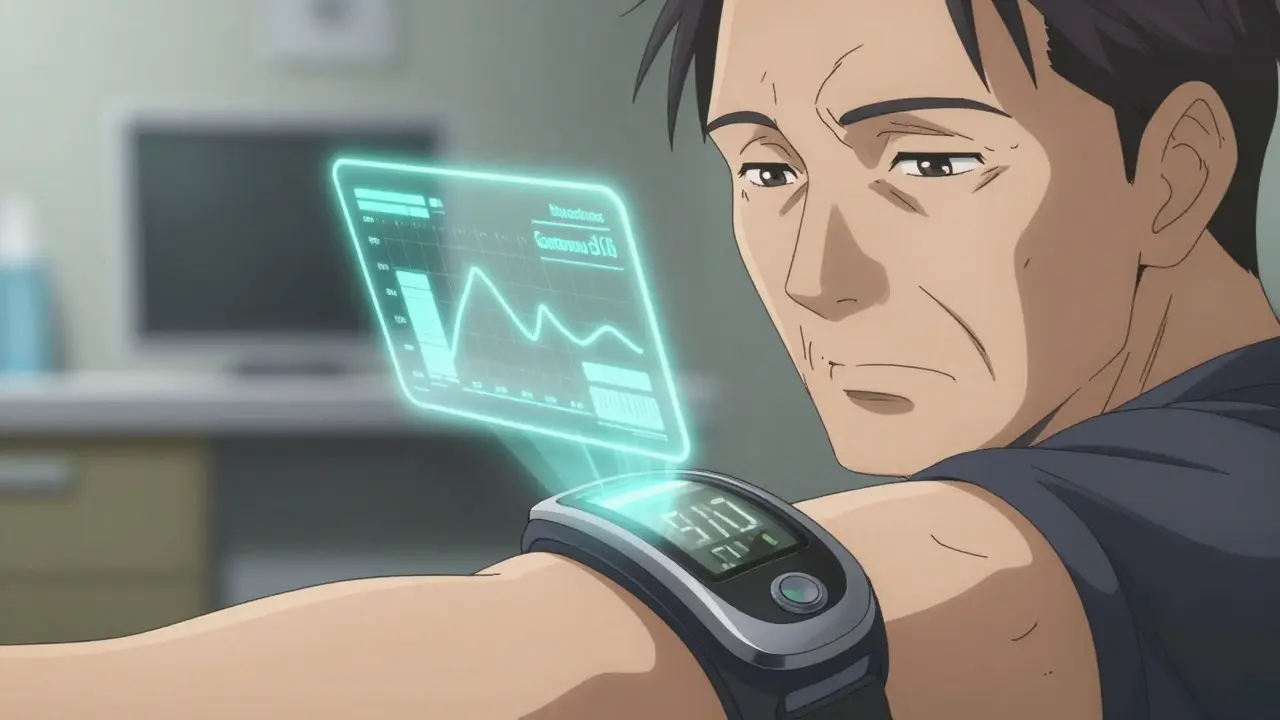
Technology is evolving to help bridge the gap in awareness. Continuous Glucose Monitors (CGMs) like the Dexcom G7 or Abbott FreeStyle Libre 3 provide continuous data streams. For an older adult who cannot feel the drop, a vibrating alarm on a wristwatch can be the difference between eating a snack and ending up in the ER.
However, barriers remain. Cost is a major factor, though Medicare coverage expanded in 2023 for some insulin-treated patients. Many older adults on sulfonylureas-who are also at high risk-are still excluded. Additionally, the small screens and complex apps can be daunting. Look for systems with large displays and simple interfaces, or involve a tech-savvy family member in setup.
Looking ahead, dual-hormone artificial pancreas systems (delivering both insulin and glucagon) are entering clinical trials. While widespread availability may not happen until after 2026, these devices promise automatic correction of lows, offering hope for a future where technology protects us from our own physiology.
When to Seek Help: Recognizing Severe Events
Level 3 hypoglycemia is a severe event requiring assistance from another person. Signs include inability to swallow, seizures, unconsciousness, or extreme confusion. If this happens:
- Do NOT put food or drink in the mouth (risk of choking).
- Administer glucagon if available and trained to do so.
- Call emergency services immediately.
- Place the person in the recovery position (on their side) to keep airways clear.
After the event, once the person is awake and able to swallow, give them a complex carbohydrate (like crackers or bread) to sustain blood sugar levels. Follow up with the doctor to adjust the prevention plan. Every severe event is a signal that the current management strategy is failing.
What is the target blood sugar for older adults with diabetes?
The American Diabetes Association recommends individualized targets. For healthy older adults, an A1c below 7.0% may be appropriate. For those with multiple chronic conditions or functional limitations, an A1c below 8.0% to 8.5% is safer to avoid hypoglycemia. The focus is on avoiding lows rather than achieving tight control.
Which diabetes medication is most dangerous for seniors?
Glyburide, a long-acting sulfonylurea, is considered high-risk for older adults due to its long duration and potential accumulation in the body, especially if kidney function is reduced. It increases the risk of severe hypoglycemia by 50% compared to shorter-acting options like glipizide.
How can I tell if my elderly parent is experiencing low blood sugar?
Older adults often lack classic symptoms like shaking or sweating. Look for atypical signs such as sudden confusion, dizziness, behavioral changes, slurred speech, or unexplained falls. If you suspect a low, check their blood glucose immediately. Levels below 70 mg/dL indicate hypoglycemia.
Should older adults use Continuous Glucose Monitors (CGMs)?
Yes, if feasible. CGMs can reduce hypoglycemia episodes by up to 40% by providing real-time alerts. While adoption is currently low due to cost and complexity, they are highly effective for detecting unawareness. Medicare coverage has expanded for some insulin users, making them more accessible.
What should I do if an older adult becomes unconscious from low blood sugar?
Do not give food or drink as they may choke. Administer glucagon via injection or nasal spray if available. Call emergency services immediately. Place the person on their side to keep their airway open until help arrives.
