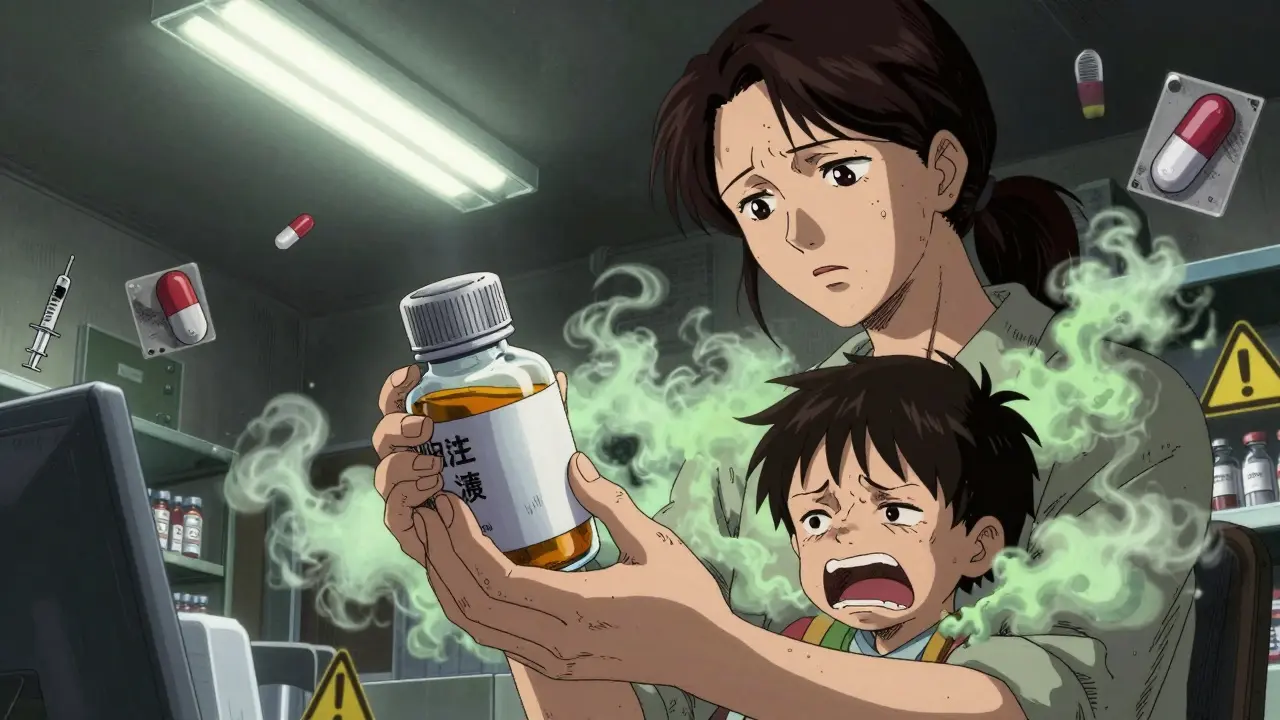
Every parent knows the struggle: the medicine bottle comes out, the child’s face twists, and suddenly it’s not just about taking a pill-it’s a full-blown battle. You’ve tried mixing it with juice, hiding it in applesauce, even bribing with candy. Nothing works long-term. And then there’s the guilt-you know the medicine matters, but your child is refusing, spitting it out, or worse, pretending to swallow it. This isn’t just about stubbornness. It’s about taste. And taste is a silent killer of treatment success.
Why Taste Matters More Than You Think
Over 78% of children have trouble sticking to their medication schedules, and nearly half of those struggles come down to one thing: bad taste. Liquid antibiotics like Amoxicillin, Augmentin, and Azithromycin are notorious for their bitter, chemical aftertaste. Even if the dosage is perfect and the doctor’s instructions are clear, if the medicine tastes like burnt metal or sour chalk, kids won’t take it. And if they don’t take it, the infection doesn’t clear. Antibiotics fail. Infections return. Hospital visits happen.
It’s not just about compliance-it’s about outcomes. The FDA calls palatability a ‘key factor in successful therapeutic intervention.’ That’s not just jargon. It means if the medicine tastes awful, the treatment doesn’t work-even if it’s scientifically perfect.
How Flavoring Services Actually Work
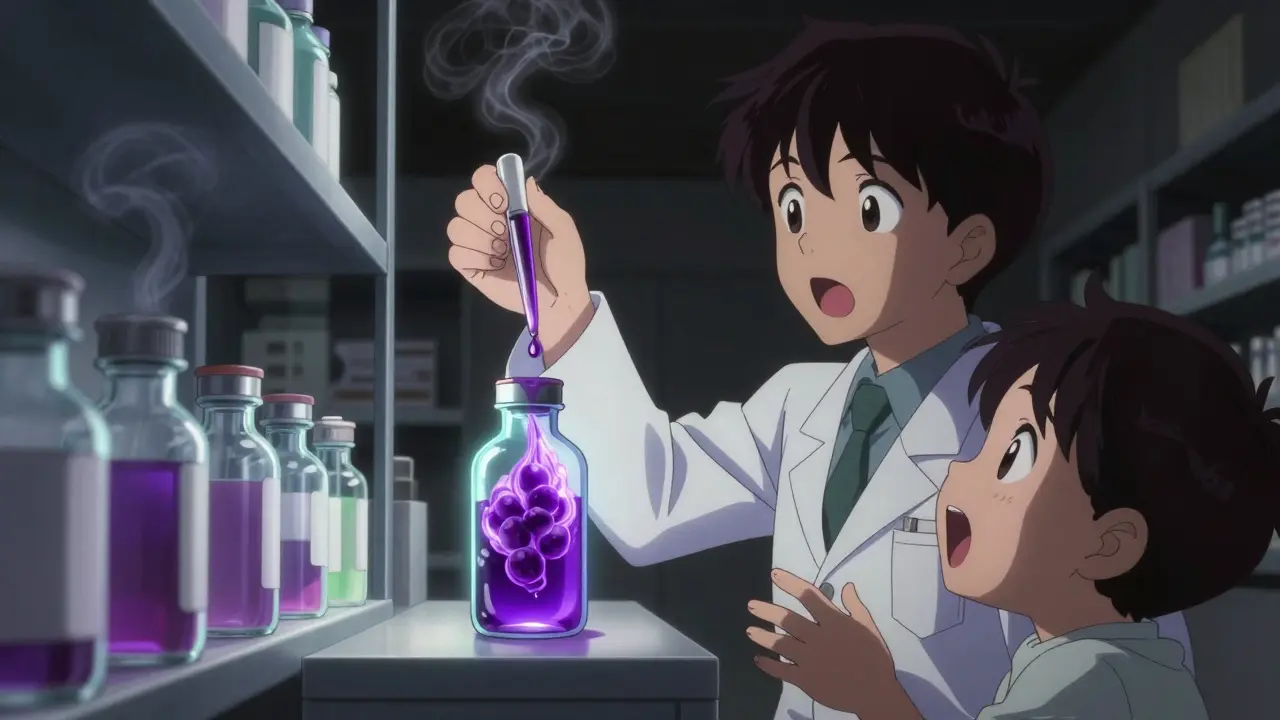
Flavoring services aren’t magic. They’re simple. A pharmacist takes your child’s liquid prescription-whether it’s an antibiotic, antiviral, or seizure medication-and adds a safe, food-grade flavoring agent directly into the bottle. No extra equipment. No complicated process. Just a few drops, a quick shake, and suddenly that bitter liquid tastes like grape, bubblegum, or watermelon.
These flavoring systems, like FLAVORx, are specifically designed for medications. They’re sugar-free, dye-free, and don’t interfere with the drug’s potency or dosage. That’s critical. Some parents try to mask the taste by mixing meds with milk or juice, but that can change how the body absorbs the drug. Flavoring services avoid that risk entirely.
Pharmacists don’t just pick a flavor at random. They use guides to match the right flavor to the right medication. For example, grape works best with Amoxicillin. Bubblegum masks the bitterness of Clindamycin. Strawberry hides the metallic tang in Cefdinir. There’s science behind the sweetness.
The Numbers Don’t Lie
Before flavoring, non-compliance rates for pediatric liquid meds hovered around 76%. After flavoring? They dropped to 20%. That’s not a small improvement. That’s a 74% reduction in treatment failure.
The National Community Pharmacists Association found that when flavoring was offered, medication adherence jumped from 53% to over 90%. That’s not a guess. That’s data from real pharmacies across the U.S., tracking whether kids actually finished their prescriptions.
At Intermountain Healthcare, which rolled out flavoring services in 2023, the goal was simple: ‘Ensure patients are adherent and receive the best outcomes.’ They charge $1.50 per prescription. That’s less than a coffee. And for many families, it’s the difference between a full course of antibiotics and a relapse.
What Flavors Work Best?
Not all flavors are created equal. Some kids hate orange. Others gag at cherry. The most popular flavors-based on thousands of prescriptions-are:
- Grape
- Bubblegum
- Strawberry
- Watermelon
- Cherry
Why these? Because they’re familiar. Kids recognize them from candy, juice boxes, and popsicles. They don’t taste like medicine-they taste like treats. At Germantown Pharmacy in Mississippi, kids get to pick their flavor. That small choice gives them control. And when kids feel like they’re part of the decision, they’re more likely to cooperate.
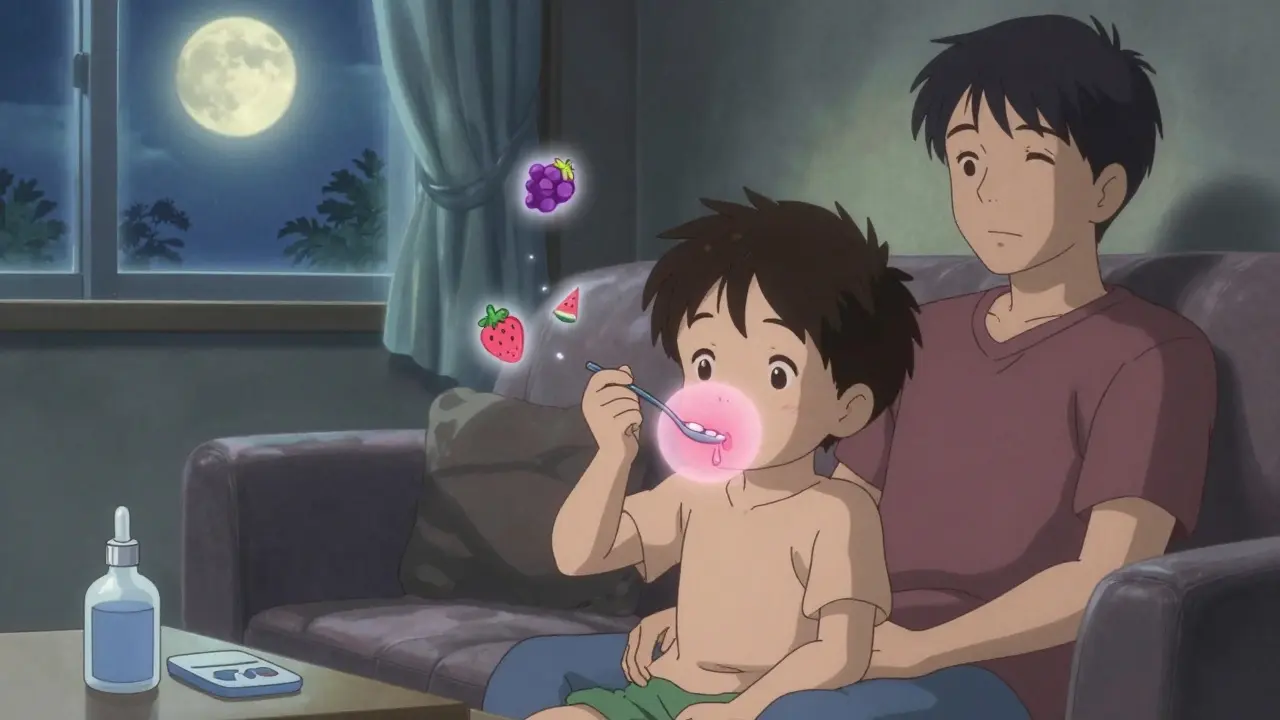
One parent shared: ‘My son used to cry every time we opened the medicine bottle. Now he asks for it. He says it tastes like bubblegum.’ That’s not just a sweet story. That’s a win for his health.
What Medications Are Most Often Flavored?
Some drugs are just inherently nasty. The top five liquid medications that get flavoring most often are:
- Augmentin
- Amoxicillin
- Azithromycin
- Cefdinir
- Clindamycin
All of these are commonly prescribed for ear infections, strep throat, and pneumonia-conditions that hit kids hard and often. If you’re prescribed one of these, ask your pharmacist about flavoring. Don’t wait until the battle starts.
Why This Beats Home Hacks
You’ve probably tried mixing meds with yogurt, honey, or soda. But here’s the problem: you don’t know if the drug still works after you’ve done that. Some medications need to be absorbed on an empty stomach. Others break down in acidic liquids like orange juice. Even a small change can make the dose too weak-or too strong.
Flavoring services are done under controlled conditions. Pharmacists know exactly which flavors are safe with which drugs. They don’t risk altering absorption, stability, or effectiveness. And they can flag medications that shouldn’t be flavored at all.
Compare that to a parent guessing whether mixing medicine with peanut butter is safe. The difference isn’t just convenience-it’s safety.
What About Chewable Tablets or Disintegrating Pills?
Some kids do better with tablets or dissolvable pills. But those aren’t always an option. Not all medications come in those forms. Younger kids can’t swallow pills. Some drugs are only available as liquids because of how they’re absorbed. And for kids with swallowing difficulties, liquids are the only choice.
A study in Africa found that for antimalarial meds, 91% of kids took tablets-but only 42% took the liquid version. That’s a massive gap. Flavoring bridges it. It makes the liquid option viable again.
Why More Pharmacies Aren’t Offering It
Surprisingly, many parents don’t even know flavoring services exist. A FLAVORx study found awareness was extremely low-even among families who’d struggled for months. That’s the real problem: not the service itself, but the lack of awareness.
Some pharmacies don’t offer it because they don’t think parents will ask. Others think it’s too much work. But the truth? It takes less than two minutes. The system is designed for busy pharmacies. The flavoring bottles are pre-measured. The staff just add, shake, and label.
And here’s the kicker: pharmacies that offer it see more repeat customers. Parents who have a good experience with flavoring don’t just come back for the next prescription-they tell their friends. One pharmacy reported that 87% of parents who used the service said they’d recommend the pharmacy to others.
When Flavoring Doesn’t Work
It’s not perfect. Some medications are too thick, too acidic, or too unstable to mix with flavoring. Pharmacists know this. They’ll tell you if it’s not safe. Also, some kids develop strong flavor preferences. If their antibiotic tasted like grape this time, they might refuse the next one because it’s strawberry. That’s rare, but it happens.
And flavoring doesn’t fix everything. If a child has sensory issues, anxiety around medicine, or a complex medical condition, taste is just one piece. But for most kids? It’s the biggest one.
What You Can Do Today
If your child is prescribed a liquid medication:
- Ask the pharmacist if they offer flavoring services.
- Find out which flavors they have available.
- Let your child pick one. Yes, even if they’re two years old. Choice reduces resistance.
- Don’t assume the medicine is already flavored. Even if it says ‘grape-flavored,’ it might still taste bitter underneath.
- If your pharmacy doesn’t offer it, ask them to start. Demand drives change.
It’s not about making medicine taste like candy. It’s about making it tolerable enough that your child doesn’t dread it. And when they don’t dread it, they take it. And when they take it, they get better.
It’s Not Just About Medicine-It’s About Peace
Behind every missed dose is a tired parent, a crying child, and a doctor wondering why the infection isn’t clearing. Flavoring services don’t just improve adherence. They reduce stress. They turn medication time from a war into a quiet moment. They give families back their evenings.
And in a world where healthcare is complicated, expensive, and overwhelming, this is one small, affordable, proven thing you can do right now to make a real difference.

Sangeeta Isaac
so like… my kid threw up the last antibiotic because it tasted like a science lab exploded? yeah. i didn’t even know pharmacies did this. now i’m mad i didn’t ask before. why is this not standard??
Dee Monroe
It’s funny how something so simple-flavor-can be the difference between healing and hospitalization. We treat kids like tiny adults, expecting them to endure bitterness because ‘it’s good for them.’ But children aren’t just small humans; they’re sensory beings who experience the world through taste, smell, and emotion. When we ignore that, we’re not being tough-we’re being blind. Flavoring isn’t coddling. It’s respect. It’s saying, ‘I see you’re scared, I hear you’re disgusted, and I’m not going to make you suffer needlessly.’ And honestly? That’s the foundation of compassionate medicine. It’s not about making medicine candy. It’s about removing the unnecessary trauma so the real work-the healing-can actually happen. We spend billions on fancy drugs, but the most powerful tool in pediatrics might just be a dropper and a bottle of bubblegum extract.
Ben McKibbin
Finally, someone who gets it. I’m a pharmacist in Portland and we started offering this two years ago. Parents cry when they realize their kid didn’t hate the medicine-they hated the taste. We’ve seen compliance jump from 40% to 92% on certain scripts. The best part? Kids start asking for their ‘medicine candy.’ And yes, we let them pick. One three-year-old chose ‘tropical punch’ for his amoxicillin and now calls it his ‘superhero drink.’ That’s not magic. That’s human-centered design. We should be doing this everywhere. It’s cheap, safe, and it saves lives. Why isn’t this mandatory?
Amber Lane
My son took his meds without a fight for the first time last week. Bubblegum. Game changer.
Philip Williams
While the anecdotal evidence presented is compelling, one must consider the broader pharmacoeconomic implications. The FDA’s recognition of palatability as a therapeutic variable is indeed significant, yet the absence of longitudinal data on long-term adherence patterns and potential flavor aversion development warrants further investigation. Additionally, the economic model presented-$1.50 per prescription-while seemingly negligible, scales substantially across national formularies. A rigorous cost-benefit analysis, accounting for reduced ER visits and antibiotic resistance, is essential before universal implementation.
Alex Carletti Gouvea
Next they’ll be putting sprinkles on chemo. This is just another step in the softening of America. Kids need to learn to suffer a little. If they can’t swallow a bitter pill, how are they gonna handle real life?
Melanie Pearson
Let’s be clear: this is a symptom of a deeper societal failure. We’ve replaced discipline with dopamine. Parents are too exhausted to enforce basic health routines, so they outsource compliance to flavoring agents. This is not innovation-it’s capitulation. And now we’re normalizing the idea that children should never experience discomfort, even when medically necessary. Where does it end? Sugar-coated vaccines? Chocolate-infused insulin? We are engineering weakness into our children’s biology.
Uju Megafu
Ohhh so now you’re telling me African kids don’t get this because they’re ‘not developed enough’? Let me guess-your pharmacy in Mississippi charges $1.50 and my cousin in Lagos has to give her child bitter medicine while crying because she can’t afford the ‘flavor upgrade.’ This isn’t healthcare. It’s luxury medicine for the privileged. You’re celebrating a Band-Aid while the whole system is rotting. And you call this progress? Please.
Roisin Kelly
Wait… so this is just a corporate ploy by FLAVORx to make pharmacies sell more? I bet they’re secretly adding sugar or artificial sweeteners to mess with kids’ microbiomes. And why is no one talking about how this normalizes medication use from age 1? This is step one to mandatory childhood drug programs. I’ve seen the documentaries. This is how they get you hooked. You think it’s just grape flavor? Nah. It’s the beginning of the pharmaceutical state.
Samuel Mendoza
Flavoring doesn’t work. My kid took grape-flavored amoxicillin and still spat it out. It’s not the taste-it’s the texture. You’re blaming the wrong thing.