
By the end of 2025, the legal landscape in the U.S. is changing faster than most businesses and individuals can keep up. It’s not just one big law passing - it’s hundreds, scattered across states and federal agencies, hitting everything from how you pay your employees to whether you can carry a gun in a national park. And if you think this is just noise, think again. These aren’t minor tweaks. They’re structural shifts that will shape how you work, live, and run a business for years to come.
Employment Law Gets a Major Overhaul - Especially in California
California is leading the charge in labor law reform, and what happens there often sets the tone for the rest of the country. In October 2025, Assembly Bill 406 went into effect, merging three separate leave laws into one clear rule under the Fair Employment and Housing Act (FEHA). Now, employees who are victims of violence, stalking, or abuse - or who need to care for a family member who is - can take protected leave without jumping through legal hoops. Employers must update their notice templates by law, and the Civil Rights Department is already rolling out the new model notice.
On top of that, paid sick leave rules changed too. The old Labor Code section 246.5 was rewritten to match the new consolidated leave structure. This isn’t just paperwork. It means HR teams had to retrain managers, update handbooks, and fix payroll systems - all within weeks. Companies report spending between $1,200 and $1,800 per employee just to get compliant.
Senate Bill 642 also updated pay transparency rules, requiring employers to list salary ranges in every job posting. And while SB 590’s expansion of Paid Family Leave to cover non-blood relatives won’t take effect until 2028, the groundwork is already being laid. Companies are starting to train managers now, because waiting until July 2028 means getting caught flat-footed.
The Federal Government Is Rolling Back Rules - But It’s Not Simpler
At the same time, the federal government is pulling back in some areas. Medicare Advantage plans are getting more freedom. ACA subsidy rules are being loosened. Anti-money laundering oversight is easing for certain financial institutions. On paper, that sounds good - less red tape, lower costs. But here’s the catch: removing a rule doesn’t mean compliance gets easier.
Take the IRS. They rolled back the Form 1099-K reporting threshold from $600 to $20,000 in October 2025. That’s a win for freelancers and small sellers. But the IRS didn’t just flip a switch. They issued three separate guidance documents - FS-2025-07, FS-2025-08, and IR-2025-107 - to explain how it works, who it affects, and what documentation you still need to keep. Tax professionals saw a 40% spike in course enrollments as accountants scrambled to relearn the rules.
And then there’s the "One, Big, Beautiful Bill" - Public Law 119-21, signed on July 4, 2025. It gave a $6,000 tax deduction to people aged 65 and older, but only for tax years 2025 through 2028. That’s a big deal for retirees, but it also means tax software had to be updated, retirement planners had to rewrite advice, and estate attorneys had to adjust long-term projections. The IRS is already preparing inflation adjustments for 2026, so this isn’t a one-time change. It’s a new baseline.
Housing Laws Are Being Rewritten to Fix a Crisis
California’s housing crisis got a major push in June 2025 with two landmark bills: AB 130 and SB 131. These aren’t minor zoning tweaks. They’re sweeping exemptions to the California Environmental Quality Act (CEQA), which for decades has delayed housing projects for years. Now, qualifying developments - especially those near transit hubs or in high-demand areas - can skip years of environmental reviews. The California Building Industry Association estimates this will cut approval times by 18 to 24 months.
The state projects this could boost annual housing production by 15% to 20%. That’s tens of thousands of new units. But it’s not without friction. Environmental groups are challenging the exemptions in court. Local governments are struggling to adjust their planning departments. Developers are rushing to file applications before deadlines, knowing these rules might not last beyond the next election cycle.

Firearms Rules Are Changing - Even in Strict States
On the federal level, H.R.2243, the LEOSA Reform Act of 2025, passed the House in May and is now in the Senate. If it becomes law, retired and active law enforcement officers will be allowed to carry concealed firearms in places they couldn’t before - including school zones, national parks, and even some federal buildings. States can still set their own rules, but they can’t block the federal right. And they’re allowed to reduce how often retired officers must requalify with their weapons.
This isn’t just about guns. It’s about jurisdictional conflict. What happens if a retired cop from Texas carries in California, where concealed carry is tightly controlled? The law doesn’t say. Courts will have to decide. Legal teams are already bracing for lawsuits. Police departments are updating training manuals. And gun rights groups are preparing for the next wave of litigation.
The Supreme Court Is About to Reshape American Law
2025 marks the 20th anniversary of the Roberts Court. And this term, it’s poised to make history. Legal analysts from American Progress and Bloomberg Law warn that upcoming rulings could expand presidential power, weaken voting rights, and limit protections for marginalized groups. The Court is expected to rule on at least three major cases involving executive authority, administrative agencies, and the right to protest.
Law firms are already hiring constitutional law specialists. Corporate legal departments are increasing their constitutional expertise by 25%, according to Bloomberg Law. Why? Because if the Court says federal agencies can’t enforce certain rules, that ripples through every industry - from healthcare to finance to tech. Companies can’t just wait. They need to model scenarios: What if the EPA loses power? What if the FTC can’t block mergers? What if states can ban abortion without federal oversight?
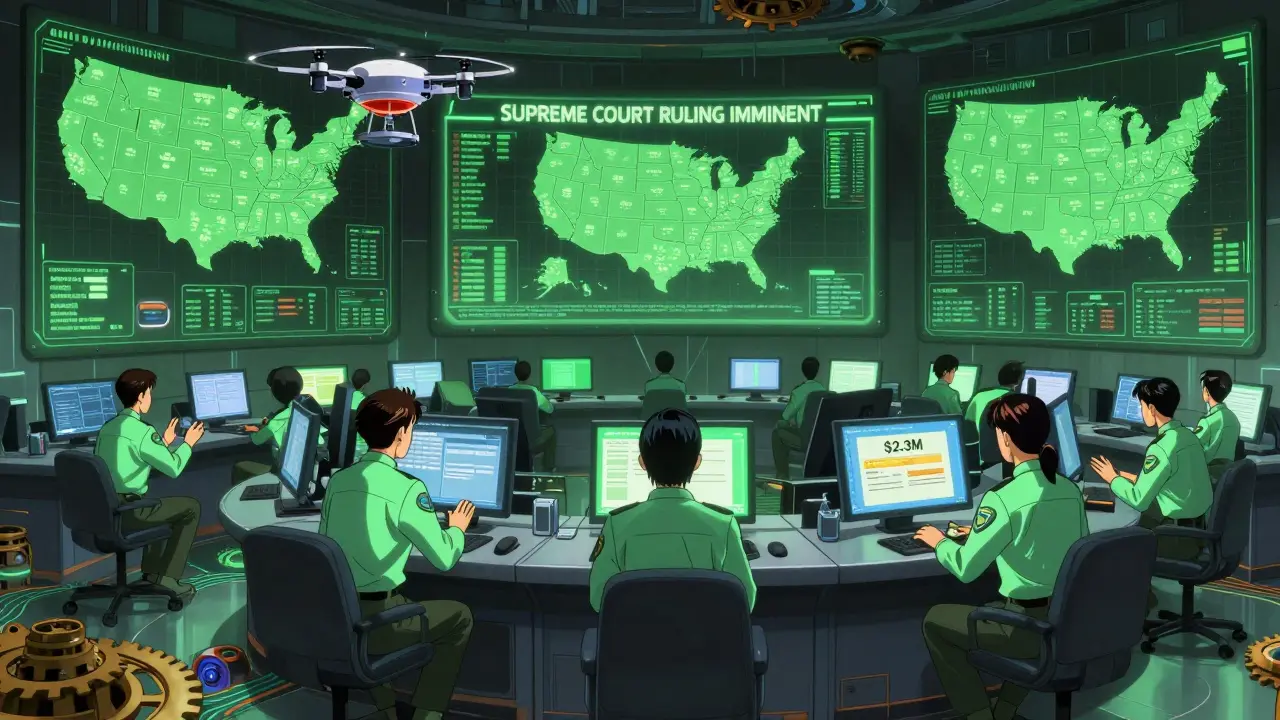
Compliance Is No Longer a Department - It’s a Company-Wide System
Here’s the hard truth: You can’t outsource compliance anymore. It’s not just the legal team’s job. It’s HR’s job. It’s IT’s job. It’s finance’s job. RegEd’s 2025 report says organizations that treat compliance as a checklist are failing. The ones surviving are building systems - automated alerts, cross-departmental task boards, real-time policy trackers.
Companies are hiring more compliance staff - up to 20% more in some cases. They’re buying AI-powered RegTech tools. Deloitte found that 78% of Fortune 500 companies plan to use AI to monitor regulatory changes by 2026. Gartner predicts the RegTech market will grow 35% this year alone. Why? Because manually tracking 4,800+ regulations across 50 states and federal agencies is impossible without technology.
And the cost of falling behind? PwC says it’s 15% to 25% higher compliance costs - plus fines, lawsuits, and reputational damage. One California employer got hit with a $2.3 million penalty in August 2025 for failing to update their leave policy after AB 406. They didn’t know the notice changed. They didn’t train their managers. And now they’re paying for it.
What You Need to Do Right Now
If you’re a business owner, HR manager, or even a freelancer, here’s what to do:
- Track your jurisdiction. Know which state and federal rules apply to you. Don’t assume federal rules override state ones - they often don’t.
- Update your policies. Review your employee handbooks, tax procedures, and operational guidelines. If you haven’t touched them since 2023, you’re already behind.
- Train your team. Managers need to know the new leave rules. Accountants need to know the 1099-K change. Sales teams need to know pay transparency laws.
- Invest in tools. Even small businesses can use low-cost RegTech platforms that scan for updates in your industry. Some cost less than $100 a month.
- Prepare for 2026. The IRS will release 2026 tax brackets. More state bills will pass. The Supreme Court will rule. Don’t wait until January to start planning.
The legal future isn’t coming. It’s already here. The question isn’t whether you’ll adapt - it’s how fast you can.
Are these legal changes only affecting California?
No. While California is leading with major labor and housing reforms, federal laws like the LEOSA Reform Act and the "One, Big, Beautiful Bill" apply nationwide. Plus, 37 out of 50 states passed at least one significant employment law change in 2025. Even if you’re not in California, you’re likely affected by federal tax, firearms, or sentencing rule changes.
Do I need to hire a lawyer to stay compliant?
Not necessarily - but you do need someone who understands the rules. Small businesses can use online compliance platforms that track changes in real time. Many HR software tools now include automated policy updates. For complex issues like tax law or constitutional challenges, consulting a lawyer is smart. But for routine updates - like leave policies or pay notices - trained managers and updated templates can handle it.
What’s the biggest risk if I ignore these changes?
Financial penalties, lawsuits, and reputational damage. One company in California paid over $2 million for not updating their employee notice after AB 406. The IRS can audit you for incorrect 1099-K filings. The Department of Labor can fine you for misclassifying workers. And if your customers or employees find out you’re ignoring basic rights, they’ll take their business - or their complaints - elsewhere.
Will these laws change again in 2026?
Almost certainly. RegEd expects another 1,200 regulatory changes in the second half of 2025 alone. The IRS will update tax brackets for 2026. More housing bills are likely to pass in states like New York and Washington. And if the Supreme Court rules on presidential power or agency authority, that could invalidate entire federal regulations overnight. Compliance is no longer a yearly task - it’s a daily one.
How can I keep up without spending a fortune?
Start with free resources: the IRS website, your state’s labor department portal, and industry associations like the California Chamber of Commerce. Subscribe to their email alerts. Use low-cost RegTech tools like ComplianceQuest or Avalara that cost under $150/month. Assign one person in your organization to track changes weekly. And don’t wait for a fine to wake you up - most violations are preventable if you’re proactive.

CHETAN MANDLECHA
California’s doing its usual thing-leading the charge while the rest of us scramble to catch up. AB 406? Yeah, that’s a mess in the making for small biz owners. I’ve got a cousin running a bakery in Sacramento-she spent $15k just retraining staff and updating digital notices. No one warned her the old template was obsolete. Now she’s got HR nightmares.
But honestly? It’s not just California. The federal 1099-K shift saved my side hustle. I was about to get audited last year for $800 in Etsy sales. Now? I can breathe. Still, the IRS guidance docs are worse than a tax lawyer’s coffee stain.
Ajay Sangani
you know… i think we’re all just living in the aftermath of a legal earthquake and no one’s really talking about how the ground keeps shifting. like… we got this big bill with the $6k deduction for seniors but what about the people who are 64 and 11 months? are they just… forgotten? and the courts… they’re not just ruling, they’re rewriting the rulebook while we’re still trying to read the first page.
also, did anyone notice the form 1099-k thing? i think the IRS just traded one kind of chaos for another. now we got three different guidances and no one knows which one to trust. i mean… i’m not even a tax person and i feel dizzy.
Gray Dedoiko
Really appreciate this breakdown. I’m a small business owner in Ohio, and honestly, I thought most of this was just California noise. Turns out, the federal stuff hit me harder than I realized. The LEOSA changes don’t affect me, but the pay transparency rules? Yeah, my job posts are getting updated this week.
Also, the RegTech tools under $150/month? I’m signing up for one tomorrow. I’ve been doing this manually since 2022 and it’s killing me. One missed update and I’m on the hook for fines. Not worth it.
Katie Taylor
STOP acting like this is just bureaucracy. This is justice. AB 406 gives people who’ve been silenced for years the right to take time off without begging for permission. The pay transparency laws? They’re not ‘red tape’-they’re equity. And if you’re complaining about updating your handbook, imagine being the employee who had to hide a stalker from your boss because HR didn’t know the law.
Stop treating compliance like a chore. Treat it like a moral obligation. And if you’re not ready? Get ready. Now.
Isaac Bonillo Alcaina
Let’s be clear: this isn’t reform. It’s regulatory overreach disguised as compassion. AB 406? That’s a liability minefield for employers. Pay transparency? Now every applicant is negotiating before they even walk in the door. And the Supreme Court cases? You’re all acting like this is about rights. It’s about power. The federal government is eroding state sovereignty while pretending to help.
And don’t get me started on the RegTech hype. AI can’t interpret legal nuance. You’re outsourcing your legal responsibility to a bot that doesn’t understand context. This isn’t innovation-it’s negligence wrapped in a SaaS subscription.
Charles Barry
EVERYTHING HERE IS A SETUP. AB 406? Paid leave? It’s not about victims-it’s about creating a class of permanent litigants. The IRS lowered 1099-K thresholds? They’re setting up the next audit wave. The Supreme Court? They’re being manipulated by dark money to dismantle the administrative state so private equity can buy everything.
And the RegTech tools? You think they’re helping? They’re harvesting your compliance data to sell to insurers and corporate spies. You’re not staying compliant-you’re feeding the machine. Wake up. This isn’t law. It’s control.
Rosemary O'Shea
How utterly pedestrian. You all treat these seismic shifts in governance like a spreadsheet update. The LEOSA Reform Act isn’t about guns-it’s about the collapse of federal-state jurisprudential hierarchy. And the housing bills? You think CEQA exemptions are progress? They’re the death knell of environmental accountability wrapped in a ‘housing crisis’ blanket.
And yet, you’re all still using free IRS emails and Avalara? Darling, if you’re not consulting a constitutional scholar and a policy architect, you’re not just behind-you’re complicit. This isn’t compliance. It’s civilization maintenance. And you’re doing it with a free trial.
Sidra Khan
Okay but… why are we all acting like this is new? This is just capitalism with more paperwork. Every time they change a rule, someone makes a course, a tool, or a consultant. The real winners? The people selling the solutions. The rest of us? We’re just paying to play.
Also, I don’t care if I get fined $2.3M. I’ll just raise my prices. Pass the popcorn.
Ademola Madehin
Y’all be trippin. California changes one law and suddenly we all got to relearn everything? I’m in Nigeria, I got no clue what FEHA is, but I know this-when the government starts changing rules every 6 months, it’s not because they care. It’s because they’re lost.
My cousin in Atlanta got fined $18k for not updating a leave notice. I laughed so hard I cried. This ain’t law. This is chaos with a corporate logo.
Adarsh Dubey
There’s truth in all of this. California leads, but the ripple effects are real. The pay transparency rules? They’re long overdue. The 1099-K change? A relief for gig workers. But the real win is the housing bills-finally, some real action on affordability.
That said, the fearmongering around compliance tools is overblown. If you’re spending $100/month to avoid a $2M fine, that’s not a cost-it’s insurance. And the Supreme Court’s rulings? They’ll shape everything. But we don’t have to panic. We just have to stay informed. And maybe, just maybe, stop treating law like a game of Whack-a-Mole.
Bartholomew Henry Allen
This is the end of American sovereignty. Federal overreach disguised as progress. California sets the tone and the rest of us bow. The Supreme Court is being neutered by activist agendas. The IRS is weaponizing paperwork. And you call this compliance? This is subjugation.
Stop buying RegTech. Stop training managers. Stop updating handbooks. The system is rigged. The only solution is to refuse participation. I will not comply. Let them fine me. I’d rather be poor than obedient.