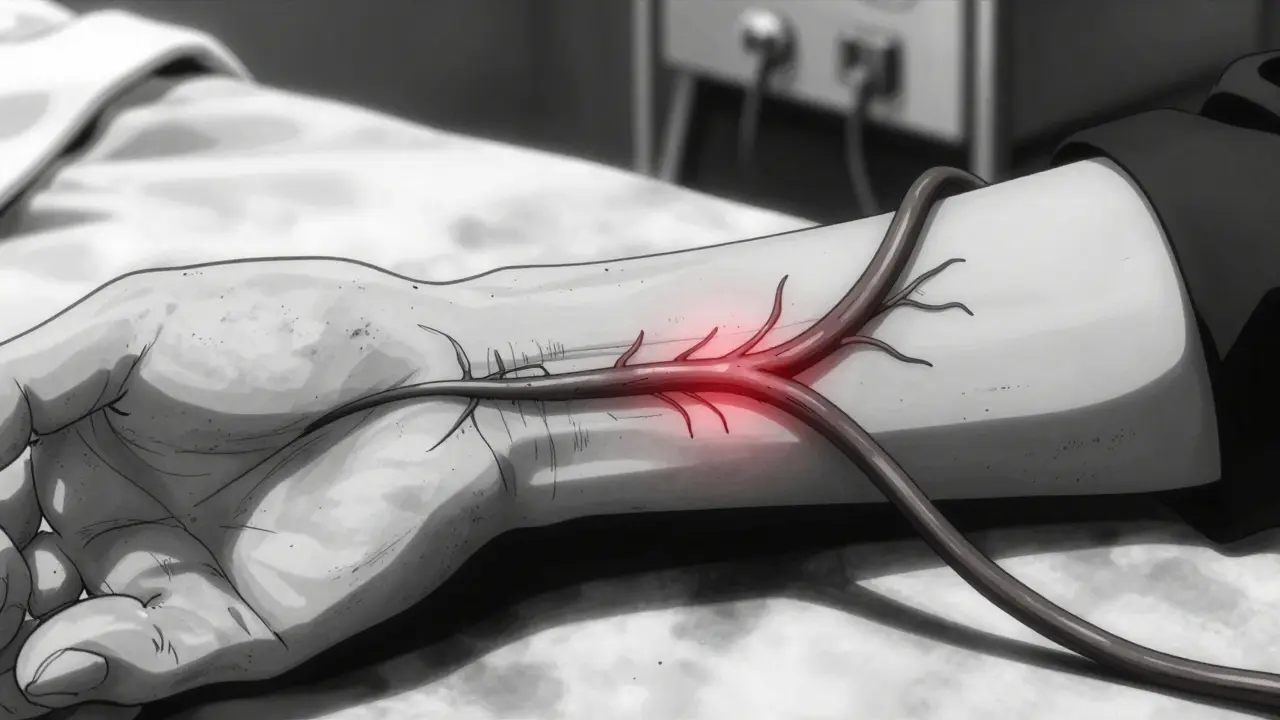
When your kidneys stop working properly, getting on dialysis is a major life change. But before the treatments even begin, you face a critical decision about how blood will enter and leave your body during each session. This connection point is called dialysis access, which is the vascular entry point used to filter blood during hemodialysis treatments. It’s not just a technical detail; it’s the lifeline that determines your safety, comfort, and long-term health outcomes.
You have three main options: an arteriovenous (AV) fistula, an arteriovenous (AV) graft, or a central venous catheter. Each has distinct pros and cons regarding durability, infection risk, and daily maintenance. Understanding these differences helps you work with your nephrologist to choose the best path for your specific anatomy and lifestyle. Let’s break down what each option involves, why experts prefer one over the others, and how you can keep your access healthy.
Why Access Type Matters More Than You Think
The type of access you use directly impacts your survival rates and quality of life. Clinical data shows that patients using catheters face significantly higher risks compared to those with surgical connections. A comprehensive review published in PMC found that catheter use was associated with a 1.53 times higher risk of mortality compared to fistulas. That translates to roughly 106 excess deaths per 100,000 patient-years simply due to the access method chosen.
Infection is another major concern. Catheters carry a 2.12 times higher risk of fatal infections compared to fistulas. Because catheters sit directly in large veins near the heart, bacteria can easily travel into the bloodstream, causing sepsis. In contrast, native tissue connections like fistulas are far more resistant to infection. The economic burden is also staggering; replacing catheters with fistulas could save the U.S. healthcare system approximately $1.1 billion annually by reducing hospitalizations. For you, this means fewer trips to the emergency room and more time living your life.
Arteriovenous (AV) Fistula: The Gold Standard
AV fistula is a surgical connection between an artery and a vein, typically in the non-dominant arm, allowing the vein to enlarge and strengthen for needle insertion. The National Kidney Foundation and KDOQI guidelines strongly recommend this as the first choice for all hemodialysis patients. Why? Because it uses your own body’s vessels, eliminating the need for foreign materials that can trigger immune responses or clotting.
Creating a fistula involves a surgeon tying an artery directly to a nearby vein. Over time, usually 6 to 8 weeks, the increased blood pressure from the artery causes the vein to thicken and expand-a process called maturation. Once mature, the vein becomes robust enough to withstand repeated needle insertions. These connections are incredibly durable. Many patients report their fistulas lasting for decades with proper care. One patient at Azura Vascular Care noted having a perfectly functioning fistula for seven years with only routine check-ups.
The downside is the waiting period. You cannot use a fresh fistula immediately. If you need to start dialysis right away, you’ll likely need a temporary catheter until the fistula matures. Additionally, not everyone qualifies. About 30-60% of initial fistula surgeries fail to mature, particularly in elderly patients or those with diabetes and hardened arteries. Vein mapping via ultrasound is essential beforehand to determine if your vessels are suitable.
Arteriovenous (AV) Graft: The Synthetic Alternative
If your veins are too small or weak for a fistula, an AV graft serves as a synthetic tube made of biocompatible material, such as polytetrafluoroethylene, connecting an artery and vein for dialysis access. This acts as a bridge between your artery and vein. Unlike a fistula, which relies on natural tissue strengthening, a graft provides immediate structural support because the synthetic tube is already thick-walled.
The biggest advantage of a graft is speed. It requires only 2 to 3 weeks of healing time before use, much faster than the 6-8 weeks needed for a fistula. This makes it a viable option for patients who need to start dialysis sooner but still want a permanent solution better than a catheter. However, grafts come with trade-offs. They have higher rates of clotting and infection compared to fistulas. Statistics show that 30-50% of AV grafts require at least one intervention, such as angioplasty or surgery, within the first year to maintain patency.
Grafts generally last 2 to 3 years before needing replacement due to wear and tear or stenosis (narrowing). While they offer a middle ground between catheters and fistulas, they still fall short of the longevity and low complication rates of native tissue connections. Dr. John K. Roberts, a vascular surgeon, notes that while grafts are useful when fistulas aren't possible, they inherently carry a higher risk profile due to the presence of foreign material in the bloodstream.
Central Venous Catheters: Temporary vs. Permanent
A central venous catheter (CVC) is a soft tube inserted into a large vein in the neck, chest, or groin, providing immediate access for dialysis but carrying higher infection risks. Catheters are the most common form of access when dialysis starts suddenly, such as in acute kidney injury cases. They allow for immediate treatment without any surgical healing time. However, they are intended to be temporary. Using them long-term is associated with the highest morbidity and mortality rates among all access types.
Catheter care demands strict hygiene. You must keep the site dry and sterile at all times. This often limits bathing options, requiring sponge baths instead of showers to prevent water from entering the wound site. The infection rate is significant, occurring at a rate of 0.6 to 1.0 episodes per 1,000 catheter days. Bloodstream infections from catheters can lead to serious complications, including endocarditis (heart valve infection) and sepsis. Despite these risks, some patients rely on catheters permanently when other options are exhausted due to poor vascular health.
If you are stuck with a catheter, diligent care is non-negotiable. Healthcare providers emphasize sterile technique during dressing changes. Patients who receive comprehensive education on catheter care see a 25% reduction in complications during their first year. Regular monitoring for signs of infection-such as redness, swelling, fever, or drainage-is crucial. Never ignore these symptoms, as they can escalate rapidly.
Comparison of Dialysis Access Types
| Feature | AV Fistula | AV Graft | Central Venous Catheter |
|---|---|---|---|
| Material | Patient's own vein and artery | Synthetic tube (PTFE) | Silicone/Polyurethane tube |
| Healing Time | 6-8 weeks | 2-3 weeks | Immediate |
| Lifespan | Decades (with care) | 2-3 years | Temporary (days to months) |
| Infection Risk | Lowest | Moderate | Highest |
| Clotting Risk | Low | Moderate to High | Moderate |
| Mortality Impact | Lowest risk | Moderate risk | Highest risk (1.53x vs fistula) |
| Daily Care | Monitor thrill/blood flow | Monitor site, watch for swelling | Strict sterile dressing changes |

Daily Care and Maintenance Tips
Regardless of your access type, daily vigilance keeps it functional. For fistula and graft users, the golden rule is "No Blood Pressure, No Weight, No Needles" on the access arm. Avoid having your blood pressure taken on that arm, as the cuff can damage the delicate vessels. Do not lift heavy objects with that arm, which can cause kinking or aneurysms. And never let anyone draw blood or place an IV in the access arm.
Check your access daily for the "thrill," a vibration you feel when touching the site. This indicates good blood flow. If the thrill disappears or feels weaker, contact your dialysis center immediately-it may signal a clot. For catheter users, keep the site clean and dry. Change dressings exactly as instructed by your nurse, using sterile gloves and supplies. Watch for signs of infection like redness, warmth, or pus. Report any fever above 100.4°F (38°C) right away.
Education plays a huge role in success. Patients who undergo pre-surgical training sessions with dialysis nurses experience fewer complications. Ask your care team to demonstrate how to inspect your access, how to handle minor bleeding after treatment, and when to seek emergency help. Knowledge empowers you to catch problems early, preventing hospital visits.
Future Innovations and Improvements
The field of dialysis access is evolving. New technologies aim to reduce the high failure rates of fistulas and the infection risks of catheters. In 2022, the FDA approved wireless sensors like Manan Medical’s Vasc-Alert, which monitor fistula blood flow continuously. Early trials showed a 20% reduction in thrombosis events, offering peace of mind through real-time data. Preoperative exercise programs are also gaining traction, with studies showing a 15-20% increase in fistula maturation rates when patients engage in targeted arm exercises before surgery.
Research into bioengineered blood vessels holds promise for patients with limited native vessel options. Humacyte’s human acellular vessels are currently in phase 3 clinical trials, potentially offering a more biocompatible alternative to synthetic grafts. As the dialysis population ages and conditions like diabetes become more prevalent, these innovations will be vital. Experts project that fistulas will continue to dominate as the preferred access method through 2030, accounting for 65-70% of permanent accesses, while catheter use is expected to decline.
What is the best type of dialysis access?
The arteriovenous (AV) fistula is considered the gold standard and best option for most patients. It has the lowest risk of infection and clotting, lasts the longest (often decades), and improves survival rates. However, it requires healthy veins and a 6-8 week maturation period. If your veins are unsuitable, an AV graft is the next best choice, followed by a central venous catheter for temporary use.
How long does it take for a fistula to heal?
An AV fistula typically takes 6 to 8 weeks to mature fully. During this time, the vein enlarges and strengthens to handle the high blood flow and needle insertions required for dialysis. Your doctor will monitor progress with ultrasounds. You cannot use the fistula for dialysis until it is deemed mature enough to prevent complications like blowouts or inadequate flow.
Can I shower with a dialysis catheter?
Showering with a central venous catheter requires extreme caution. You must keep the catheter site completely dry to prevent infection. Many patients opt for sponge baths instead. If you do shower, you may need to cover the site with a waterproof dressing specifically designed for catheters, but you must follow your healthcare provider's exact instructions. Never submerge the catheter in bathwater or pools.
What should I do if my fistula stops vibrating?
If you lose the "thrill" (vibration) in your fistula, contact your dialysis center immediately. This loss of vibration often indicates a clot or blockage in the access. A blocked fistula cannot be used for dialysis and requires urgent medical attention, such as thrombectomy or angioplasty, to restore blood flow. Delaying treatment can result in the loss of the access entirely.
Why are catheters associated with higher mortality?
Catheters are linked to higher mortality primarily due to severe infections and clotting. Because they sit directly in large veins near the heart, bacteria can easily enter the bloodstream, causing sepsis or endocarditis. Studies show catheter users have a 1.53 times higher risk of death compared to fistula users. Additionally, catheters can cause central vein stenosis, narrowing the veins and making future access creation difficult.
