Azithromycin Liver Health Awareness Tool
Note: This tool is for educational purposes only. It is not a medical diagnosis. If you suspect liver injury, contact a healthcare provider immediately.
Select any symptoms you are experiencing:
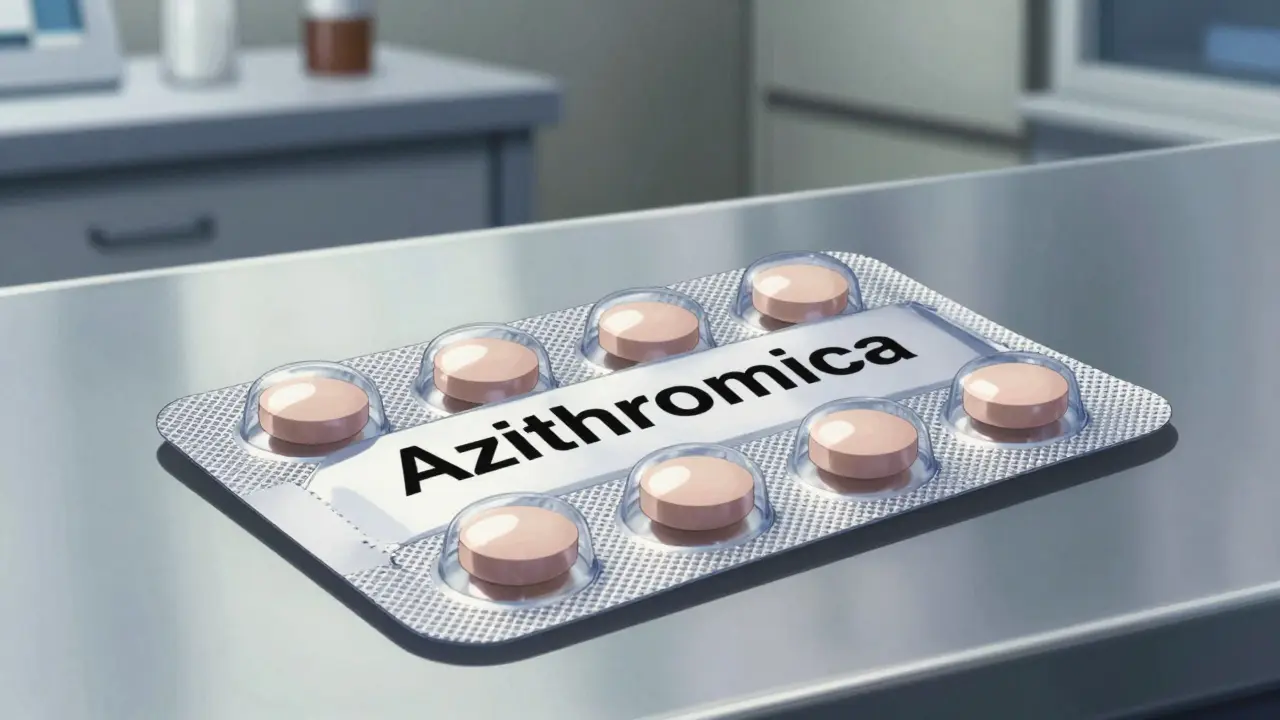
You’ve likely had a "Z-Pak" at some point-those convenient, short-course antibiotics for a stubborn sinus infection or pneumonia. For years, Azithromycin is a semisynthetic macrolide antibiotic used to treat a wide range of bacterial infections. Commonly sold under brand names like Zithromax and Zmax, it's praised for its once-daily dosing and effectiveness. But there is a hidden side to this popularity. While the drug is generally safe, it has quietly become one of the top ten causes of drug-induced liver injury (DILI) in the U.S. The real danger isn't just that it can hurt the liver, but that the damage often shows up after you've finished your pills, making it easy to miss.
How Azithromycin Affects the Liver
For most people, azithromycin passes through the system without a hitch. However, a small percentage of patients experience Hepatotoxicity, which is essentially liver damage caused by a chemical agent. In about 1% to 2% of short-term users, the liver shows mild signs of stress through elevated enzymes in the blood. This is usually asymptomatic, meaning you wouldn't feel a thing unless a doctor ordered a blood test.
The situation gets more serious when we talk about clinically apparent liver injury. While the odds are low-ranging from 1 in 2,500 to 1 in 65,000 prescriptions-the impact can be severe. Most of these cases follow a "cholestatic" pattern. In plain English, this means the flow of bile from the liver is blocked or slowed down. This leads to a buildup of bilirubin in the blood, which is what causes that telltale yellowing of the skin and eyes.
The "Delayed Fuse": Why Diagnosis Is Tricky
If you're looking for a rash or a fever immediately after taking the first pill, you might be looking for the wrong thing. Unlike some allergic reactions that happen instantly, azithromycin-induced liver injury often has a latency period of one to three weeks. In fact, a study by Chalasani et al. found that 89% of patients developed symptoms after completing their entire course of antibiotics.
Imagine finishing your meds, feeling better from your infection, and then suddenly waking up ten days later with intense itching (pruritus) or deep fatigue. Because the pills are gone, many people-and even some doctors-don't immediately connect these new symptoms back to the antibiotic they took two weeks prior. This gap in timing often leads to misdiagnoses, where patients are told they have viral hepatitis when the real culprit was actually the Z-Pak.
Comparing Azithromycin to Other Antibiotics
Azithromycin isn't the only macrolide that can stress the liver. It belongs to a family that includes erythromycin and clarithromycin. When we compare them, azithromycin is actually safer for the heart (it doesn't prolong the QT interval as much as erythromycin), but its sheer popularity means we see more total cases of liver injury from it than from its cousins.
| Antibiotic | Typical Liver Risk | Primary Injury Pattern | Recovery Rate |
|---|---|---|---|
| Azithromycin | Low (1:2,500 - 65,000) | Cholestatic / Mixed | High (92% resolve in 4-8 weeks) |
| Erythromycin | Moderate (1:1,000) | Cholestatic | Variable |
| Clarithromycin | Very Low (1:10,000) | Cholestatic | High |
| Doxycycline | Very Low | Minimal | N/A |
| Isoniazid | High (10-20%) | Hepatocellular | Slow (Months) |

Is It an Immune Reaction or Direct Poisoning?
Scientists are still arguing over exactly why this happens. For a long time, the consensus was that it's an "idiosyncratic reaction." This means it's not about how much of the drug you took, but how your specific immune system reacts to it. Dr. Neil Kaplowitz has pointed out that some patients show eosinophilia (a type of white blood cell increase), which usually screams "immune response."
However, new research from 2024 suggests a different path. Some evidence indicates that azithromycin might suppress a protein called Nrf2, which normally protects cells from oxidative stress. If Nrf2 is suppressed, "reactive oxygen species" (ROS) can build up and damage liver cells directly. Whether it's an immune glitch or a chemical attack, the result is the same: inflammation and potential cell death in the liver.
Who Is Most at Risk?
While anyone can have a reaction, certain groups should be more cautious. Elderly patients (those 65 and older) make up about 38% of severe cases. This is likely because the liver's ability to process medications slows down with age, or they may be taking other drugs that interact poorly.
You should also be wary if you have pre-existing liver disease. The European Medicines Agency recommends avoiding azithromycin if you already have severe liver impairment. Additionally, be careful with combinations. A recent FDA alert highlighted that taking azithromycin alongside atovaquone (used for certain parasitic infections) might increase the risk of severe liver failure.

Recognizing the Red Flags
Since this often happens after the treatment ends, knowing the symptoms is vital. Keep an eye out for these "red flags" appearing anywhere from a few days to three weeks after your last dose:
- Jaundice: Yellowing of the skin or the whites of the eyes (occurs in 87% of cases).
- Extreme Fatigue: A level of exhaustion that doesn't go away with rest (79% of cases).
- Pruritus: Intense, unexplained itching (63% of cases).
- Abdominal Pain: Specifically in the upper right side of your stomach (52% of cases).
- Dark Urine: Urine that looks like tea or cola, indicating high bilirubin levels.
How Doctors Manage the Injury
If a doctor suspects Drug-Induced Liver Injury (DILI), the first step is always the same: stop the drug immediately. The American Association for the Study of Liver Diseases (AASLD) suggests that if liver enzymes (ALT) are more than 3 times the upper limit of normal, or if bilirubin is more than 2 times the limit, the medication must go.
Most people recover quickly once the drug is stopped, usually within 4 to 8 weeks. However, a tiny fraction-about 0.7%-suffer irreversible damage. In extreme cases, this can lead to "vanishing bile duct syndrome," where the liver's drainage system is destroyed, eventually requiring a liver transplant. This is why early recognition is so critical; catching the injury within the first seven days of symptoms leads to much faster recovery times.
Can azithromycin cause permanent liver damage?
In the vast majority of cases, the damage is reversible and the liver heals within 4-8 weeks after stopping the medication. However, in very rare instances (less than 1% of DILI cases), it can lead to chronic liver failure or the need for a transplant, especially if the diagnosis is delayed.
Why does the liver damage happen after I stop taking the pills?
This is due to the "latency period." Azithromycin stays in your tissues for a long time. The immune reaction or the buildup of cellular stress often peaks days or weeks after the last dose, meaning the symptoms only appear once the medication course is already finished.
Should I get a liver test before taking a Z-Pak?
For a standard 3-to-5 day course, routine testing isn't usually required for healthy adults. However, if you have pre-existing liver disease, are over 65, or are taking a prolonged course (longer than 7 days), your doctor may want to monitor your liver function tests (LFTs).
Are there safer alternatives to azithromycin?
Depending on the infection, Doxycycline is often cited as a safer alternative with a much lower risk of hepatotoxicity for respiratory infections. Always consult your provider to see if a different antibiotic is appropriate for your specific bacteria.
What is Hy's Law and does it apply here?
Hy's Law is a clinical rule used to predict if a drug will cause severe liver failure. It occurs when both the ALT enzyme and bilirubin are significantly elevated without any other explanation (like hepatitis). About 18% of azithromycin liver injury cases meet this criteria, which signals a high risk of acute liver failure.
Next Steps and Troubleshooting
If you are currently taking azithromycin and feel fine, there is no need to panic-the risk is statistically low. However, if you have a history of liver issues, make sure your doctor knows before you start the prescription. They might choose a different antibiotic or schedule a blood test halfway through your treatment.
If you have already finished your course and are now noticing yellowing eyes or intense itching, do not ignore it. Contact your healthcare provider immediately and specifically mention that you recently took azithromycin. Because of the delayed onset, doctors might not think of the antibiotic unless you bring it up, and early detection is the difference between a quick recovery and a long-term complication.

Hudson Nascimento Santos
It's a strange paradox of modern medicine that the more convenient a drug becomes, the more we tend to ignore the systemic risks. We prioritize the "Z-Pak" efficiency because it fits our fast-paced lives, yet we overlook the biological lag in how our organs actually process these chemicals. The idea of a "delayed fuse" is a perfect metaphor for the disconnect between immediate relief and long-term systemic impact.
Brian Shiroma
Oh great, another "safe" drug that actually destroys your liver two weeks after you stop taking it. Just wonderful. 🙄
Rachelle Z
Omg, I love how doctors just hand these out like candy!!! 🍭 And then we're just supposed to hope our eyes don't turn yellow??!! Soooo professional!!! 🙄💅
Beth LeCours
too long didnt read but sounds bad
Ace Kalagui
I actually had a close friend who went through something similar a few years back and it was absolutely terrifying because the symptoms didn't start until he was already feeling better from the initial infection, so he just assumed he was getting a new virus, but once he mentioned the antibiotic to a different specialist, they caught the liver enzyme spike just in time to prevent something permanent, which is why I always tell people to keep a little log of every medication they take even if it's just a short course because your future self will really thank you when you're sitting in an ER trying to figure out why you're suddenly exhausted and yellow.
angel sharma
Everyone needs to take charge of their health and stay proactive by demanding more transparency from their healthcare providers because knowing about the Nrf2 protein suppression is exactly the kind of high-level information that empowers a patient to ask the right questions and ensures that we aren't just passive recipients of medicine but active partners in our own recovery and long-term wellness journey!
Branden Prunica
I am literally shaking right now. I took a Z-Pak last month and I've been feeling tired!
Is my liver failing??! I can't believe this is happening to me! This is actual nightmare fuel!
Sakshi Mahant
It is very important to maintain a balance between trusting our doctors and being aware of these rare side effects, as each body reacts differently to chemical compounds based on genetics and environment. In my community, we often discuss how traditional awareness and modern science must go hand-in-hand to ensure patient safety, especially for the elderly who are more vulnerable to these interactions. While the statistics are low, the respect for one's own health boundaries means asking for the safer alternatives mentioned, like Doxycycline, when the situation allows for it, ensuring that the cure doesn't become more burdensome than the original illness.